What to Know Before Hiring a Hail Damage Roofing Contractor After a Storm
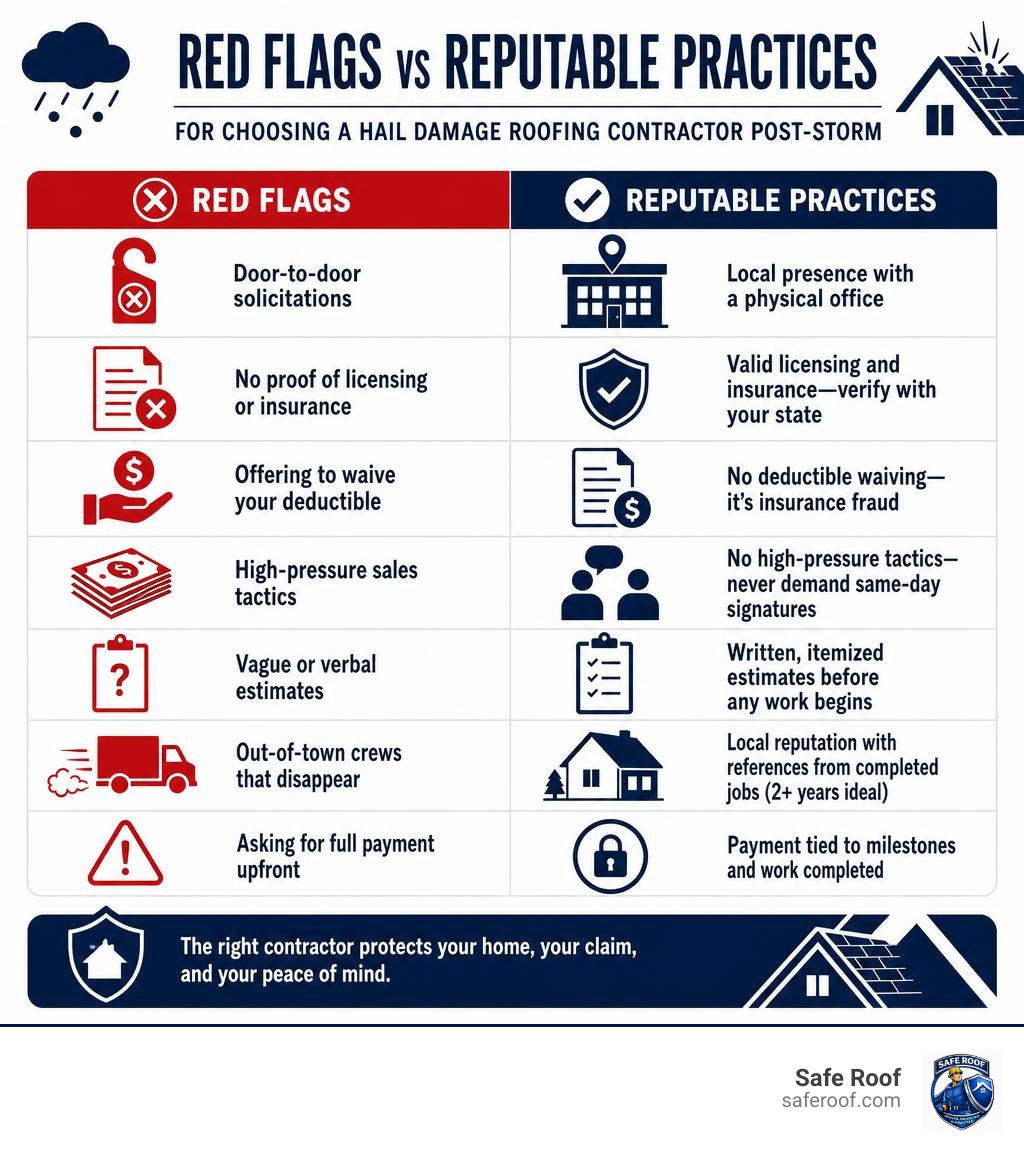
When you need a hail damage roofing contractor after a major storm, the most important thing you can do is hire a licensed, local professional from a trusted local roofing company — not the first person who knocks on your door. For documented storm impacts, start with a professional hail damage roof repair assessment so the damage is inspected, photographed, and scoped correctly before water intrusion begins.
Here’s what to look for quickly:
- Local presence — a physical office, not a P.O. box or out-of-state number
- Valid licensing and insurance — verify directly with your state licensing board
- GAF or manufacturer certification — confirms access to enhanced warranties and current installation training from manufacturers such as GAF
- No deductible waiving — any contractor offering this is committing insurance fraud
- Written, itemized estimates — before any work begins
- References from completed jobs — at least two years old is ideal
- No high-pressure tactics — reputable contractors never demand same-day signatures
After a major hailstorm, your neighborhood will likely be flooded with out-of-state contractors offering fast, cheap repairs. Some will leave before the work is done. Others will disappear entirely after collecting payment. Studies show that storm chasers leave roughly 30% of jobs incomplete or with unresolved warranty issues — a costly problem for homeowners who thought they were getting a deal.
The stakes are real. Hail damage left unrepaired can lead to leaks within 6 to 12 months, and repair costs can increase by up to 300% when water intrusion goes unaddressed. Choosing the right hail damage roofing contractor from the start protects both your home and your insurance claim.
I’m Jacob Ortiz, owner of Safe Roof, a GAF-certified roofing contractor serving homeowners across Southern Oklahoma and North Texas — two of the most hail-exposed markets in the country. Over the course of my career as a hail damage roofing contractor, I’ve helped hundreds of homeowners navigate post-storm repairs, insurance claims, and the pressure tactics of predatory storm chasers.
Learn more about hail damage roofing contractor:
Local Roofing Contractor vs. Storm Chaser: What is the Difference?
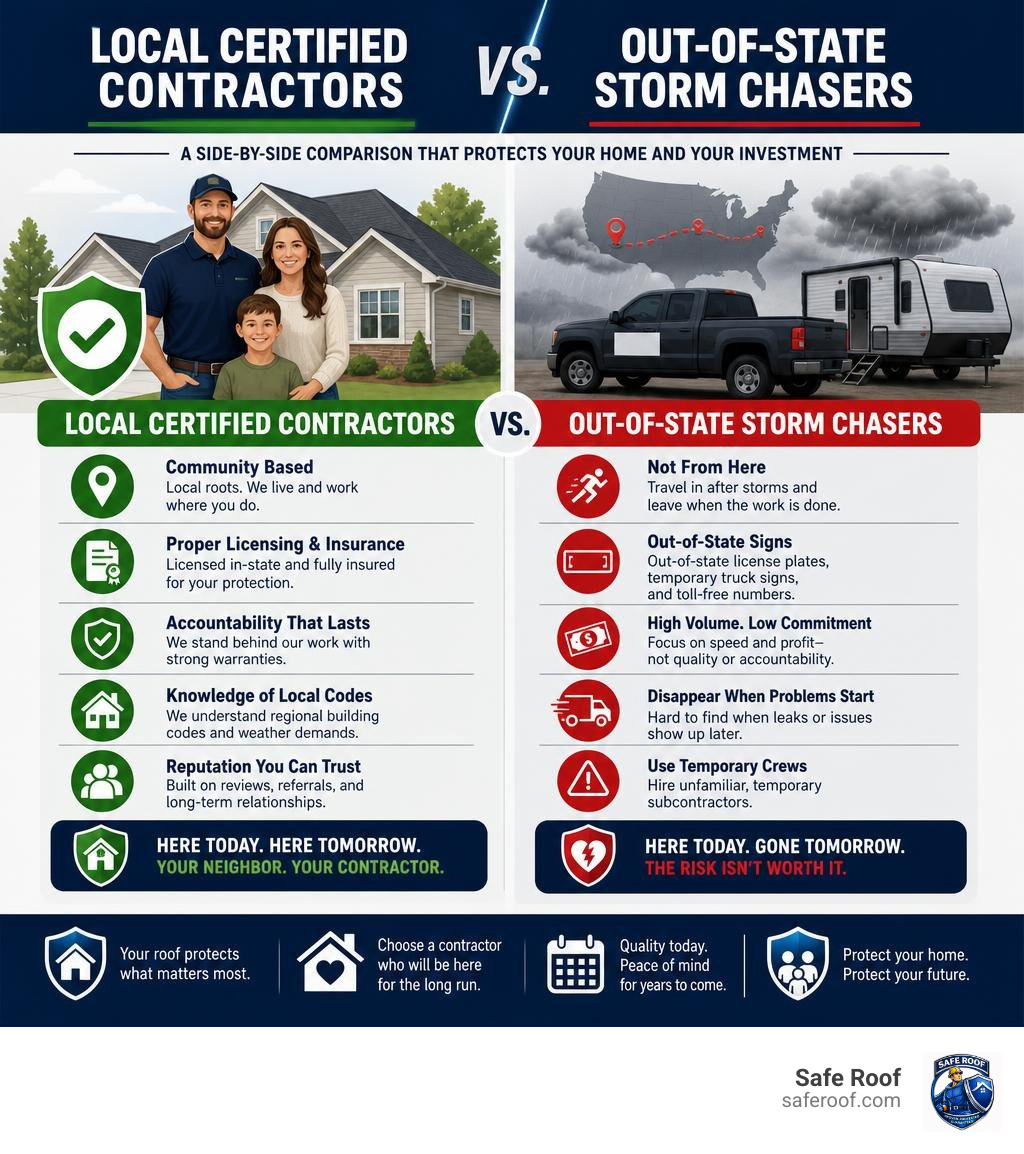
A local roofing contractor provides permanent accountability; a storm chaser provides temporary labor after a weather event. Understanding this difference is the first line of defense for any homeowner in Texas or Oklahoma. While both types of companies may offer to replace your roof, their business models, quality of work, and long-term accountability could not be more different.
Local Accountability
A local roofing contractor is an established business with deep roots in your community. We live, work, and raise our families in the same areas we service, from the busy DFW Metroplex down to Southern Oklahoma. Because our business relies heavily on word-of-mouth referrals and community trust, we maintain permanent physical offices, local phone numbers, and transparent business registrations.
When you work with a local contractor, you are partnering with someone who understands regional building codes, local wind speed requirements, and the unique weather patterns of North Texas and Central Oklahoma. More importantly, we are still here to honor our workmanship warranties five, ten, or fifteen years down the road. Local contractors retain roughly 75% of post-storm business in their communities because homeowners value this long-term accountability. For homeowners with widespread exterior damage, local storm damage roofing services provide inspection, documentation, repair planning, and warranty support from one accountable team.
Storm Chasers
In contrast, storm chasers are transient, out-of-state entities that track severe weather patterns across the United States. When a major hailstorm hits a city like Oklahoma City OK or Plano TX, these companies quickly move in, set up temporary operations, and flood neighborhoods with door-to-door sales representatives.
You can easily spot storm chasers by their out-of-state license plates, temporary magnetically attached truck signs, and toll-free or out-of-area phone numbers. Their entire model is built on high-volume, rapid-turnaround repairs. They hire temporary, local subcontractors to install roofs as quickly as possible, pocket the insurance payouts, and vanish once the storm season ends. If your roof develops a major leak six months later, these companies are long gone, leaving you with a voided warranty and expensive secondary damage.
To prevent these headaches, it is crucial to recognize immediate storm impacts and coordinate a professional hail damage roof repair before hidden moisture begins rotting your roof decking.
Red Flags to Watch For When Selecting a Hail Damage Roofing Contractor
As you evaluate potential contractors to restore your home, keeping an eye out for specific warning signs can save you thousands of dollars and prevent legal trouble.
Deductible Waiving
If a contractor offers to “absorb,” “waive,” or “reimburse” your insurance deductible, walk away immediately. While this might sound like a helpful financial shortcut, it is a major form of insurance fraud. Under Texas House Bill 2102 (and similar laws in Oklahoma), it is a Class A misdemeanor for a contractor to pay or waive a policyholder’s deductible.
To make up for the “free” deductible, dishonest contractors often submit inflated material invoices to the insurance company or use cheap, substandard materials on your home. A reputable hail damage roofing contractor will always require proof of deductible payment and provide transparent, itemized invoicing. If you need help understanding what your carrier requires, use professional insurance claims assistance instead of relying on a contractor who promises illegal savings.
High-Pressure Sales Tactics
Be wary of door-to-door solicitors who pressure you to sign a “contingency agreement” or “authorization form” before your insurance adjuster has even stepped foot on your property. These high-pressure sales reps often claim that “spots are filling up fast” or that you must sign immediately to lock in a special price. In reality, these agreements often legally bind you to use their company for the entire replacement, stripping you of your right to choose a qualified local partner once the insurance claim is approved.
Cash-Only Demands & Large Upfront Deposits
A legitimate roofing contractor will never demand cash-only payments or ask for a massive upfront deposit before any materials are delivered to your home. While it is standard to pay a portion of the project cost once materials arrive on-site, demanding full payment or a large deposit upfront is a classic sign of a scam. Many homeowners have handed over thousands of dollars to transient contractors, only for the company to disappear without ever delivering a single shingle.
Lack of Physical Office
Always verify that the contractor has a physical, brick-and-mortar office in your region. Be highly skeptical of companies that list a P.O. box, a temporary shared workspace, or a hotel address as their primary place of business. If they do not have a permanent office in areas like Fort Worth TX, Prosper TX, or Ardmore OK, they lack the local infrastructure required to handle complex municipal permits, material deliveries, and long-term warranty support.
Educating yourself on how to spot real hail damage is your best defense against fabricated damage claims by predatory, out-of-town solicitors.
Comparing Local Certified Contractors vs. Storm Chasers
| Criteria | Local Certified Contractor (Safe Roof) | Storm Chaser Roofing Company |
|---|---|---|
| Physical Address | Permanent local office in Texas/Oklahoma | P.O. Box, hotel room, or temporary shared workspace |
| Workmanship Warranty | Multi-year, locally backed workmanship warranties | Vague, short-term, or completely unhonored warranties |
| Manufacturer Certifications | Certified (e.g., GAF Master Elite or TAMKO Pro) | Uncertified; ineligible for extended manufacturer warranties |
| Insurance Compliance | Strictly adheres to state laws; never waives deductibles | Frequently offers to illegally “waive” or “absorb” deductibles |
| Local References | Verifiable local projects completed at least 2 years ago | Out-of-state references or non-verifiable online reviews |
How a Reputable Contractor Handles Insurance Claims
Navigating a homeowners insurance claim after a severe storm can feel overwhelming. A professional, experienced hail damage roofing contractor acts as your guide, ensuring the process is handled legally, transparently, and thoroughly.
Insurance Coordination
It is important to understand the legal and professional boundaries of working with your insurance carrier. A roofing contractor is not a public adjuster. We cannot legally negotiate your policy terms or settle your claim.
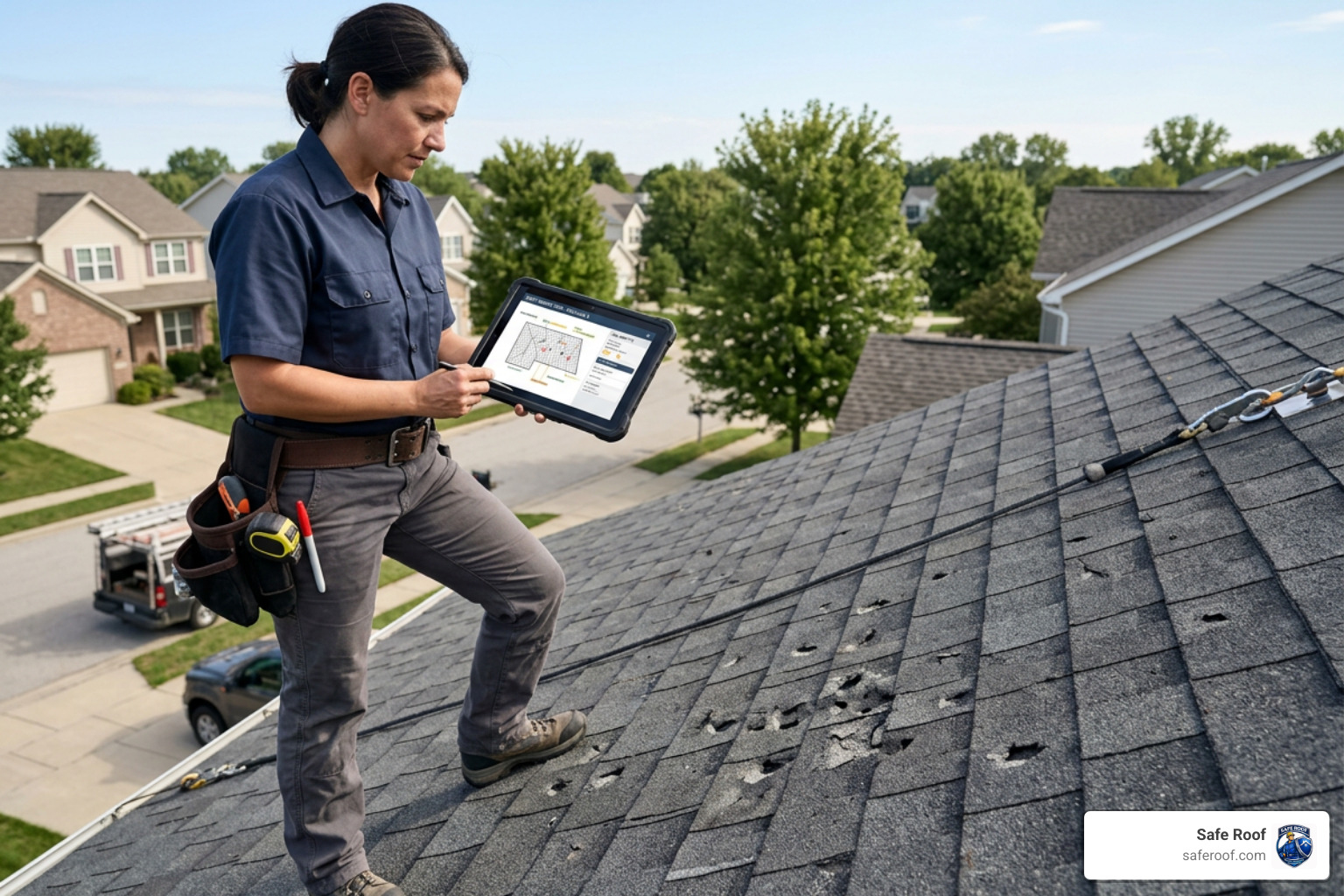
However, we can provide the precise, technical documentation your insurance carrier needs to evaluate your loss. This includes detailed physical measurements, high-resolution photo evidence, and itemized scopes of work utilizing industry-standard estimating software. This is the core purpose of compliant insurance claims assistance: documenting roof damage accurately without misrepresenting policy coverage.
Adjuster Meetings
One of the most valuable services a reputable contractor provides is meeting your insurance adjuster on-site during the official inspection. When we stand on the roof alongside the adjuster, we can point out subtle, easily overlooked damage, such as micro-bruising on asphalt shingles or dented metal flashing. This collaborative approach ensures that all eligible storm damage is documented in the initial report, preventing delays and reducing the need for back-and-forth negotiations later.
Detailed Documentation
Professional storm damage restoration requires exhaustive documentation. We utilize advanced tools like satellite roof mapping and digital photo evidence to build a comprehensive damage report. If you are dealing with a whole-property event that has damaged your gutters, windows, and siding, we document every affected surface to ensure your insurance carrier has a complete, accurate picture of the loss.
For instance, homeowners in Dallas and Fort Worth often face extensive exterior damage that goes far beyond the shingles themselves.
Supplement Claims
It is incredibly common to discover hidden structural issues — such as rotten decking, deteriorated underlayment, or code-compliance issues — once the old shingles are completely torn off. When this happens, a reputable contractor does not cut corners or cover up the problem.
Instead, we document the newly uncovered damage with photos and submit an official supplement claim to your insurance carrier. This ensures the repairs are completed correctly to local building codes, and that the insurance company covers the additional necessary costs.
Navigating this complex process is much simpler when you have access to professional insurance claims assistance to maximize your policy coverage and protect your home investment.
How to Verify Your Hail Damage Roofing Contractor Credentials
Before you sign any contract or authorize work, take the time to verify the contractor’s professional credentials:
- GAF Certification: Working with a GAF-certified roofing contractor is one of the best ways to protect your investment. Only a small percentage of roofing companies nationwide achieve GAF Master Elite status. This certification allows us to offer enhanced 50-year manufacturer warranties, giving you long-term peace of mind. Homeowners can also review manufacturer standards directly through GAF roofing resources.
- Licensing and Registration: Always verify state-specific compliance. While Texas does not have a mandatory state-wide roofing license, reputable contractors register with the Roofing Contractors Association of Texas (RCAT). In Oklahoma, roofing contractors must register with the Oklahoma Construction Industries Board (CIB). Always ask for their active registration number and verify it directly on the state database.
- General Liability Insurance: Ask the contractor to have their insurance carrier send an active certificate of general liability and workers’ compensation insurance directly to you. This protects you from financial liability if a worker is injured on your property or if your home is accidentally damaged during the construction process.
For a smooth and secure experience, follow our step-by-step guidelines on hiring a hail damage roof contractor who is fully licensed, insured, and certified in your specific area.
Understanding Hail Damage Across Different Roofing Materials
Hail does not affect all roofs the same way. Different materials exhibit unique damage characteristics that require specialized inspection techniques.
Asphalt Shingles
Asphalt shingles are the most common residential roofing material in North Texas and Southern Oklahoma. When hail strikes an asphalt shingle, it knocks away the protective mineral granules, exposing the dark asphalt layer underneath.
Over time, UV rays from the sun degrade this exposed asphalt, causing the shingle to become brittle and leak. Severe hail can also cause circular bruising and micro-fractures in the underlying fiberglass mat, destroying the shingle’s structural integrity. Major manufacturers such as Owens Corning Roofing and CertainTeed residential roofing publish product specifications that help contractors match shingle performance, warranty coverage, and impact-resistance options to the roof system. If you live in areas like Collin County, getting a professional assessment of hail damage roof repairs in Plano is vital to catching these issues early.
Metal Roofing
Many homeowners in rural Oklahoma and Texas choose metal roofing for its durability and energy efficiency. While metal roofs rarely leak immediately after a hailstorm, they are highly susceptible to cosmetic denting and dimpling.
However, severe hail can cause structural damage, such as buckling panels, loosened fasteners, or cracked protective coatings. If the protective paint layer is fractured, the metal will eventually rust and corrode, leading to premature failure.
Tile and Slate
Tile and slate are premium, long-lasting roofing materials, but they are brittle. High-velocity hail can cause star cracks, spalling, and shattered tiles. Even a single cracked tile can allow wind-driven rain to penetrate the underlayment, leading to hidden rot and mold in your attic.
Understanding the long-term risks of ignoring minor hail damage on your roof will help you determine when immediate action is required to prevent water intrusion.
When to Repair vs. Replace with a Certified Hail Damage Roofing Contractor
Deciding whether your roof needs a localized repair or a complete replacement depends on several critical factors:
- Percentage of Damaged Squares: If hail damage is widespread across multiple slopes (typically exceeding 8 to 10 impacts per 100 square feet), a full replacement is usually recommended and covered by insurance.
- Age of the Roof: If your asphalt shingle roof is more than 15 to 20 years old, the materials are already brittle and prone to cracking. Attempting to repair individual shingles on an aging roof often causes more damage to the surrounding shingles.
- Wind-Driven Rain Intrusion: If the storm has lifted shingle tabs or damaged the underlayment, water can easily bypass the shingles, making a full replacement necessary to restore the home’s water-tight seal.
We strictly adhere to the National Roofing Contractors Association (NRCA) standards for storm damage classification. These professional protocols ensure that our damage assessments are accurate, objective, and aligned with what insurance adjusters expect.
If your roof has suffered extensive structural compromise, we can help you determine when localized storm damage warrants a complete, high-quality roof replacement.
Immediate Steps to Take After a Hailstorm
If a severe storm has recently swept through your area, taking these immediate steps will help protect your property and streamline your insurance claim.
Step 1: Document the Date and Time
Record the exact date and time of the storm event. Insurance companies track weather data closely, and having the precise date of the storm helps verify your claim.
Step 2: Visual Inspection
Perform a safe visual inspection from ground level. Take clear photos of any obvious roof damage, dented gutters, damaged window screens, shredded landscaping, and dented vehicles. Do not climb onto the roof yourself; leave that to the professionals. If you are unsure what counts as storm impact, review how professionals identify real hail damage on a roof before speaking with a door-to-door solicitor.
Step 3: Emergency Tarping
If you have active leaks inside your home, take immediate steps to mitigate further water damage. Most insurance policies require homeowners to make temporary repairs to prevent secondary damage. We provide rapid emergency tarping as part of our storm damage roofing services to keep your home safe while your claim is processed.
Step 4: Schedule a 22-Point Inspection
Partner with a trusted, local GAF-certified contractor for a comprehensive, physical roof assessment. We will provide a detailed damage report, high-resolution photos, and an itemized estimate to submit to your insurance carrier.
For a stress-free experience, consult our beginners guide to insurance roof claims to help you navigate the post-storm timeline with confidence.
Frequently Asked Questions About Hail Damage Roofing
How long do I have to file a hail damage insurance claim in Texas and Oklahoma?
In Texas and Oklahoma, most standard homeowners insurance policies require hail damage claims to be filed within one to two years from the date of the storm event, though specific policy terms and state-declared disasters can alter these deadlines.
In Texas, the Texas Insurance Code governs claim-filing deadlines, and most policies enforce a strict one-year limit from the date of loss. In Oklahoma, the statute of limitations for property damage claims is typically two years, but individual policy terms may require prompt notice within one year. We highly recommend filing your claim as soon as possible after a storm, as weather evidence becomes much harder to establish over time. A contractor providing insurance claims assistance should help document the roof condition, storm date, photos, and repair scope without acting as a public adjuster.
Can a contractor legally waive my insurance deductible?
No, it is illegal for a roofing contractor to waive, discount, or pay a homeowner’s insurance deductible. In Texas (under House Bill 2102) and Oklahoma, doing so constitutes Class A misdemeanor insurance fraud for both the contractor and the policyholder.
Reputable contractors will always require proof of deductible payment, such as a bank transfer or credit card receipt, and provide transparent, itemized invoicing to ensure full compliance with state laws and insurance guidelines.
What does hidden hail damage look like on asphalt shingles?
Hidden hail damage on asphalt shingles typically manifests as micro-bruising on the underside of the fiberglass mat, subtle granule displacement that accelerates UV degradation, and micro-fractures that compromise the shingle’s water-shedding capabilities over time.
Because this damage is often invisible from the ground and may not cause immediate leaks, a professional physical hand-testing inspection and infrared moisture detection are required to identify latent storm damage before it leads to wood rot and structural failure. Homeowners can compare visible symptoms against this guide on how to spot real hail damage before scheduling a full inspection.
Conclusion
The Safe Roof Advantage
As a premier GAF-certified roofing contractor, Safe Roof specializes in residential and commercial storm restoration across Texas and Oklahoma. Whether you need an inspection in the DFW Metroplex or down in South Oklahoma, we bring the local knowledge, technical expertise, and dedication to quality that your home deserves.
Unmatched Protection
We are proud to offer our customers enhanced 50-year manufacturer warranties, full-service insurance claims coordination, and expert storm damage restoration. We never cut corners, we never waive deductibles, and we are always here to support our local communities long after the storm clouds clear.
Contact our team today for certified storm damage roofing services to protect your home. If your inspection shows widespread shingle failure, we can also explain whether a full roof replacement is the safest long-term solution.
Call to Action
Do not wait for a minor leak to turn into an expensive repair. Contact Safe Roof today to schedule your complimentary, professional 22-point storm damage inspection.