What You Need to Know Before Filing an Insurance Roof Claim
Filing an insurance roof claim after a storm can feel overwhelming — but understanding the basics before you start with a trusted local roofing company can mean the difference between a full payout and leaving thousands of dollars on the table.
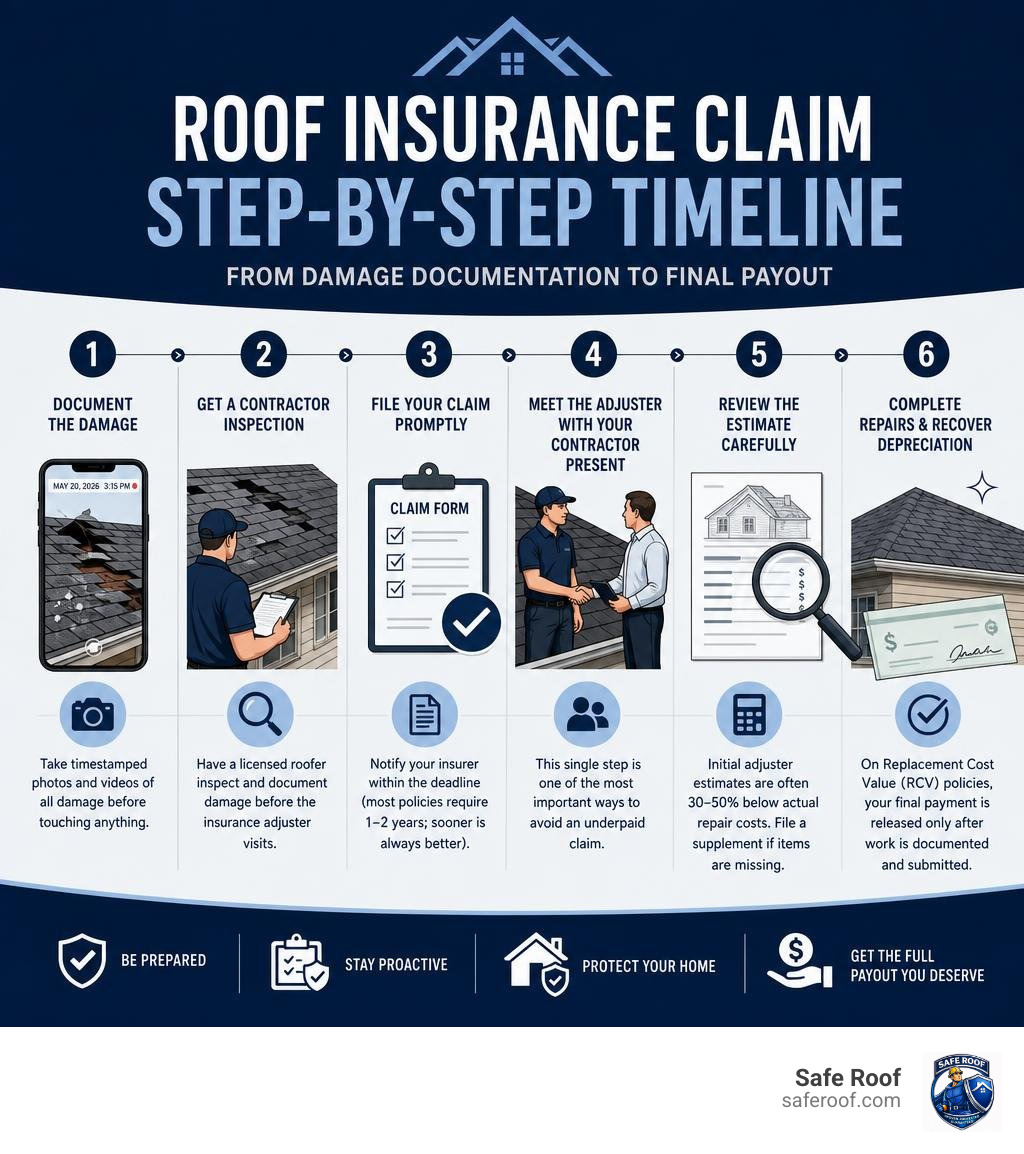
Here’s a quick overview of how a roof insurance claim works:
- Document the damage — Take timestamped photos and videos of all damage before touching anything.
- Get a contractor inspection — Have a licensed roofer inspect and document damage before the insurance adjuster visits.
- File your claim promptly — Notify your insurer within the deadline (most policies require 1–2 years; sooner is always better).
- Meet the adjuster with your contractor present — This single step is one of the most important ways to avoid an underpaid claim.
- Review the estimate carefully — Initial adjuster estimates are often 30–50% below actual repair costs. File a supplement if items are missing.
- Complete repairs and recover depreciation — On Replacement Cost Value (RCV) policies, your final payment is released only after work is documented and submitted.
In 2024, roof repair and replacement costs across the U.S. reached nearly $31 billion — a 30% increase since 2022 — driven almost entirely by wind and hail storms. Those same storms account for over half of all residential roofing claims filed each year. Yet despite that volume, initial insurance estimates routinely underpay homeowners who don’t know how to push back.
The stakes are real. A missed line item, a late filing, or letting an adjuster inspect your roof alone can cost you thousands of dollars in legitimate coverage.
Whether you’re dealing with hail damage, wind damage, or a leak that appeared the morning after a storm, this guide walks you through everything you need to know — from reading your policy to getting your final check. If you’re in Southern Oklahoma or North Texas, Safe Roof is here to help you every step of the way.
I’m Jacob Ortiz, owner of Safe Roof, a GAF-certified roofing contractor based in Ardmore, Oklahoma, with years of hands-on experience helping homeowners navigate the insurance roof claim process after hail and wind damage across Texas and Oklahoma. In this guide, I’ll share exactly what I’ve seen work — and what I’ve seen cost homeowners money they didn’t have to lose.
Explore more about insurance roof claim:
What Types of Damage Are Covered Under an Insurance Roof Claim?
Homeowners insurance is designed to protect your property from sudden, accidental physical losses. It is not a maintenance plan. Knowing what qualifies as a covered peril under your specific policy is key to getting your claim approved.
Covered Perils
Standard homeowners policies (such as an HO-3 policy) typically cover roof damage caused by the following events:
- Wind Damage: High winds can tear shingles completely off your roof, lift flashing, and break the water-resistant seals between shingle courses.
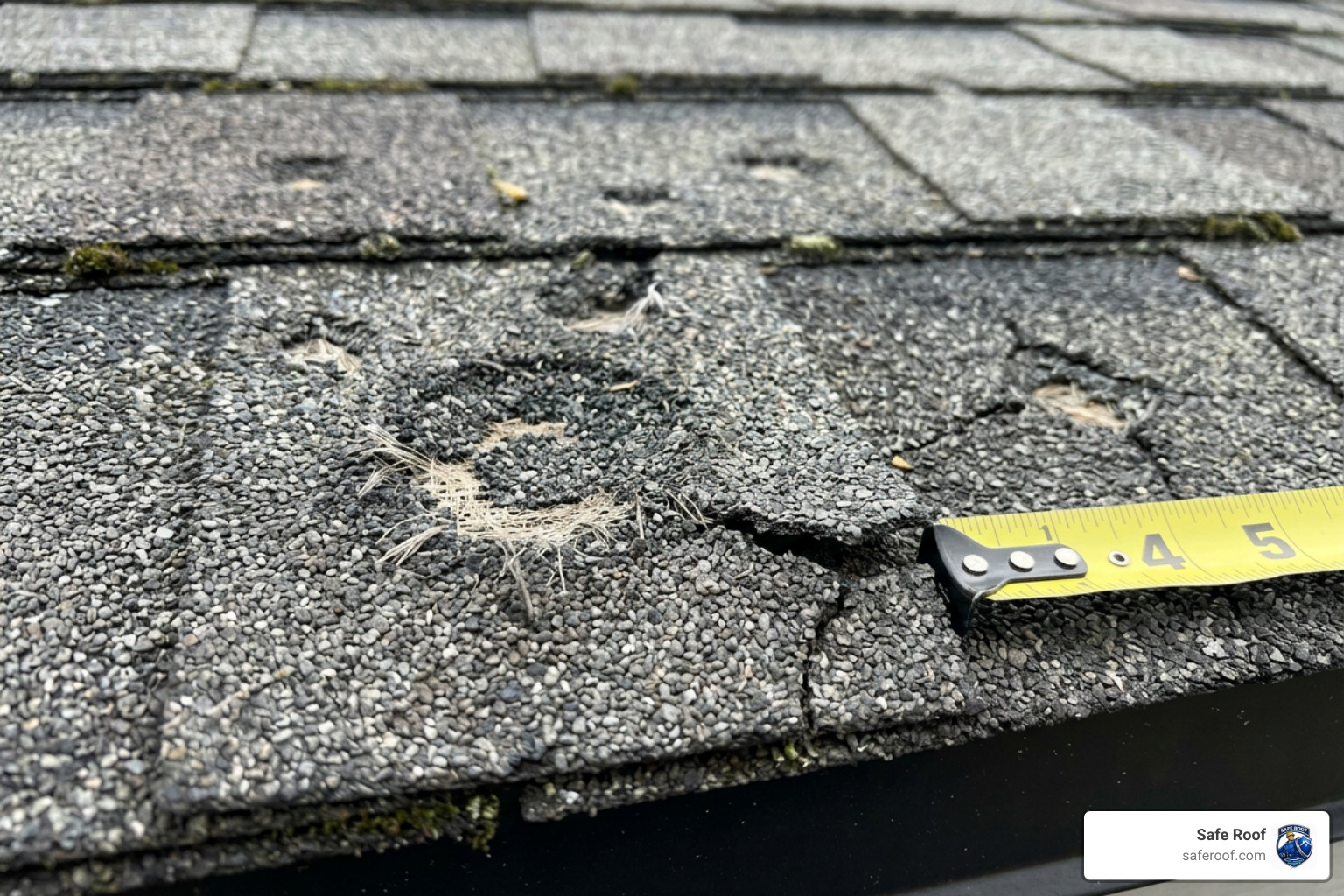
- Hail Damage: Hailstones bruise the asphalt mat of a shingle, causing immediate or eventual granule loss. This exposes the underlying fiberglass layer to UV rays, which rapidly degrades the roof.
- Fallen Trees and Debris: If a storm knocks a tree limb onto your home, the structural damage to your decking, rafters, and shingles is covered.
- Weight of Ice and Snow: Severe winter storms that cause structural collapses are covered under standard open-peril lines of coverage.
To understand how your specific policy handles these events, you can consult the Texas Department of Insurance roof coverage guidelines. If you suspect your roof has suffered from any of these issues, explore our specialized storm damage roofing services to see how we handle storm-related restorations.
What Is Not Covered: Cosmetic Exclusions and Wear and Tear
Insurance carriers do not cover gradual deterioration. If your roof is simply old, leaking due to neglected maintenance, or showing normal wear and tear, your claim will be denied.
Additionally, many modern policies in Texas and Oklahoma now include cosmetic damage exclusions. This means if hail dents your metal roof or bruises your shingles but does not compromise the roof’s ability to shed water, the insurance company may refuse to pay for a replacement.
Knowing whether your roof needs a simple roof repair or a complete roof replacement is the first step toward resolving these issues before water damages the interior of your home.
Step-by-Step Process for Filing a Roof Claim
Filing an insurance roof claim requires a methodical approach. Doing things in the wrong order can result in lower payouts or flat-out denials.

Here is the exact step-by-step process we recommend for homeowners in the DFW Metroplex, North Texas, and Southern Oklahoma:
- Safety First: Never climb onto a damaged roof yourself. Leave high-altitude inspections to licensed, insured professionals.
- Schedule a Professional Inspection: Before calling your insurance company, have a local roofing expert perform a comprehensive assessment.
- Review Your Policy: Check your declarations page to confirm whether you have RCV or ACV coverage and identify your exact wind/hail deductible.
- File the Claim: Contact your insurance company’s claims department online or by phone. Provide the exact date of the storm and your contractor’s inspection report.
- Prepare for the Adjuster: Schedule a time for the insurance adjuster to visit. Ensure your roofing contractor is scheduled to meet them on-site.
- Review the Scope of Loss: Once the adjuster provides their estimate, compare it line-by-line with your contractor’s bid.
- Submit Supplements: Have your contractor submit documentation for any missed items, code upgrades, or hidden damage.
- Complete Repairs and Recover Depreciation: Hire your contractor to perform the work, submit the final invoice, and collect your remaining insurance funds.
For homeowners in Carter County or South Oklahoma, understanding regional regulations is key to ensuring your filing timeline complies with state insurance laws. If you are ready to begin, schedule one of our comprehensive professional roof inspections to get an accurate baseline of your roof’s condition.
How to Document Damage Before Filing Your Insurance Roof Claim
Your insurance company relies on hard evidence. To build an airtight case, you must document the damage thoroughly before anyone touches your roof:
- Take Ground-Level Photos: Walk around your property and photograph any fallen shingles, damaged metal gutters, dented window screens, or damaged fences. These serve as collateral evidence of a storm event.
- Document Interior Leaks: If water is dripping into your attic or living spaces, take photos of the active leaks, water stains on ceilings, and any ruined drywall.
- Establish the Date of Loss: Note the exact date and approximate time the storm hit. You can use local weather reports or online hail maps to verify that severe weather occurred in your area on that day.
If you have experienced a major hail storm in Collin County, TX, or Central Oklahoma, capturing this evidence immediately is vital for securing a successful hail damage roof repair claim.
Preparing for the Adjuster Inspection with a Certified Contractor
The on-site adjuster inspection is the most critical event in the entire claims process. The insurance adjuster’s job is to inspect the roof and write an estimate based on what they see. However, adjusters are often busy, and they may miss subtle signs of damage or overlook local building code requirements.
Having a certified roofing contractor on the roof with the adjuster changes the dynamic completely. Your contractor acts as your advocate, pointing out bruised shingles, lifted flashing, and code-required items like drip edges or ice-and-water shields.
Before your adjuster arrives, read about what to expect during a contractor inspection so you are fully prepared.
If you live in North Texas, working with a local contractor who understands municipal codes in Plano, Celina, or Prosper ensures your claim is documented accurately for adjusters.
Understanding Your Policy: RCV vs. ACV and Deductibles
How much out-of-pocket money you will pay for your roof replacement depends entirely on two terms in your policy: Replacement Cost Value (RCV) and Actual Cash Value (ACV).
RCV vs. ACV Coverage Mechanics
- Replacement Cost Value (RCV): This is the gold standard of roof coverage. An RCV policy pays the full cost to repair or replace your roof at today’s market prices, minus your deductible. The insurance company pays this in two stages: an initial Actual Cash Value check, followed by a “recoverable depreciation” check once the repairs are completed and invoiced.
- Actual Cash Value (ACV): An ACV policy only pays for what your roof was worth at the exact moment of the storm. The insurance company calculates the replacement cost and then subtracts depreciation based on the age and wear of your roof. You must pay the difference out of pocket to get a new roof.
| Coverage Feature | Replacement Cost Value (RCV) | Actual Cash Value (ACV) |
|---|---|---|
| Payout Basis | Today’s current cost to replace the roof | Depreciated value of the roof based on age |
| Payment Structure | Two checks (Initial ACV + Recoverable Depreciation) | One check (No holdback released) |
| Out-of-Pocket Cost | Deductible only | Deductible + Accumulated Depreciation |
| Ideal For | Newer roofs and complete financial protection | Budget-conscious policies (higher risk) |
How Deductibles Affect Your Insurance Roof Claim Payout
Your deductible is the portion of the claim that you are legally responsible for paying. In Texas and Oklahoma, insurance companies rarely use flat-dollar deductibles (like $1,000) for storm damage. Instead, they use percentage deductibles based on the insured value of your home.
These deductibles typically range from 1% to 5% of your home’s dwelling coverage (Class A):
- If your home is insured for $400,000 and you have a 2% wind/hail deductible, your out-of-pocket cost is $8,000.
- If you have a standard $1,500 fixed deductible for other perils, it will not apply to wind and hail claims if your policy has a separate wind/hail percentage clause.
Note: In Texas and Oklahoma, it is illegal for a roofing contractor to waive, absorb, or find “creative ways” to cover your insurance deductible. Doing so constitutes class-three insurance fraud for both the contractor and the homeowner.
Common Mistakes That Lead to Denied or Underpaid Claims
Many legitimate claims get denied or heavily underpaid simply because of preventable errors made during the filing process.
To avoid leaving money on the table, watch out for these common pitfalls:
- Delaying the Filing Process: Most policies require you to report storm damage within one year of the date of loss. Waiting to see if your roof leaks before filing can result in a denied claim, as the carrier can argue the damage occurred during a different, undocumented weather event.
- Making Permanent Repairs Too Early: While you must mitigate further damage by placing a temporary tarp over active leaks, do not hire a company to replace shingles or rebuild sections of the roof before the adjuster has inspected the damage.
- Accepting the First Lowball Estimate: Initial adjuster estimates are frequently 30% to 50% below the actual cost of construction. Adjusters often use generic national averages in pricing software like Xactimate and omit essential line items like waste percentages, starter shingles, and ridge caps.
- Overlooking Building Code Upgrades: If your local municipality in McKinney, TX, or Oklahoma City, OK, requires specific upgrades (like ice-and-water shields or drip edges) that were not on your original roof, your policy must include “Ordinance and Law” coverage for the insurer to pay for them.
By following proper hail damage roof restoration steps, you can ensure your documentation is complete and your supplement requests are approved without delay.
Frequently Asked Questions About Roof Insurance Claims
Does homeowners insurance cover a roof leak?
Yes, but only if the leak is caused by a sudden, accidental covered peril, such as a windstorm tearing off shingles or hail puncturing your roof’s underlayment. Insurance will not cover leaks that result from wear and tear, lack of preventative maintenance, or an old roof that has reached the end of its natural lifespan.
Can I choose my own roofing contractor for repairs?
Absolutely. As a homeowner, you have the legal right to hire any licensed, insured contractor you trust. You are never obligated to use the insurance company’s “preferred” or “recommended” contractors.
When choosing, look for a local team with manufacturer-backed credentials, such as a GAF-certified installer. If you are navigating a claim with a major national carrier like State Farm, having an experienced contractor who understands carrier-specific estimating guidelines is essential for a successful outcome.
When should I hire a public adjuster or attorney?
You should consider hiring a public adjuster or an insurance attorney if your insurance company flatly denies a valid claim, refuses to pay for a full replacement when repairs are structurally impossible, or acts in bad faith.
Public adjusters typically charge a percentage (10% to 20%) of your final settlement. Alternatively, you can invoke the appraisal clause in your policy, which allows an independent panel of appraisers to resolve disputes over the value of your loss without going to court.
Conclusion
Navigating an insurance roof claim does not have to be a stressful battle. By documenting the damage early, understanding your policy’s RCV or ACV terms, and having a trusted contractor advocate on your behalf, you can protect your home and ensure your insurer pays every dollar you are legally owed.
At Safe Roof, we specialize in storm restoration and insurance claims assistance across Texas and Oklahoma. As a GAF-certified roofing contractor, we offer enhanced 50-year warranties to give you ultimate peace of mind. Whether you are in Dallas, Fort Worth, Plano, Ardmore, or Oklahoma City, we are ready to help you restore your home.
If you have storm damage or need help navigating your insurance claim, contact our specialists today for professional insurance claims assistance.