After a Storm Hits, Here’s What You Need to Know About Your Roof
A storm damage roof inspection is the single most important step you can take after severe weather tears through your area — and knowing what to look for can save you thousands of dollars.
Quick answer: What does a storm damage roof inspection involve?
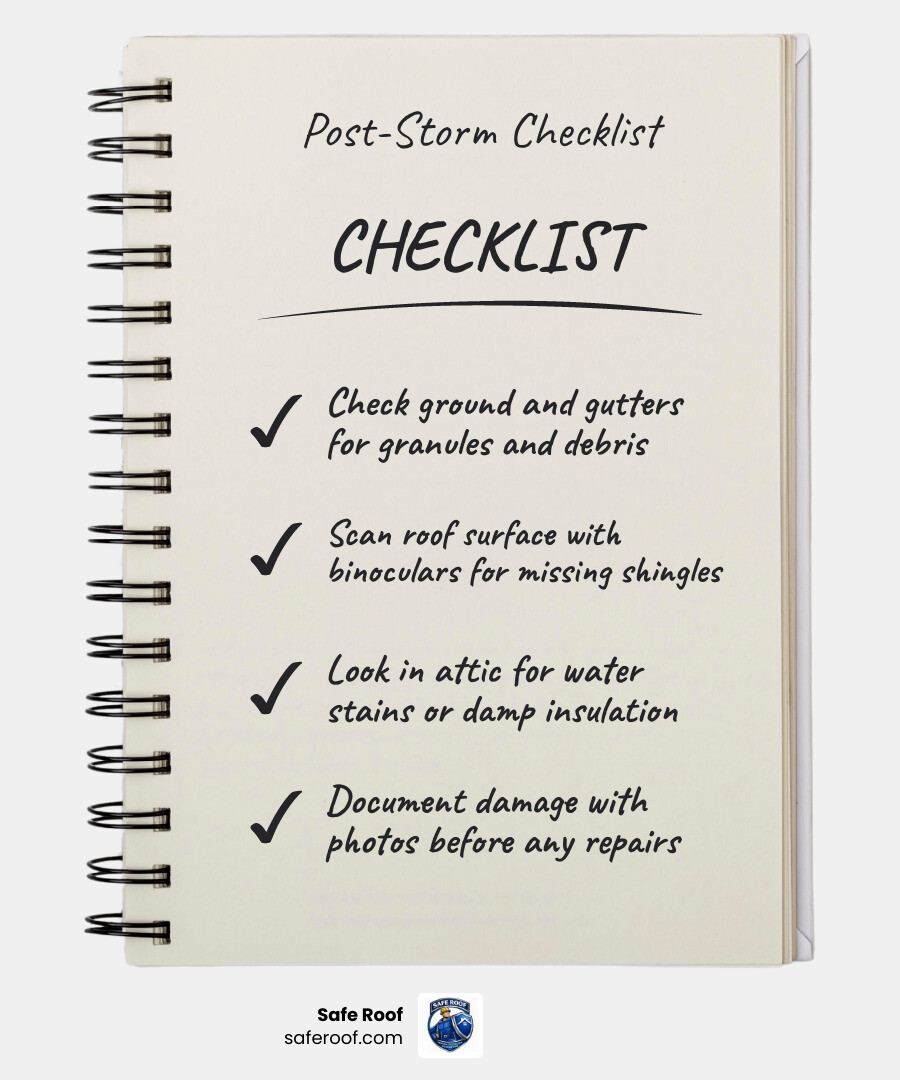
- Check the ground and gutters — Look for shingle granules, broken pieces, or displaced materials around your home
- Scan the roof surface from the ground — Use binoculars to spot missing shingles, lifted edges, or dented metal
- Inspect your attic and ceilings — Look for water stains, damp insulation, or musty odors
- Document everything — Photograph all visible damage before touching anything
- Call a licensed local contractor — Get a professional inspection before filing an insurance claim
Texas and Oklahoma sit in one of the most storm-battered regions in the country. Hail, high winds, and heavy rain are a seasonal reality — not a rare event. And every spring storm season, the same thing happens: damage goes undetected, small problems quietly grow into expensive repairs, and homeowners get caught off guard by contractors who don’t have their best interests in mind.
Here’s the hard truth: nearly 60% of homeowners delay roof inspections after storms, leading to far costlier repairs down the road. And damage that looks minor from the ground — or invisible entirely — can be silently shortening your roof’s lifespan or setting up a future leak.
That’s exactly why this guide exists. Whether you just heard hail hammering your roof last night or you’re not sure if last month’s storm left any real damage, you’ll find clear, honest answers here from the professional roofing services team at Safe Roof.
I’m Jacob Ortiz, owner of Safe Roof, a GAF-certified roofing contractor based in Ardmore, Oklahoma, with years of hands-on experience conducting storm damage roof inspections across Southern Oklahoma and North Texas. I’ve seen how hidden damage turns into major structural problems — and how the right inspection at the right time protects both your home and your insurance claim.
What is Considered Real Storm Damage to a Roof?
Real storm damage to a roof is defined as any physical or structural compromise caused by severe weather—such as hail, wind, heavy water flow, or falling debris—that reduces the roof’s lifespan or impairs its ability to keep water out.
Not all weather events leave obvious, gaping holes in your ceiling. In fact, most storm damage starts out incredibly subtle. Understanding the difference between normal wear-and-tear and actual storm-induced damage is crucial, especially if you plan to file an insurance claim.

Hail Impact and Bruising
Hail is responsible for approximately $1 billion in insured losses annually in the U.S., with roofs being the most commonly damaged component. When a hailstone strikes an asphalt shingle, it creates what roofers call a “bruise.” This is a soft spot where the protective outer granules have been knocked away, exposing the underlying fiberglass mat.
Over time, exposure to sunlight and rain degrades this exposed mat, leading to micro-fractures, leaks, and premature shingle failure. If you want to prevent long-term structural decay, you must address these impacts early. Learn more about hail damage roof repair to see how these bruises are professionally diagnosed and restored.
Wind Uplift and Creasing
High winds don’t just blow shingles completely off your roof; they also lift them. When strong winds get underneath a shingle, they break the sealant strip. The shingle lifts up, bends, and then settles back down.
From the ground, the shingle might look perfectly fine. However, the physical bending creates a horizontal crease across the top of the shingle where the granules have cracked off. Once that adhesive bond is broken, the shingle is highly vulnerable to water intrusion during the next rainstorm.
Water Intrusion and Debris Impact
Severe storms often bring heavy rain and flying debris, such as tree branches. Debris can puncture shingles, tear away protective flashing, or dent roof vents.
Meanwhile, heavy downpours test every weak spot on your roof. If your flashing is lifted or your shingles are cracked, water will find its way into your home’s structural framing. For a deep dive into what standard manufacturer guidelines recommend for evaluating these issues, review What certified experts look for during a storm damage inspection.
How to Safely Inspect Your Roof for Damage
The safest way for a homeowner to inspect a roof for storm damage is to keep their feet firmly planted on the ground. You should never climb onto a wet, steep, or potentially compromised roof after a severe storm.
Professional roof inspections after storms can identify up to 40% more damage than visual checks from the ground alone. However, a preliminary ground-level inspection is an excellent way to determine if you need to call in the professionals.

Step 1: The Ground-Level Visual Check
Walk around the entire perimeter of your home. Look closely at the ground, your lawn, and your deck. Are there split wood pieces, chunks of asphalt shingles, or metal flashing lying in your yard?
Next, look at your gutters and downspouts. If you see heavy piles of dark, sand-like granules spilling out of your downspouts, your shingles have suffered severe granule loss.
Step 2: Binocular Scanning
Grab a pair of binoculars and scan your roof from several angles. Look for:
- Missing, torn, or cleanly split shingles.
- Shingles that look buckled, curled, or lifted up.
- Dented metal vents, chimney caps, or valley flashing.
- Exposed underlayment (the black or gray felt layer under the shingles).
Step 3: The Interior Attic Check
Often, the clearest signs of roof damage are found inside your home. Grab a flashlight and head up to your attic. Look for damp insulation, water stains on the rafters or roof decking, and any active dripping. If you spot water damage or mold growth, it is a clear sign that your roof’s water barrier has been breached.
To protect your safety and ensure an accurate assessment, you should always schedule professional roof inspections rather than climbing a ladder yourself. If you are located in Southern Oklahoma, you might also ask: Do I need a roof inspection after an Oklahoma hailstorm? The answer is almost always yes, as hidden damage can rapidly shorten your roof’s lifespan in our volatile climate.
Signs of Damage Across Different Roofing Materials
Different roofing materials react uniquely to storm forces. While asphalt shingles bruise and lose granules, metal panels dent, and clay tiles shatter.
| Roofing Material | Primary Storm Threat | Key Signs of Damage to Look For |
|---|---|---|
| Asphalt Shingles | Hail & High Winds | Dark circular bruises, granule loss, lifted or missing shingles, horizontal creasing |
| Metal Roofing | Hail & Debris | Dents, loose or backed-out fasteners, scratched protective coatings, lifted seams |
| Clay/Concrete Tile | Hail & Heavy Debris | Star-shaped cracks, chipped edges, broken corners, completely shattered or missing tiles |
| Wood Shakes | Hail & Wind | Sharp splits along the wood grain, missing pieces, lifted shakes, mold or rot in split areas |
| Slate Tile | Hail & Debris | Clean fractures, broken corners, missing tiles, loose copper nails or hangers |
If you suspect any of these issues on your roof, finding the exact entry point of water is critical to preventing structural wood rot. Learn more about professional leak detection to see how modern technology pinpoint leaks behind walls and ceilings.
The Step-by-Step Storm Damage Roof Inspection Process
A professional storm damage roof inspection is a highly methodical process that goes far beyond a simple glance at your shingles. When our GAF-certified inspectors step onto your property, we follow a strict multi-point protocol to ensure every square inch of your roof system is thoroughly evaluated.
1. Perimeter and Ground Assessment
We begin by inspecting the perimeter of your home. We look for siding damage, dented window screens, damaged downspouts, and shingle debris in the yard. This initial step helps us establish the direction and severity of the storm’s impact.
2. Shingle and Surface Evaluation
Next, we access the roof safely using specialized safety gear. We examine the shingles section by section, checking for wind uplift, creasing, and hail bruising. We physically feel the shingles to locate soft spots or micro-fractures in the asphalt mat that cannot be seen from a distance.
3. Flashing and Penetration Inspection
Flashing is the metal material installed around chimneys, dormers, and roof valleys to direct water away from critical seams. We check all flashing to ensure it hasn’t been warped, lifted, or punctured by wind or debris. We also inspect the rubber boots around plumbing vents, as hail can easily crack them.
4. Gutter and Drainage Check
We inspect your gutters for major dents and heavy granule accumulation. If your gutters are choked with shingle granules, it indicates that your shingles have lost their primary defense against UV radiation and weather wear.
If you are dealing with high-wind damage, it is vital to secure loose shingles before the next rain system moves in. Learn more about wind damage roof repair to understand how wind-damaged roofs are structurally restored. For a complete look at standard industry checklists, you can also review the Storm damage roof assessment guidelines.
Navigating Insurance Claims and Avoiding Storm Chaser Scams
Filing an insurance claim for roof damage can feel overwhelming, but it doesn’t have to be. The key to a smooth, approved claim is prompt action and professional documentation.
Insurance claims for roof damage filed within 30 days of a storm are 25% more likely to be approved without dispute. This is because insurance companies can easily verify the weather events of that specific date, reducing the likelihood of disputes over “gradual wear and tear.”
Beware of “Storm Chasers”
After a major storm, out-of-state roofing companies—often called “storm chasers”—flood affected neighborhoods. They knock on doors, offer “free roofs,” and pressure homeowners into signing contracts on the spot.
The Danger of Storm Chasers:
- Poor Workmanship: They often use cheap materials and sub-contracted labor to complete jobs as quickly as possible.
- No Warranties: Once the storm season ends, they pack up and move to the next state. If your roof leaks six months later, they are nowhere to be found.
- Insurance Fraud: Some storm chasers promise to “cover your deductible.” In Texas and Oklahoma, absorbing or waiving an insurance deductible is strictly illegal and can land both the contractor and the homeowner in legal trouble.
Why a Local, Certified Contractor Matters
Working with an established, local GAF-certified contractor like Safe Roof ensures you are legally protected and receive the highest quality restoration. We live and work in the same communities we serve—from Ardmore, OK, to the DFW Metroplex—and our business relies on our local reputation.
Because we are GAF-certified, we can offer enhanced 50-year warranties that out-of-state storm chasers simply cannot match. If you need help documenting your damage and meeting with your insurance adjuster, get professional insurance claims assistance from our experienced team. For those living south of the Red River, make sure you understand your local rights by reading about Choosing a roofing contractor in Texas.
Frequently Asked Questions About Storm Damage
We hear a lot of questions from homeowners in Texas and Oklahoma after severe weather strikes. Here are clear, direct answers to help you make informed decisions about your home. If you suspect your roof needs immediate attention, you can learn more about roof repair services to see how we handle everything from minor leak patches to major structural fixes.
How soon should I schedule a storm damage roof inspection?
You should schedule a professional roof inspection within 24 to 48 hours after a storm, or as soon as it is safe to do so.
Acting quickly is essential for two reasons. First, it prevents minor issues—like a single lifted shingle—from turning into a major interior leak that ruins your insulation, drywall, and ceilings. Second, filing your insurance claim within the first 30 days significantly increases your chances of a hassle-free approval. If the damage is extensive and repairs are no longer viable, you can learn more about roof replacement options that fit your budget and timeline.
Can I perform a storm damage roof inspection myself?
No. While you can safely scan your roof from the ground using binoculars, you should never climb onto the roof to inspect it yourself.
Walking on a storm-damaged roof is highly dangerous, especially if there is hidden structural damage to the roof decking. Additionally, hail bruises and micro-fractures are incredibly difficult to spot if you are not trained to look for them. A GAF-certified inspector has the specialized safety gear, training, and moisture-detection tools required to perform a safe, accurate, and comprehensive assessment.
Will my homeowners insurance cover a total roof replacement?
Yes, your homeowners insurance will typically cover a total roof replacement if the damage was caused by a sudden, accidental storm event (like wind, hail, or a fallen tree) and the cost to repair the damaged sections exceeds the threshold for a full replacement.
However, insurance will not cover a replacement if the roof is simply old, poorly maintained, or suffering from gradual wear and tear. During our inspection, we provide a detailed, photo-documented report that clearly distinguishes storm damage from normal aging. We can also meet directly with your insurance adjuster on-site to ensure they see all qualifying damage, helping you secure the full coverage you are entitled to under your policy.
Conclusion
Your roof is your home’s first line of defense against the unpredictable and often violent weather of Texas and Oklahoma. When a major storm rolls through, taking quick, proactive steps to assess the damage is the best way to protect your property and your wallet.
Don’t let hidden leaks quietly destroy your home’s structure, and don’t let out-of-state storm chasers pressure you into questionable contracts. Trust a local, GAF-certified partner who will stand by their work for decades to come.
At Safe Roof, we specialize in high-quality residential and commercial storm restoration across North Texas and Southern Oklahoma. Backed by our industry-leading 50-year warranties and extensive insurance expertise, we make the entire restoration process simple, transparent, and stress-free.
Protect your home and secure your peace of mind. Schedule your storm damage roof inspection today with the trusted team at Safe Roof to connect with a local roofing expert right now!