What to Do When You Need a hail damage roof contractor
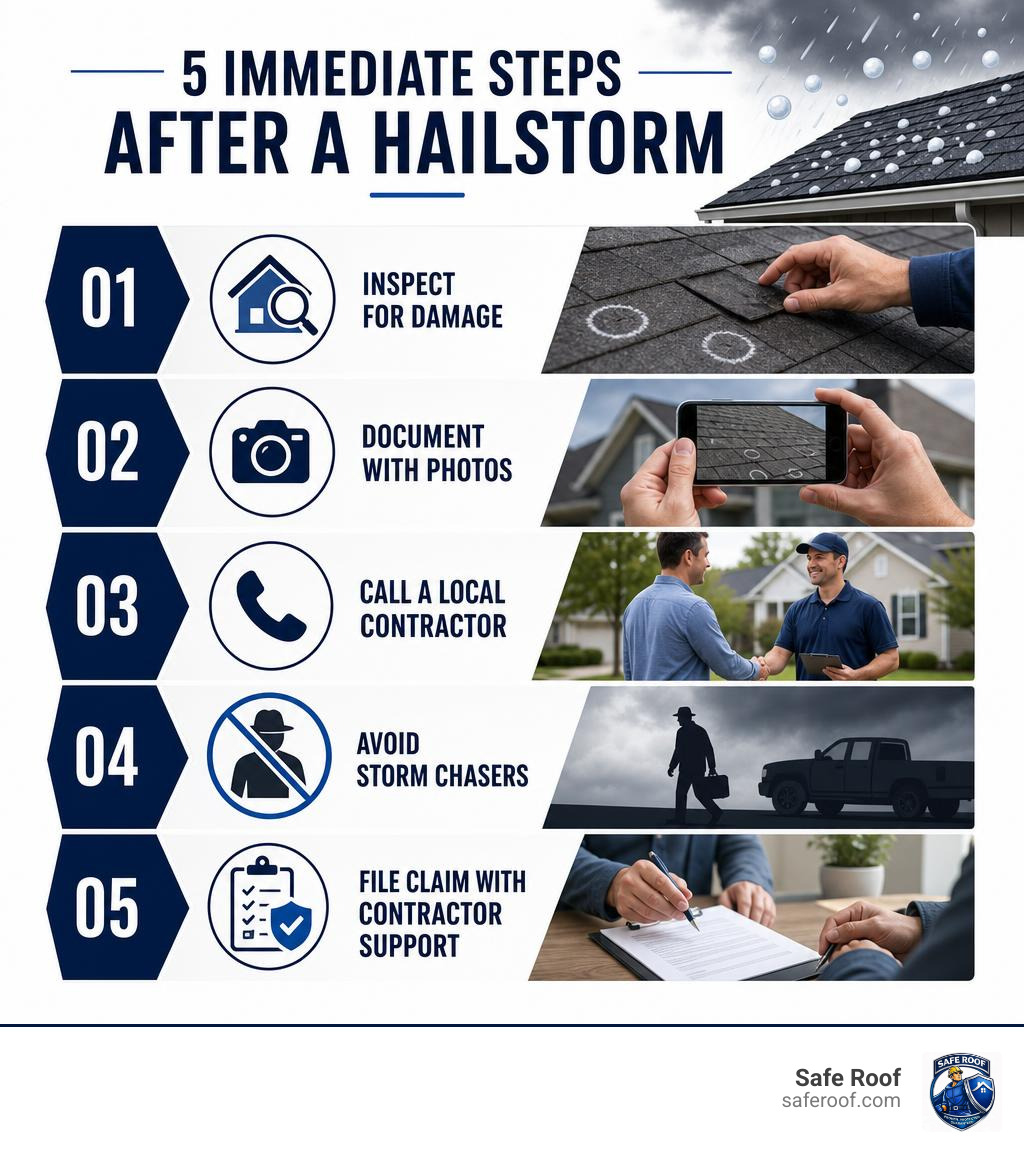
Finding a reliable hail damage roof contractor after a storm is one of the most important decisions you’ll make as a homeowner — and one of the easiest to get wrong. When you need professional guidance, partnering with a trusted local roofing company like Safe Roof ensures your property is protected. Here’s what to do, fast:
- Don’t call your insurance company first. Get a contractor inspection before filing a claim.
- Document everything. Photos and videos taken immediately after the storm strengthen your claim.
- Avoid door-knockers. Out-of-town storm chasers often disappear after collecting payment.
- Verify credentials. Look for licensed, locally rooted contractors with manufacturer certifications.
- Have your contractor meet the adjuster. Homeowners who do this receive settlements 20–40% higher on average.
Hail causes an estimated $1.5 billion in property damage across the United States every year, and your roof absorbs most of that impact. Even hailstones as small as one inch in diameter — roughly the size of a quarter — can bruise shingles, strip granules, and leave your home exposed to leaks, mold, and structural damage that only gets worse over time.
The problem isn’t just the storm. It’s what happens next. Contractors flood storm-hit neighborhoods. Insurance adjusters get backlogged. And homeowners — stressed and unsure — often make rushed decisions that cost them thousands.
That’s exactly what this guide is here to prevent. At Safe Roof, we’ve walked Southern Oklahoma and North Texas homeowners through hail damage roof repair and the insurance process that comes with it. I’m Jacob Ortiz, owner of Safe Roof and a GAF-certified roofing contractor with years of hands-on experience helping homeowners navigate hail damage claims and restorations across some of the most storm-exposed markets in the country. If you’re dealing with a damaged roof right now, this guide will show you exactly what to do — step by step.
Step 1: Identify the Signs of Roof Hail Damage
Before you search for a hail damage roof contractor, it helps to know what you are actually dealing with. Hail damage is notoriously deceptive. From the ground, your roof might look perfectly fine, but high-velocity impacts alter the structural integrity of your shingles.
When hail strikes an asphalt shingle, it creates a localized depression that sheds the protective mineral granules. This exposes the underlying fiberglass mat to the sun’s harsh ultraviolet rays, causing the shingle to decay rapidly.
Here are the most common signs of roof hail damage you should look for on your property:
- Bruised Shingles: Dark, soft spots on your shingles that feel slightly spongy to the touch.
- Granule Loss: Large accumulations of mineral granules in your gutters or at the base of your downspouts.
- Dented Gutters and Downspouts: Soft aluminum gutters, downspouts, and metal valley flashings show denting clearly and serve as excellent evidence of hail size.
- Damaged Roof Vents: Dents on metal exhaust vents, ridge vents, or plastic turtle vents.
- Siding and Trim Damage: Chipped paint, cracks, or dents on your home’s exterior siding.
It is crucial to understand the difference between functional damage and cosmetic damage. Insurance companies draw a hard line between the two, and this distinction directly dictates your coverage.
Functional vs. Cosmetic Hail Damage
| Damage Type | Description | Insurance Coverage | Long-Term Risk if Unaddressed |
|---|---|---|---|
| Functional Damage | Structural compromise that reduces the roof’s lifespan or its ability to shed water (e.g., fractured fiberglass mats, bruised shingles, split wood shakes). | Fully Covered under standard homeowners policies. | Roof leaks, mold growth, wood rot, and structural ceiling damage. |
| Cosmetic Damage | Purely visual imperfections that do not affect the roof’s water-shedding capabilities (e.g., minor dents in metal panels or downspouts). | Often excluded or limited by cosmetic exclusion endorsements. | Decreased curb appeal and lower home resale value. |
If you suspect your roof has suffered functional damage, you need to act quickly. Delaying repairs can lead to hidden water intrusion, which can void your manufacturer warranty and lead to mold or rot. Learn more about the critical timeline in our guide on hail damage roof restoration steps to save your home.
Step 2: Schedule a Professional Inspection with a Hail Damage Roof Contractor
While looking for dented downspouts from the ground is a great starting point, climbing onto a steep roof is highly dangerous and often ineffective without specialized training. Many forms of hail damage are invisible to the untrained eye.
A professional hail damage roof contractor uses advanced technology to evaluate your roof’s condition safely and accurately. Reputable local contractors utilize high-resolution drone inspections and satellite imagery to map out the exact density and size of hail impacts across your entire roof surface.
These modern tools allow for precise, undeniable damage documentation that can be easily shared with your insurance provider.
When selecting a contractor for your initial assessment, ensure they are certified by HAAG. A HAAG-certified inspector has undergone rigorous training to understand exactly how hail and wind interact with different roofing materials. They follow strict scientific standards to differentiate between natural wear-and-tear and storm-related damage. You can verify certification criteria directly via the HAAG Certified Damage Assessment Standards.
To get an accurate, professional assessment of your roof, schedule one of our comprehensive roof inspections. We will provide a detailed report with photographic evidence that you can present to your insurance company.
Step 3: Navigate the Insurance Claims Process Safely
Filing an insurance claim for storm damage can feel like trying to solve a puzzle in a foreign language. The process is highly bureaucratic, and one wrong move can result in a partial or total claim denial.

Many homeowners make the mistake of calling their insurance carrier immediately after a storm without knowing if they actually have qualifying damage. This is a mistake. Insurance companies track every inquiry, and a filed claim that is later denied still remains on your permanent record, which can affect your future premium rates.
The most critical step in the entire claims process is the insurance adjuster meeting. The adjuster’s job is to inspect the damage and determine how much the insurance company will pay for the restoration.
However, adjusters are often backlogged and overwhelmed after a major storm, leading them to miss critical areas of damage. This is why having your own roofing contractor present during the inspection is so vital.
How a Reputable Hail Damage Roof Contractor Assists with Claims
A trustworthy contractor acts as your advocate throughout the claims process. Here is how they streamline your recovery:
- Attending the Adjuster Meeting: Your contractor will walk the roof alongside the adjuster, pointing out compromised shingles, split flashing, and subtle wind damage that might otherwise be overlooked.
- Providing a Comprehensive Damage Report: The contractor compiles a detailed, photo-documented report outlining every item that needs repair or replacement.
- Using Standardized Estimating Software: Reputable contractors use Xactimate software—the exact same pricing platform used by 95% of insurance companies. This ensures that the material and labor costs in the estimate align with the insurance company’s baseline pricing.
- Executing the Supplement Review: If the insurance company’s initial estimate is 30% to 40% lower than the actual cost of repairs, your contractor will submit a “supplement.” This is a request for additional funds backed by photographic proof and local building code requirements to ensure the work is completed correctly.
For a deeper dive into how policyholders are protected during this process, consult the Texas Department of Insurance Claims Guide or explore our insurance claims assistance services.
Step 4: Vet and Select Your Roofing Professional
In the wake of a severe hailstorm, neighborhoods are often flooded by “storm chasers.” These are non-local, out-of-state roofing companies that travel from city to city following severe weather patterns. They use high-pressure sales tactics to sign contracts quickly, hire cheap local sub-contractors to do the actual physical labor, and then leave town as soon as they collect their checks.
If your roof develops a leak six months down the road, these companies are long gone, leaving you with an invalid workmanship warranty and no recourse.
To protect your home and your wallet, you must hire a verified, local storm damage roofing specialist. Look for contractors who maintain a physical office in your area, have local phone numbers, and boast a strong reputation in the community.
Additionally, prioritize contractors who hold manufacturer-backed credentials. For example, GAF Master Elite contractors represent the top 2% of roofing professionals nationwide. This elite status allows them to offer the strongest manufacturer warranties in the industry, including enhanced 50-year system protection. You can review these strict requirements on the GAF Master Elite Certification Requirements page.
Red Flags to Avoid When Choosing a Hail Damage Roof Contractor
Keep your guard up and watch out for these common warning signs of an unreliable contractor:
- Door Knockers: Contractors who knock on your door uninvited, offering “free roofs” or claiming they are “working on your neighbor’s house.”
- Upfront Payments: Never pay a contractor a large deposit before materials are delivered to your property. Reputable local companies have the financial stability to secure materials and start the work before receiving payment.
- Out-of-State Plates: Check the license plates on the contractor’s trucks. If they are from three states away, they are likely storm chasers.
- No Physical Address: Avoid contractors who only list a P.O. Box or a temporary hotel address.
- Offers to “Cover” Your Deductible: In Texas and Oklahoma, it is illegal for a contractor to pay, waive, or absorb a homeowner’s insurance deductible. Any contractor offering to do this is committing insurance fraud.
For detailed guidelines on avoiding storm-related scams, read the Oklahoma Insurance Department Disaster Guide.
Step 5: Choose the Right Materials for Future Storm Protection
If your roof has suffered extensive hail damage and requires a complete roof replacement, this is your golden opportunity to upgrade your home’s defenses. Standard asphalt shingles are highly vulnerable to impact damage, but modern manufacturing technology has introduced shingles designed specifically to withstand severe weather.
We highly recommend upgrading to Class 4 shingles. These impact-resistant shingles are engineered using polymer-modified asphalt, which acts like rubber to absorb and disperse the energy of a hailstone impact without fracturing.
To achieve a Class 4 rating, shingles must pass the Underwriters Laboratories (UL) 2218 Impact Rating test. During this test, steel balls ranging from 1.25 to 2 inches in diameter are dropped from heights of up to 20 feet directly onto the shingles. To pass, the shingle must show no signs of cracking, tearing, or splitting on either its front or back surface.
While Class 4 shingles carry a slightly higher upfront material cost, they offer incredible long-term financial benefits:
- Lower Insurance Premiums: Most major insurance carriers offer substantial discounts (often up to 20% to 30% off your annual premium) for homes with Class 4 roofs.
- Extended Lifespan: These shingles easily withstand severe wind speeds and moderate hail, meaning you won’t have to go through the replacement process again after the next storm.
- Enhanced Home Value: A certified impact-resistant roof is a major selling point that increases your home’s resale value and structural appeal.
Frequently Asked Questions About Hail Damage Roof Restoration
How long do I have to file a hail damage insurance claim?
The time window to file a claim depends on your specific insurance policy and state laws. In Texas and Oklahoma, most policies require you to file a claim within one year of the storm date, though some policies allow up to two years. For comparison, Colorado law (HB19-1264) gives homeowners a strict two-year window.
Regardless of the legal limit, you should always file your claim as soon as possible. Waiting months to file makes it harder to prove that the damage was caused by a specific storm rather than normal wear-and-tear, which can lead to a claim denial.
Should I call my insurance company or a contractor first?
You should always call a reputable local contractor first. A professional contractor will perform a thorough inspection to verify if you actually have qualifying damage. If they find sufficient damage, they will document it with high-resolution photos and provide a detailed report.
This documentation gives you the leverage and proof you need when you eventually contact your insurance company to schedule an adjuster appointment. If you need immediate assistance or minor repairs before filing, check out our roof repair services.
What should a detailed roof repair estimate include?
A detailed, professional estimate from a legitimate contractor should be fully transparent and include:
- Itemized Material Quantities: The exact brand, style, and color of shingles, underlayment, ice and water shield, and flashing.
- Labor Charges: Clearly defined labor costs, including tear-off fees and disposal fees.
- Project Specifications: Detailed descriptions of the work being performed, including the installation of ventilation systems and drip edges.
- Permit Fees: The cost of securing all necessary local building permits.
- Warranties: Explicit details regarding both the manufacturer material warranty and the contractor’s workmanship warranty.
Conclusion
Dealing with storm damage is stressful, but hiring the right hail damage roof contractor makes all the difference. By taking a methodical approach — documenting the damage, verifying contractor credentials, and having a professional advocate represent you during the insurance adjustment — you can protect your home’s structural integrity and ensure you receive the full claim settlement you are legally owed.
At Safe Roof, we are proud to be a GAF-certified roofing contractor serving homeowners and commercial property owners across Texas and Oklahoma. Whether you are in Ardmore, OK, the DFW Metroplex, or Collin County, TX, our team is equipped to handle your roof repair, full replacement, and insurance coordination with absolute transparency and care. We back our work with industry-leading 50-year warranties, giving you ultimate peace of mind long after the storm clouds clear.
Don’t leave your home’s safety to chance. Schedule a Free Inspection with our storm restoration team today. Let us help you rebuild a roof that is built to last.