

Professional Metal Roofing Services

Metal roofing has become one of the most sought-after upgrades for homeowners across southern Oklahoma and north Texas, and for good reason. A metal roof combines unmatched durability with energy efficiency, wind resistance, and a lifespan that can stretch well past 50 years. At Safe Roof, we install, replace, and repair metal roofing systems for residential and commercial properties throughout Ardmore, Carter County, and the surrounding region. Whether you are building a new home, replacing an aging asphalt roof, or adding a standing seam system to a commercial building, our licensed team (Oklahoma License #80004931) delivers expert craftsmanship backed by manufacturer warranties and decades of combined field experience.

We understand that choosing a roofing material is a major financial decision. This page walks you through every aspect of metal roofing, from material types and styles to costs, installation details, and long-term performance data, so you can make a fully informed choice before requesting your free roof quote.

Types of Metal Roofing Systems We Install in Texas & Oklahoma

Not all metal roofs are created equal. The material you select affects everything from upfront cost and appearance to corrosion resistance and expected lifespan. Understanding the differences between steel, aluminum, copper, and zinc helps you match the right product to your property, climate, and budget.

Steel Roofing

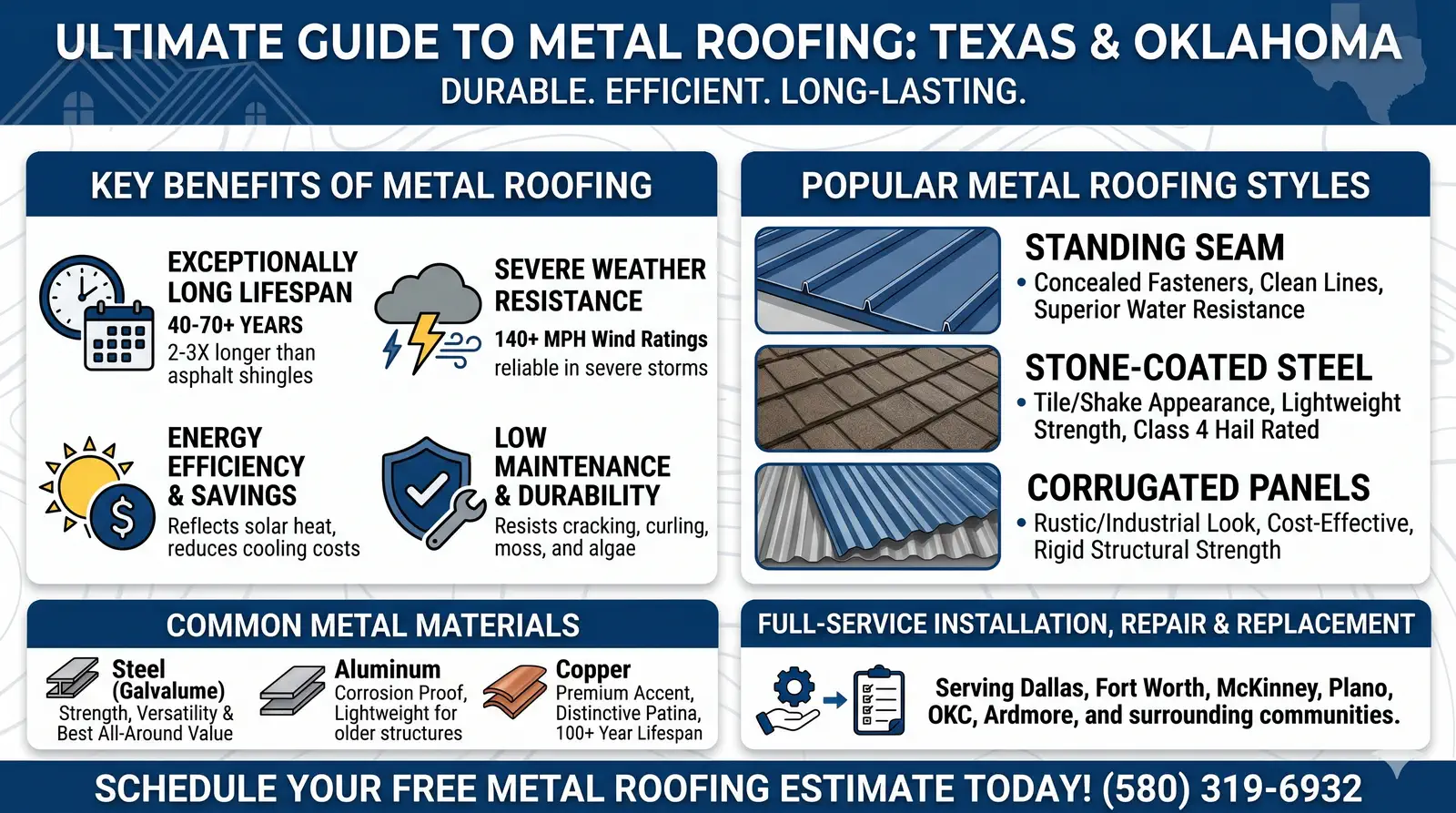
Steel is by far the most common metal roofing material installed in Oklahoma. It offers an excellent balance of strength, affordability, and versatility. Most residential steel panels use a Galvalume coating (a blend of aluminum, zinc, and silicon) that protects against rust and extends service life to 40–60 years with minimal maintenance. Galvanized steel, coated with pure zinc, is another widely available option, though Galvalume generally outperforms it in corrosion resistance. According to the Metal Roofing Alliance, steel roofing accounts for the majority of residential metal roof installations across the United States, largely because of its favorable cost-to-performance ratio.

Aluminum Roofing

Aluminum is naturally resistant to corrosion, making it an ideal choice for properties in humid climates or areas with salt exposure. It weighs roughly 40–50% less than steel, which reduces structural load, an important consideration for older buildings or homes with limited framing capacity. Aluminum roofing costs more per square foot than steel, but its resistance to rust without relying on protective coatings can offset long-term maintenance expenses. Homeowners looking for a lightweight, corrosion-proof solution often find aluminum to be the best fit.

Copper Roofing

Copper is the premium tier of metal roofing. It develops a distinctive green patina over time that many homeowners and architects prize for its aesthetic character. Copper roofs can last 100 years or more with virtually zero maintenance, and the material is fully recyclable at the end of its service life. The tradeoff is cost: copper roofing typically runs three to five times the price of steel. In our service area, copper is most commonly used as an accent material, on dormers, bay windows, or entryway overhangs, rather than as a full-roof installation.

Zinc Roofing

Zinc is a self-healing metal, meaning minor scratches in the surface re-seal themselves through a natural patination process. This gives zinc roofing outstanding longevity (80–100 years) and very low maintenance requirements. Like copper, zinc carries a premium price point and is more commonly specified in architectural and custom-home projects than in standard residential builds.

Licensed Commercial & Residential Roofing Contractor

Trusted and licensed contractor for commercial and residential roofing—quality materials, expert service, and lasting protection guaranteed.

LICENSE NUMBER: 80004931

Metal Roofing Material Comparison

Choosing the right metal starts with understanding how each material performs across the factors that matter most, cost, lifespan, weight, and maintenance. The table below provides a side-by-side snapshot to help you narrow your options before scheduling a consultation.

Material

Typical Lifespan

Relative Cost

Weight (per sq ft)

Corrosion Resistance

Best Application

Galvalume Steel

40–60 years

$$

~1.0–1.5 lbs

High (coated)

Residential & commercial, best all-around value

Galvanized Steel

30–50 years

$$

~1.0–1.5 lbs

Moderate (zinc coat)

Budget-friendly residential

Aluminum

50–75 years

$$$

~0.5–0.7 lbs

Excellent (natural)

Coastal, humid, or salt-exposure areas

Copper

80–100+ years

$$$$$

~1.2–1.5 lbs

Excellent (patina)

Architectural accents, historic restoration

Zinc

80–100 years

$$$$

~0.8–1.0 lbs

Excellent (self-healing)

Custom homes, architectural applications

Metal Roof Styles and Profiles

Beyond the raw material, the style or profile of your metal roof determines its visual character, performance in severe weather, and installation complexity. Safe Roof installs every major profile type, and our team can help you match the right style to your home’s architecture and your long-term performance goals.

Standing Seam Metal Roofing

Standing seam is the flagship profile in metal roofing. Panels connect through raised, interlocking seams that sit above the flat pan of the roof surface, creating a clean, modern aesthetic with concealed fasteners. Because the fasteners are hidden beneath the seam, there are no exposed screw holes to invite leaks, making standing seam the highest-performing profile for water resistance. 

Standing seam systems also accommodate thermal expansion and contraction, which is critical in Oklahoma’s climate where summer highs above 100°F and winter lows near 10°F are common. Standing seam metal roofs carry a search volume of nearly 50,000 monthly queries in the United States, reflecting the strong and growing consumer demand for this premium profile.

Corrugated Metal Roofing

Corrugated panels feature a repeating wave or ribbed pattern that provides excellent structural rigidity at a lower cost than standing seam. This profile is widely used on agricultural buildings, commercial structures, and increasingly on homes with rustic, farmhouse, or industrial design aesthetics. Corrugated metal roofing is one of the most affordable metal roof options, making it a practical entry point for homeowners transitioning from asphalt shingles.

Metal Shingles

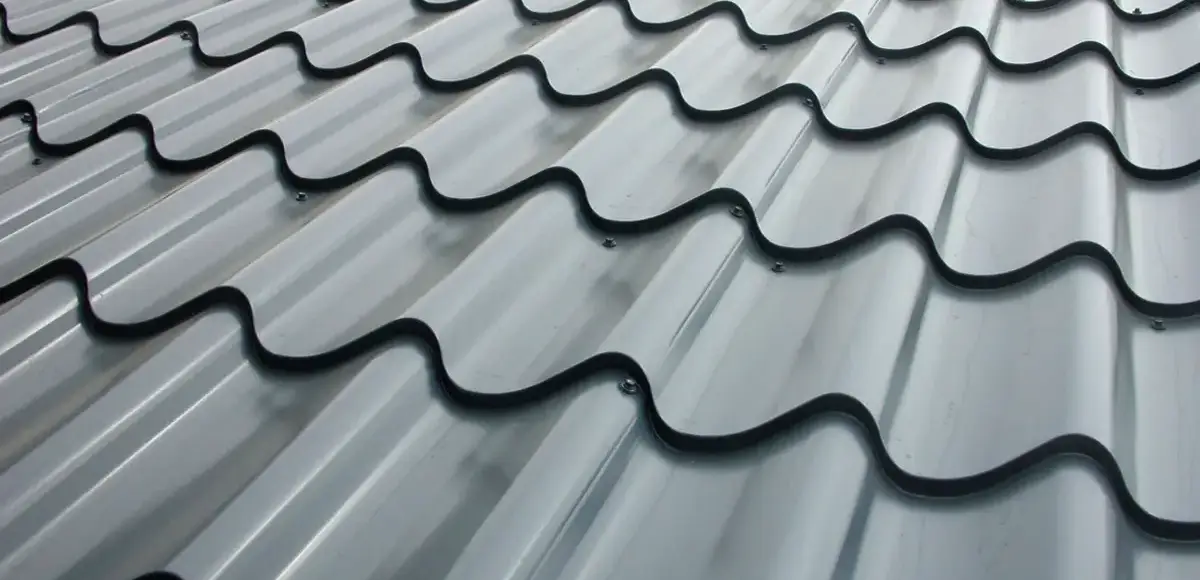
Metal shingles are designed to mimic the appearance of traditional architectural shingles, slate, or wood shake while delivering the performance benefits of metal. They install in individual pieces rather than long panels, making them a good fit for complex rooflines with multiple dormers, hips, and valleys. Metal shingles appeal to homeowners who want the longevity of metal without departing from a conventional roofing look.

Stone-Coated Steel Roofing

Stone-coated steel panels are pressed steel substrates covered with a layer of stone granules bonded with acrylic. This construction gives them the rugged, textured appearance of tile or shake while retaining the lightweight strength of steel. Stone-coated products are especially popular in areas prone to hail damage and wind damage, as many carry Class 4 impact ratings (the highest available) and wind resistance certifications up to 120 mph.

Metal Roof Style Comparison

Each metal roof style comes with distinct trade-offs in appearance, cost, and installation complexity. Use the comparison below to see how the most popular profiles stack up across the performance categories that influence project planning and long-term satisfaction.

Profile

Appearance

Fastener Type

Wind Rating

Price Range (installed)

Best For

Standing Seam

Clean, modern lines

Concealed

Up to 140+ mph

$8–$16/sq ft

Premium residential, commercial

Corrugated

Ribbed/wave pattern

Exposed

Up to 110 mph

$5–$10/sq ft

Agricultural, rustic/industrial homes

Metal Shingles

Traditional shingle look

Concealed

Up to 120 mph

$7–$14/sq ft

Homes with complex rooflines

Stone-Coated Steel

Tile/shake texture

Concealed

Up to 120 mph

$9–$15/sq ft

Hail-prone and high-wind regions


Why Choose Safe Roof

  • Class 4 Impact Documentation — Safe Roof provides the manufacturer certification your Texas or Oklahoma insurance carrier requires to qualify for the 15 to 30 percent Class 4 premium discount available on qualifying metal roofing systems.
  • Thermal Expansion Expertise — Metal panels expand and contract with temperature changes, a critical installation consideration in a region where surface temperatures swing from freezing to 150°F+ seasonally. Safe Roof accounts for thermal movement on every panel installation.
  • Wind Zone Compliance — Texas and Oklahoma fall within high wind zones under the International Residential Code. Every Safe Roof metal installation is specced for the wind zone requirements of the specific property location.
  • Free On-Site Inspection & Written Estimate — Every metal roofing project starts with a free roof inspection and a fully itemized written estimate, material, labor, timeline, and warranty documentation, before any work is scheduled.
  • Energy Efficiency Documentation — Safe Roof provides cool roof documentation for qualifying metal systems, relevant for homeowners seeking Energy Star designation or utility incentive programs available in Texas and Oklahoma.
  • Licensed & Insured in Both States — Oklahoma Roofing Contractor #80004931. Full general liability and workers’ compensation coverage across Texas and Oklahoma on every metal roofing project.

Metal Roofing Cost and Pricing in Oklahoma and Texas

Cost is typically the first question homeowners ask when considering a metal roof, and the answer depends on several overlapping variables. Material type, roof style, project size, roof complexity, and local labor rates all factor into the final number. Nationally, metal roofing costs between $5 and $16 per square foot installed, depending on the product and profile selected. For a standard 2,000 square foot roof in the Ardmore area, that translates to a total project cost between roughly $10,000 and $32,000.

While the upfront investment for metal is higher than for standard 3-tab shingles or even mid-tier architectural shingles, the lifecycle economics often favor metal. A typical asphalt shingle roof lasts 15–25 years; a metal roof lasts 40–70+ years. When you factor in reduced maintenance, lower cooling costs (metal roofs can reflect up to 40% of solar radiant heat, according to the U.S. Department of Energy, and increased home resale value, the cost per year of service frequently makes metal the more affordable long-term option.

Metal Roof Cost by Material and Style

To help you budget effectively, the following table breaks down typical installed cost ranges across the most common material and style combinations available in our service area.

Material + Style

Cost per Sq Ft (Installed)

Est. Cost for 2,000 Sq Ft Roof

Typical Warranty

Steel Standing Seam

$8–$14

$16,000–$28,000

30–50 years

Steel Corrugated

$5–$9

$10,000–$18,000

20–40 years

Aluminum Standing Seam

$10–$16

$20,000–$32,000

35–50 years

Metal Shingles (Steel)

$7–$12

$14,000–$24,000

30–50 years

Stone-Coated Steel

$9–$15

$18,000–$30,000

30–50 years

Copper (accent/full)

$15–$30+

$30,000–$60,000+

Lifetime

Metal Roofing Pros and Cons

Every roofing material involves trade-offs. Metal roofing delivers outstanding advantages in durability, efficiency, and longevity, but it also carries considerations around cost and installation that deserve honest discussion. Here is a balanced look based on real-world performance data and our experience installing metal roofs across Texas and Oklahoma.

Advantages

  • Long Lifespan — A properly installed metal roof lasts 40 to 70 years,  two to three times the practical service life of asphalt shingles in Texas and Oklahoma’s high-UV, high-hail climate. Premium materials like copper and zinc can exceed 80 years, meaning most property owners who install metal today are replacing their roof for the last time.
  • Energy Efficiency — Reflective metal surfaces reduce cooling loads by up to 25 percent in warm climates, directly lowering utility bills during Texas and Oklahoma’s long, hot summers where temperatures regularly exceed 100°F. The U.S. Department of Energy identifies cool roof metal systems as one of the most effective passive cooling strategies available for high-heat residential markets.
  • Wind and Storm Resistance — Most metal roofing products carry wind ratings of 110 to 140+ mph and Class 4 hail impact resistance, the highest ratings available in both categories. In a region where storm damage from severe thunderstorms, hail, and tornadoes is an annual reality across Texas and Oklahoma, that performance margin is a meaningful long-term protection advantage.
  • Insurance Premium Discounts — Class 4 impact-rated metal roofing qualifies for 15 to 30 percent premium discounts from most Texas and Oklahoma carriers, a compounding annual saving that offsets a portion of the higher upfront investment over the roof’s lifespan.
  • Low Maintenance — Unlike asphalt shingles, metal roofs do not crack, curl, lose granules, or develop moss and algae growth. Minimal maintenance is required beyond periodic roof inspections and sealant checks around penetrations.
  • Sustainability — Metal roofing is 100 percent recyclable at end of life and many products contain 25 to 95 percent recycled content, a meaningful environmental advantage over asphalt shingles that typically end up in landfill at replacement time.

Considerations

  • Higher Upfront Cost — Metal roofing carries a significantly higher initial investment than asphalt shingles. The total cost of ownership over 40 to 70 years is typically lower than replacing asphalt two or three times, but the upfront capital requirement is real and should be factored into the decision.
  • Professional Installation Required — Improperly fastened panels can lift in high winds or develop leaks at seams, a serious concern given Texas and Oklahoma’s storm exposure. Metal roofing requires installation precision that differs significantly from asphalt, including panel alignment, fastener type, thermal expansion clearances, and seam details that directly affect long-term performance.
  • Noise During Heavy Rain — Some homeowners are concerned about rain noise on metal roofs. With proper insulation and underlayment, which every Safe Roof metal installation includes, this concern is largely eliminated. The perception of noisy metal roofs comes primarily from uninsulated agricultural or commercial buildings, not properly installed residential systems.
  • Hail Denting on Softer Metals — While metal roofing carries Class 4 impact ratings and outperforms asphalt under most hail conditions, extremely large hailstones can cause cosmetic denting on softer products like aluminum. Stone-coated steel and higher-gauge steel panels provide significantly better dent resistance against the largest hail events Texas and Oklahoma can produce.

Metal Roof vs. Shingles

The decision between metal roofing and asphalt shingles is one of the most common comparisons homeowners face. Both are excellent materials, but they serve different priorities. If your primary concern is minimizing upfront cost and you plan to sell the home within 10–15 years, asphalt shingles, particularly luxury shingles, may be the right choice. If you prioritize longevity, energy savings, storm resistance, and minimal long-term maintenance, metal is almost always the stronger investment.

Metal Roof vs. Shingles Decision Matrix

The comparison below lays out the performance differences between metal and asphalt shingles across the criteria that most frequently drive homeowner decisions in our service area.

Factor

Metal Roofing

Asphalt Shingles

Lifespan

40–70+ years

15–25 years

Upfront Cost (2,000 sq ft)

$10,000–$32,000

$5,000–$15,000

Energy Savings

Up to 25% cooling reduction

Minimal reflectivity

Wind Resistance

110–140+ mph

60–130 mph

Hail Resistance

Class 4 available

Class 1–4 (varies)

Maintenance

Very low

Moderate (inspections, repairs)

Weight

1.0–1.5 lbs/sq ft

2.0–4.5 lbs/sq ft

Recyclability

100% recyclable

Mostly landfill (limited recycling)

Resale Value Increase

1–6%

1–3%

Noise (rain)

Moderate (mitigated with underlayment)

Low

For many homeowners in the Ardmore area, the math works out clearly in favor of metal when calculated over a 30–50 year horizon. We are happy to walk through the numbers specific to your property during a free roof inspection.

Our Metal Roofing Installation Process

A successful metal roof installation requires precision at every stage. Mistakes in measurement, flashing, or fastener placement can lead to leaks, panel lifting, and premature failure. At Safe Roof, our installation crews follow a systematic, manufacturer-specified process that protects both your investment and our warranty coverage.

  • Step 1:  Roof Inspection and Measurement – Every project begins with a thorough roof inspection to assess the existing roof structure, decking condition, ventilation, and any areas of concern such as previous leak damage or structural issues. We use precise measurements and satellite-verified calculations to determine material quantities and panel layouts.
  • Step 2: Tear-Off or Overlay Assessment – Depending on local building codes and the condition of your existing roof, we determine whether a complete tear-off is required or whether the metal system can be installed over existing shingles. In most cases, we recommend tear-off to allow a full inspection of the decking and to install proper underlayment.
  • Step 3: Decking Repair and Underlayment – Any damaged or deteriorated decking is replaced before new roofing material goes on. We then install a high-quality synthetic underlayment, the critical moisture barrier between the decking and the metal panels. In ice-dam-prone areas, we apply ice and water shields along eaves and valleys.
  • Step 4: Drip Edge, Flashing, and Trim Installation – We install drip edge, eave trim, rake trim, and all flashing components before the panels go on. Proper flashing at valleys, walls, chimneys, and penetrations is the single most important factor in preventing leaks on a metal roof.
  • Step 5: Panel Installation – Metal panels are installed according to manufacturer specifications, working from eave to ridge. Fastener type and placement vary by profile: standing seam panels use concealed clips; corrugated and exposed-fastener systems use rubber-gasketed screws driven to a precise torque setting.
  • Step 6: Ridge Cap, Ventilation, and Final Details – Ridge caps are installed to seal the roof peak while maintaining attic ventilation. All penetrations, sealants, and trim pieces receive a final quality inspection before the project is signed off.
  • Step 7: Cleanup and Final Walkthrough – We perform a thorough site cleanup, including magnetic sweeps for stray fasteners and nails, and conduct a final walkthrough with you to review the completed installation.

What Our Customers Say

Metal Roof Lifespan and Durability

Durability is where metal roofing truly separates itself from competing materials. A correctly installed steel roof routinely lasts 40–60 years. Aluminum and stone-coated systems push into the 50–75 year range. Copper and zinc can exceed a full century of service. These are not theoretical numbers, they are backed by decades of real-world performance data from installations across the United States.

Several factors influence how long your specific metal roof will last. Coating quality is paramount: Galvalume-coated steel, for instance, resists corrosion significantly better than bare galvanized steel. Proper installation, especially at seams, fastener points, and flashing transitions, prevents the water intrusion that causes most premature failures. Adequate attic ventilation reduces condensation on the underside of the panels, which can accelerate corrosion over time. And while metal roofs require very little maintenance compared to asphalt, periodic inspections every few years ensure that sealants, fasteners, and flashing remain in good condition.

In southern Oklahoma, the primary environmental challenges for any roofing material are hail, high winds, intense UV exposure, and thermal cycling. Metal roofing handles all four exceptionally well. Steel and stone-coated products resist hail impact (many carry UL 2218 Class 4 ratings), standing seam systems withstand winds above 140 mph, reflective coatings minimize UV degradation, and concealed-fastener systems accommodate the thermal expansion that Oklahoma’s extreme temperature swings demand.

Proudly Serving Texas & Oklahoma With Expert Metal Roofing Services 

Safe Roof installs and replaces metal roofing systems for residential and commercial property owners across our full Texas and Oklahoma service area, bringing standing-seam and stone-coated steel systems with Class 4 hail impact ratings and 140+ mph wind resistance to communities across the DFW Metroplex and South-Central Oklahoma, where metal roofing’s 40 to 70 year lifespan and energy efficiency advantages make it the strongest long-term roofing investment available for property owners planning to stay for the long run. Our service areas include: Dallas, Far North Dallas, Fort Worth, Prosper, Celina, Plano, Sherman, McKinney, Oklahoma City, Ardmore and  surrounding areas. If you are looking for a broader view of our coverage, then see our full service area page here. 

Schedule Your Free Metal Roofing Estimate in Texas & Oklahoma Today

A metal roof is one of the most significant long-term investments a Texas or Oklahoma property owner can make, with a 40 to 70 year service life, Class 4 hail impact resistance, 140+ mph wind ratings, and insurance premium discounts of 15 to 30 percent from most carriers in both states. Safe Roof serves residential and commercial property owners across Dallas, Fort Worth, McKinney, Plano, Oklahoma City, Ardmore, and surrounding communities. Every metal roofing project starts with a free on-site inspection and a written, itemized estimate covering materials, labor, timeline, and warranty documentation before any work is scheduled.

Call (580) 319-6932, visit our free roof quote page, or reach out through our contact page to book your free metal roofing estimate today.

Frequently Asked Questions

How long does a metal roof last in Texas and Oklahoma?

Most steel metal roofs in Texas and Oklahoma last 40 to 60 years with proper installation and minimal maintenance,  two to three times longer than the 15 to 25 year practical lifespan of asphalt shingles in the region’s high-UV, high-hail climate. For long-term homeowners in the DFW metro or South Oklahoma, a metal roof installed today is very likely the last roof replacement they will ever need.

Is a metal roof worth the higher upfront cost in Texas and Oklahoma?

When calculated on a per-year-of-service basis, metal roofing frequently costs less than asphalt over the long term. The higher upfront investment is offset by a lifespan two to three times longer, lower maintenance requirements, meaningfully reduced cooling costs during Texas and Oklahoma summers, and the 15 to 30 percent insurance premium discount most carriers in both states offer for Class 4 impact-rated metal roofing.

Does a metal roof make a house hotter in Texas and Oklahoma summers?

No — the opposite is true. Metal roofs reflect a significant portion of solar radiant heat rather than absorbing it. The U.S. Department of Energy notes that cool roof metal systems can reduce cooling costs meaningfully, a significant advantage in a region where summer temperatures regularly exceed 100°F and residential cooling costs represent a major household expense across Texas and Oklahoma.

Can metal roofing be installed over existing shingles in Texas or Oklahoma?

In some cases yes, but Safe Roof generally recommends a full tear-off to inspect the decking and install proper underlayment before any metal system goes on. Oklahoma’s IRC modification prohibits overlaying asphalt shingles in most circumstances, and decking condition directly affects how long a metal roof performs. Local building codes and decking condition determine whether an overlay is permitted on a specific property.

Is a metal roof noisy during rain in Texas and Oklahoma?

With proper insulation, underlayment, and attic space, which every Safe Roof metal installation includes, a metal roof is not noticeably louder than other roofing materials during rain events. The perception of metal roofs being noisy largely comes from uninsulated agricultural or commercial buildings, not properly installed residential metal roofing systems.

Does a metal roof attract lightning in Texas and Oklahoma?

No. Metal roofing does not increase the likelihood of a lightning strike, a relevant concern given that Texas and Oklahoma rank among the top states for severe thunderstorm frequency. Because metal is non-combustible, a metal roof is actually safer than many other materials in the event of a lightning strike near the property.

Will my homeowner's insurance change with a metal roof in Texas or Oklahoma?

In most cases, premiums decrease. Metal roofs carry Class 4 hail impact ratings and 140+ mph wind resistance, and most Texas and Oklahoma carriers offer premium discounts of 15 to 30 percent for qualifying Class 4 roofing. Safe Roof provides the manufacturer certification your carrier requires to apply the discount at your next policy renewal. Contact your insurance agent for the specific discount your policy offers.

What maintenance does a metal roof require in Texas and Oklahoma?

Very little compared to asphalt. We recommend a visual inspection once or twice per year to check for debris accumulation, sealant condition around penetrations, and fastener tightness on exposed-fastener systems, particularly after major hail or wind events across the DFW metro and South Oklahoma. Professional roof inspections every three to five years help catch any developing issues before they require significant repair.

Safe Roof

Business Hours
Monday: Open 24 hours
Tuesday: Open 24 hours
Wednesday: Open 24 hours
Thursday: Open 24 hours
Friday: Open 24 hours
Saturday: Open 24 hours
Sunday: Open 24 hours

Your Elite Residential and Commercial Roofing Team in Texas & Oklahoma

Whether you’re dealing with storm damage, planning a replacement, or just want a professional opinion on your roof’s condition, Safe Roof is ready to help. We serve property owners across Texas and Oklahoma, showing up on time, doing the work right, and standing behind every install with GAF-certified warranty coverage.

Getting an estimate costs nothing and commits you to nothing. We’ll assess your roof, walk you through the findings, and provide a clear written estimate.