

Structural & Sagging Roof Repair Services

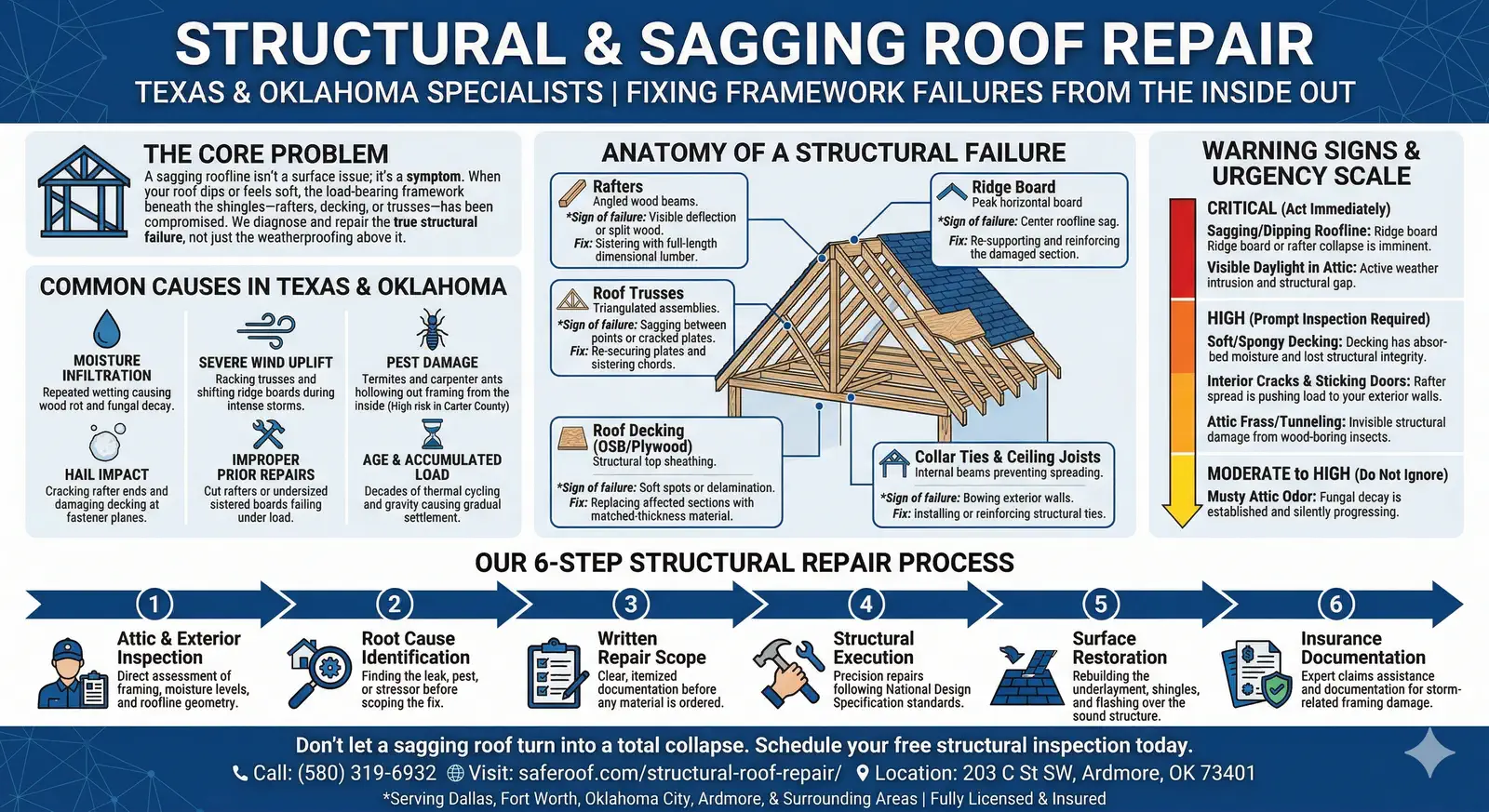
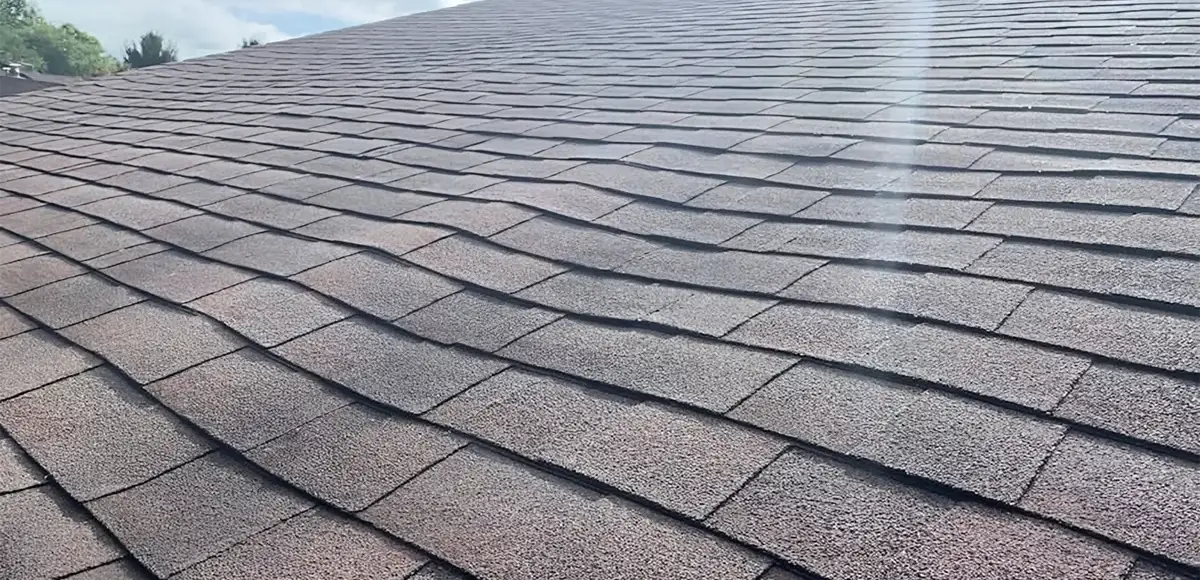
A sagging roofline or visibly uneven roof surface is one of the more serious conditions a homeowner can face. Unlike a missing shingle or a small flashing gap, structural roof damage signals that the framework beneath the shingle surface, the rafters, decking, ridge board, or trusses, has been compromised. The surface is a symptom. The real problem is what is holding the roof up.

Safe Roof provides structural roof repair services across Ardmore and Carter County for residential roofing systems where standard shingle-level work is not enough. As a licensed roofing contractor in Ardmore, OK, these repairs are handled as part of our broader roof repair services, our contractors are equipped to work on both the roofing system above and the framing below it, giving homeowners a complete repair rather than a surface patch that leaves the underlying problem in place.

Our Structural Roof Repair Process

Safe Roof approaches structural repairs methodically. The scope of work is never written before the full condition of the affected members is understood.

Step 1: Attic and Exterior Inspection 

We access the attic whenever possible to assess the framing directly. This gives us moisture readings, visual confirmation of decay or damage, and the information needed to determine whether the failure is isolated or systemic. Exterior inspection covers roofline geometry, decking surface condition, and any visible displacement at eaves or ridge.

Step 2: Cause Identification 

Structural damage always has a cause. Before we scope a repair, we identify it. If water is the source, we perform leak detection to locate the entry point so the repair addresses the cause, not just the result. Repairing damaged rafters without stopping the water that rotted them is a repair that fails again.

Step 3: Written Repair Scope 

You receive a written, itemized scope of work before any material is ordered or work begins. Structural repairs sometimes expand once framing is exposed, we communicate any changes clearly and do not proceed with additional scope without your approval.

Step 4: Structural Repair Execution 

The specific repair method depends entirely on which component failed and how extensively. Safe Roof selects the appropriate technique based on inspection findings,  not a one-size approach applied before the damage is understood. Rafter sistering and decking replacement follow the dimensional lumber and fastening standards published by the American Wood Council in the National Design Specification for Wood Construction, the reference document used by building inspectors and structural engineers across Oklahoma.

Step 5: Surface Restoration

Once the structural layer is sound, we restore the roofing surface above it, underlayment, shingles, and any flashing that was removed during the repair. The finished result is a complete repair from framing to weather surface, not a structural fix with a temporary patch above it.

Step 6: Insurance Documentation 

For structural damage caused by a storm event, we document the full scope in the format insurance carriers require. The USDA Forest Products Laboratory, which publishes the standard reference on wood structural properties used throughout the building industry, identifies moisture as the primary cause of structural wood failure, documentation that directly supports claims involving long-term leak-related framing damage. Our insurance claims assistance team handles the adjuster coordination so covered repairs are paid correctly.

Licensed Commercial & Residential Roofing Contractor

Trusted and licensed contractor for commercial and residential roofing—quality materials, expert service, and lasting protection guaranteed.

LICENSE NUMBER: 80004931

What Is Structural Roof Repair?

Structural roof repair addresses damage to the load-bearing components of a roof system, the elements that give the roof its shape, distribute its weight, and keep it from moving under wind and gravity. These are distinct from the weatherproofing layers above them.

Residential Roof Structural Components — Function, Failure Signs, and Repair Approach

Every structural repair starts with identifying which component has failed. The table below covers the five primary load-bearing elements Safe Roof inspects on every structural assessment, what each one does, and what its failure looks like from both inside the attic and outside on the roof surface.

Structural Component

Function

Signs of Failure

Typical Repair Method

Rafters

Angled framing members that carry decking and roofing weight from ridge to wall plate

Visible deflection in roof surface above; spongy or discolored wood in attic; cracked or split members

Sister with full-length dimensional lumber fastened alongside the damaged rafter

Roof trusses

Pre-engineered triangulated assemblies that distribute roof load across a wide span

Visible sag between truss points; cracked connector plates; deflection after wind events

Re-secure connector plates; sister damaged chord members; consult engineer for full truss failure

Roof decking (OSB / plywood)

Structural sheathing that provides the nailing base for underlayment and shingles

Soft spots underfoot; delamination visible from attic; fasteners pulling through surface

Replace affected sections with matched-thickness material; address moisture source first

Ridge board

Horizontal board at the roof peak where opposing rafters meet

Center roofline sag; rafters pulling away from peak; visible bow along ridge

Re-support and reinforce ridge board; sister or replace damaged section

Collar ties and ceiling joists

Horizontal members that prevent rafters from spreading outward under load

Walls bowing outward; doors and windows sticking on upper floors; widening ridge gap

Install or reinforce collar ties; repair or sister damaged ceiling joists

What Causes Structural Roof Damage in Oklahoma & Texas

Southern Oklahoma’s climate creates a specific set of structural failure conditions that differ from what contractors in other regions encounter. Carter County sits within a region where subterranean termites are active year-round, according to Oklahoma State University Extension, Oklahoma is classified in the highest termite pressure zone in the country, with eastern and southern counties at particular risk. Termite activity in attic framing often goes undetected for years because the damage is internal, with structural capacity lost before any surface sign appears. Understanding all local causes helps identify the right repair scope.

Structural Roof Damage — Common Causes, Failure Mechanism, and What Safe Roof Inspects

Each cause below produces a distinct failure pattern. Identifying the cause correctly determines whether the repair scope is limited to the damaged framing members or whether it needs to address the conditions that created the failure in the first place.

Cause

How It Damages Structure

Visible Signs

Inspection Scope

Long-term roof leak / moisture infiltration

Repeated wetting of wood framing causes rot, fungal decay, and loss of structural capacity

Soft spots in decking; discolored or spongy rafters; musty attic odor

Full decking probe; rafter and ridge board moisture check; leak detection to find active entry point

Hail and impact damage

Severe hail impacts can crack rafter ends and damage decking at the fastener plane

Granule loss above the impact zone; cracked decking at nail lines

Decking integrity check; rafter-end inspection at eave line

Wind uplift from severe storms

High-wind events can rack trusses, pull rafter-to-plate connections, and shift ridge boards

Roofline that appears shifted or one side lower than the other; interior wall cracking

Truss connector plate inspection; ridge board alignment; wall plate connection review

Pest damage (termites, carpenter ants)

Wood-boring insects hollow structural members from the inside; damage is often invisible until structural failure occurs

Frass (insect debris) in attic; soft or hollow-sounding rafters when tapped; surface tunneling on exposed wood

Full attic framing inspection; knock-test on all accessible members

Improper prior repair or modification

Cut rafters, removed collar ties, or undersized sistered members from a previous repair fail under load

Deflection localized to one area; visible repair patches that have failed

Inspection of all modified members; load path review

Age and accumulated load

Decades of thermal cycling, minor moisture exposure, and gravity cause gradual settlement and fastener creep

Slow, even sag across a broad roof span; no acute damage event

Full rafter and ridge board assessment; fastener pull-out check at decking

Why Choose Safe Roof

  • We work the full depth of the repair. Most roofing contractors work from the shingle surface down to the decking and stop. Safe Roof is equipped to work through the decking layer into the rafter and truss framing below. That distinction matters when the damage is structural.
  • We find the cause before we fix the symptom. A sagging rafter caused by a long-running leak will fail again if the leak is not resolved first. We do not scope structural repairs without identifying what created the damage.
  • We are licensed and insured in Oklahoma. Safe Roof holds Registered Roofing Contractor license #80004931. Every structural repair is covered by our workmanship warranty.
  • We document thoroughly for insurance claims. Structural damage from storm events, wind uplift, hail, or falling trees, is often a covered loss. Structural damage from long-running leaks that were the result of a covered event can also qualify depending on your policy. We build the documentation that gives your claim the best chance of full approval.

Warning Signs Your Roof Has Structural Damage in Oklahoma & Texas

Structural roof problems rarely appear without warning. The table below covers the most common indicators Safe Roof encounters on residential properties in Carter County, what each one points to, and how quickly action should be taken after the sign appears.

Structural Roof Damage Warning Signs — What They Mean and How Urgent Each One Is

Recognizing the difference between a cosmetic issue and a structural one is what prevents a repair from becoming a replacement. Each sign below has a specific structural cause, not all of them are obvious from the ground.

Warning Sign

What It Indicates

Urgency Level

Recommended Action

Sagging or dipping roofline at ridge or eave

Ridge board failure, rafter deflection, or decking collapse

Critical — do not delay through a rain event

Structural inspection within days; scope repair before next storm

Soft or spongy spots when walking the roof

Decking has absorbed moisture and lost structural integrity

High — decking failure accelerates under load and foot traffic

Inspection to determine extent; decking replacement with moisture source identified

Interior wall or ceiling cracks near roofline

Rafter spread or truss deflection is transferring lateral load to wall framing

High — structural movement is ongoing

Attic inspection for rafter-to-plate connection and collar tie integrity

Daylight visible in attic through roof plane

Breach in decking or rafter-to-plate connection; structural gap

Critical — weather intrusion is active or imminent

Immediate inspection; temporary weatherproofing if storm is forecast

Musty or damp attic odor without visible leak

Moisture has reached framing; fungal decay is established or beginning

Moderate to high — decay progresses silently once established

Leak detection to find moisture source; framing moisture assessment

Doors or windows sticking on upper floors

Rafter spread is pushing exterior walls outward

High — wall frame movement is a structural event

Full attic and roofline inspection; collar tie and ceiling joist assessment

Frass (fine wood debris) or surface tunneling in attic

Active or past termite or carpenter ant infestation; structural members may be hollow

High — pest damage is invisible from outside until failure

Full framing knock-test; treatment coordination before structural repair

If you are seeing any of these signs on a property in Ardmore or Carter County, contact Safe Roof for a free inspection. Structural deterioration accelerates once it begins, waiting through a storm season is not a safe option.

What Our Customers Say

Proudly Serving Texas & Oklahoma With Professional Structural & Sagging Roof Repair Services

Safe Roof provides licensed structural and sagging roof repair services to homeowners across Texas and Oklahoma, addressing rafter damage, rotted decking, failed ridge boards, and compromised roof framing before deterioration reaches the point of full structural failure. Our service areas include: Dallas, Far North Dallas, Fort Worth, Prosper, Celina, Plano, Sherman, McKinney, Oklahoma City, Ardmore and  surrounding areas. If you are looking for a broader view of our coverage, then see our full service area page here. Whether you are dealing with a storm-damaged roofline in the DFW Metroplex or long-term moisture damage working through the framing of a southern Oklahoma home, our structural repair crews are equipped and ready to respond in your area.

Schedule Your Free Structural Roof Inspection in Texas & Oklahoma Today

A sagging roofline or soft decking section is not a problem that waits. Every storm cycle that passes without a structural repair puts additional stress on already compromised framing across North Texas and southern Oklahoma. What starts as a subtle dip can progress to a full structural failure before the next season is out. Safe Roof’s structural inspections are completely free, conducted by licensed inspectors who evaluate the full system from the surface down to the framing beneath it. We identify the root cause, document the full scope, and handle insurance coordination for storm-related damage from the start.

Call (580) 319-6932, visit our free roof quote page, or reach out through our contact page to schedule your free structural roof inspection today.

Frequently Asked Questions

What does a sagging roofline mean?

A sagging or uneven roofline means one or more structural components beneath the shingle surface have lost load-bearing capacity. Common causes include moisture-damaged rafters, a failed ridge board, loosened truss connectors, or long-term load accumulation. It requires a structural inspection, not a shingle repair. Contact Safe Roof for a free inspection at (580) 319-6932 or request an estimate online.

What is the most common cause of structural roof damage in Oklahoma and Texas?

Long-term water intrusion is the leading cause across our service area. A small leak that goes undetected for one or two storm seasons can silently decay rafters, ridge boards, and decking to the point of structural failure. High wind events and hail storms can also cause immediate structural damage, particularly along ridge lines and roof edges where uplift forces are highest in both Oklahoma and North Texas.

Can a structurally damaged roof be repaired or does it need full replacement?

Targeted repair is possible in most cases. Sistering rafters, replacing damaged decking sections, or reinforcing a failed ridge board can restore structural function without a full tear-off. Full roof replacement becomes the right call when damage is widespread across multiple bays or when pest damage has compromised enough framing that isolated repairs cannot restore the load path.

How does a roof leak lead to structural damage?

Water entering through a failed shingle, flashing, or penetration travels along the underlayment and decking, saturating wood framing along the way. Repeated moisture cycling weakens fastener connections and creates conditions for fungal decay. Once decay establishes in a rafter or ridge board, the wood can lose more than half its structural capacity before the damage is visible, which is why early roof leak detection is the most cost-effective form of structural protection.

Will homeowner's insurance cover structural roof repair in Texas & Oklahoma?

Structural damage from a sudden covered weather event, wind, hail, or a falling tree, is typically covered. Damage from a long-running leak is more complex and coverage may be limited if the original source went unaddressed. Our insurance claims assistance team reviews the damage history and documents the cause to give your claim the strongest possible foundation.

How long does structural roof repair take in Texas & Oklahoma?

Sistering two or three rafters with no decking work typically takes one day. Repairs involving significant decking replacement, multiple rafter sections, or ridge board work generally run two to three days. Safe Roof provides a project timeline as part of every written estimate so you know what to expect before work begins.

How do I know if my roof has structural damage versus surface damage?

Surface damage — missing shingles, cracked tabs, granule loss — is visible from the rooftop and does not affect the framing beneath. Structural damage typically presents as a sagging or uneven roofline, soft spots underfoot when walking the roof, or visible bowing in the attic between rafters. If you notice any of these, a professional structural inspection is the right next step.

Safe Roof

Business Hours
Monday: Open 24 hours
Tuesday: Open 24 hours
Wednesday: Open 24 hours
Thursday: Open 24 hours
Friday: Open 24 hours
Saturday: Open 24 hours
Sunday: Open 24 hours

Your Elite Residential and Commercial Roofing Team in Texas & Oklahoma

Whether you’re dealing with storm damage, planning a replacement, or just want a professional opinion on your roof’s condition, Safe Roof is ready to help. We serve property owners across Texas and Oklahoma, showing up on time, doing the work right, and standing behind every install with GAF-certified warranty coverage.

Getting an estimate costs nothing and commits you to nothing. We’ll assess your roof, walk you through the findings, and provide a clear written estimate.