Why Residential Hail Damage Repair Can’t Wait After a Storm
Residential hail damage repair is one of the most urgent home repairs you’ll face as a homeowner in Texas or Oklahoma — and one of the most misunderstood. When you need a professional roofing contractor, acting quickly is key to protecting your property.
Here’s what you need to know right away:
- Hail damage is often invisible from the ground. Bruised shingles, lost granules, and cracked seals don’t always show up until water starts getting in.
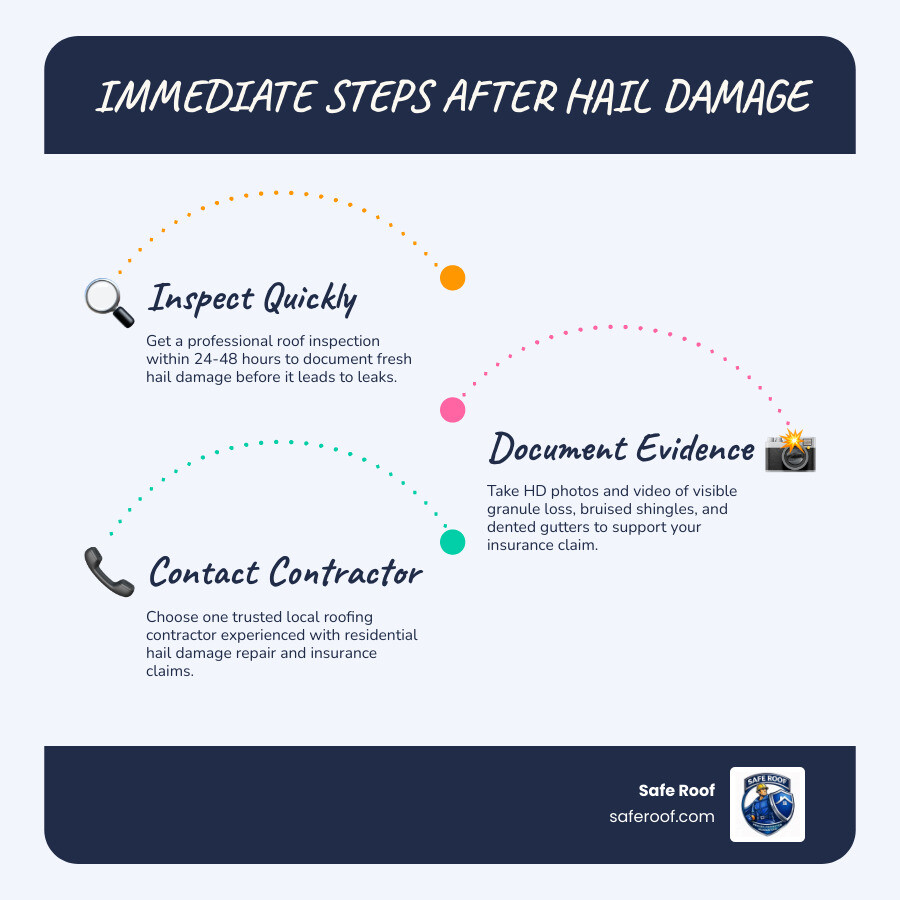
- Act fast. The sooner you get a professional inspection, the easier it is to document damage for your insurance claim.
- You don’t need three estimates. You have the right to choose one trusted hail damage repair contractor without shopping around.
- Filing a claim won’t necessarily raise your rates. Large storms typically trigger state-wide rate adjustments regardless of whether you file.
- Delaying repairs costs more. Unrepaired hail damage leads to leaks, mold, structural rot, and reduced home value.
Hail caused over $16.5 billion in damages across the U.S. in 2022 alone. Hailstones larger than 1 inch can cause significant roof damage — and storms across Texas and Oklahoma regularly produce hail well above that threshold.
The tricky part? A roof can look completely fine from your driveway and still have serious damage underneath. That’s what makes hail so dangerous for homeowners: the problems build quietly until they become expensive.
I’m Jacob Ortiz, owner of Safe Roof, a GAF-certified roofing contractor serving homeowners across Southern Oklahoma and North Texas, where residential hail damage repair is one of the most common — and most critical — services we provide. Over the years, I’ve helped hundreds of homeowners navigate storm damage, insurance claims, and restoration decisions after major hail events in this region.
This guide walks you through everything: how hail damages your roof, what to look for, how to handle your insurance claim, and how to choose the right contractor.
Understanding Hail Damage and How It Occurs
To understand why residential hail damage repair is necessary, you first need to understand how ice falling from 30,000 feet impacts your roofing system.
When a severe thunderstorm sweeps through the DFW Metroplex or Central Oklahoma, it carries updrafts that suspend water droplets in freezing temperatures. These droplets freeze, collide with other water droplets, and grow into hailstones. Once they become too heavy for the updrafts to support, they fall.
The severity of the damage inflicted on your roof depends on three physical factors:
- Impact Velocity: A hailstone’s terminal velocity increases with its size. While small pea-sized hail falls at roughly 10 to 25 mph, a golf-ball-sized stone can scream downward at over 40 to 70 mph.
- Kinetic Energy: The destructive power of a hailstone is directly tied to its mass and speed. Large stones transfer massive amounts of kinetic energy directly into your roof surface upon impact.
- Wind Speed: High winds drive hail at an angle, forcing the ice to strike the roof with greater force and causing severe lateral damage to shingle edges and flashing.
When these high-velocity ice pellets strike your roof, they cause “shingle bruising.” The impact fractures the fiberglass mat beneath the asphalt and dislodges the protective mineral granules. This weakens the structural integrity of your storm damage roofing, leaving the underlayment vulnerable to water intrusion.
The age of your roof also plays a major role. Older shingles are naturally dry and brittle, making them far more susceptible to cracking and splitting under impact than newer, more flexible roofing systems.
| Hailstone Size | Diameter (Inches) | Comparable Object | Typical Roof Damage Caused |
|---|---|---|---|
| Slight | < 0.75" | Pea / Marble | Minimal shingle damage; can dent soft metals like aluminum vents. |
| Moderate | 1.00″ | Quarter | Granule loss; minor shingle bruising; damage to older or brittle shingles. |
| Severe | 1.50″ – 1.75″ | Ping Pong / Golf Ball | Significant shingle bruising; fractured fiberglass mats; cracked wood shakes or clay tiles. |
| Extreme | 2.50″+ | Tennis Ball / Baseball | Punctured underlayment; shattered skylights; immediate structural compromise; heavy metal dents. |
Identifying Visible and Hidden Roof Hail Damage
Identifying hail damage is not as simple as looking up from your lawn to see if your roof is still there. While a major storm can tear off shingles, moderate hail impacts often leave the roof looking completely intact from the ground.

When hail strikes an asphalt shingle, it creates a circular impact mark. This impact dislodges the protective mineral granules, exposing the dark, black asphalt underneath. Over time, UV rays from the sun bake this exposed asphalt, causing it to dry out, crack, and leak.
For homeowners in Collin County TX, Plano TX, and McKinney TX, a professional inspection is the only way to detect these issues before they turn into interior water damage. Our comprehensive roof inspections check every square foot of your roof to identify both the obvious and hidden signs of storm impact.
Hidden Indicators Requiring Residential Hail Damage Repair
Many of the most destructive forms of hail damage cannot be seen without climbing onto the roof and performing a close-up physical assessment. These hidden indicators include:
- Micro-Fractures: Tiny cracks in the fiberglass matting underneath the shingle’s surface. While the granules may still cover the area, the structural core of the shingle is broken, allowing water to slowly seep through over time.
- Weakened Seal Strips: The violent vibration and lift caused by wind-driven hail can break the adhesive seal strips that bond shingles together. Once these seals are broken, future winds can easily lift and tear the shingles away.
- Underlayment Bruising: The impact can transfer through the shingle and bruise or tear the synthetic underlayment or felt paper beneath, destroying your roof’s secondary water barrier.
To find these hidden issues, we utilize proof-based documentation methods. This includes close-up physical testing (feeling for soft “bruises” in the shingle mat) and detailed video walkthroughs that document the exact pattern of the damage. Identifying these issues early is critical to maintaining a healthy residential roofing system.
Spotting Ground-Level Signs of Hail Impact
While you should never climb onto a wet or damaged roof yourself, you can look for ground-level clues that indicate your roof took a hit. Walk around your property and check for these signs:
- Dented Gutters and Downspouts: Gutters are made of soft aluminum. If they have dented, circular dings, your shingles likely suffered similar or worse impacts.
- Siding and Window Screen Damage: Check for holes in window screens, cracked vinyl siding, or chipped paint on your home’s exterior.
- Splatter Marks: Look at your wooden fences or painted deck. Fresh hail will leave clean, circular “splatter marks” where it knocked away dirt, algae, or stain.
- Granules in the Gutters: Check your downspout exits. If you see piles of dark, sand-like granules washing out, it means your shingles are actively shedding their protective coating.
If your vehicles parked outside sustained damage requiring car hail damage repair in Texas, or if you had to seek auto body work from specialists like Liberty Hail or Auto Hail Repair Dallas–Fort Worth | $0 Out-of-Pocket | AutoCrafts in the DFW Metroplex, your home’s roof undoubtedly faced the same destructive force.
Similarly, if you are located in Oklahoma and had to schedule auto service at Bob Moore Collision Center in OKC, or Gerber Collision in Ardmore OK, you can safely assume your roofing system requires an immediate professional evaluation.
The Cost of Delay: Long-Term Consequences of Unrepaired Hail
The single biggest mistake a homeowner can make after a storm is waiting for an active leak to appear before taking action. Hail damage is a progressive problem.

When a shingle loses its granules, the underlying asphalt is exposed to harsh UV radiation. Within a few months, this asphalt deteriorates, cracks, and allows water to penetrate the roof deck. By the time you notice a water spot on your living room ceiling, the damage has already spread.
Leaving hail damage unrepaired leads to several costly consequences:
- Mold and Mildew Growth: Moisture trapped in your attic space creates the perfect breeding ground for toxic mold, which can spread through your HVAC system and compromise your family’s health.
- Structural Rot: Water dripping onto wooden rafters, decking, and joists causes the wood to soften and rot, threatening the structural integrity of your entire home.
- Compromised Attic Insulation: Wet insulation loses its R-value, meaning your air conditioner and furnace have to work twice as hard. This directly spikes your monthly energy bills.
- Decreased Property Value: If you try to sell your home, a home inspector will easily spot unrepaired storm damage, forcing you to pay for a full roof replacement out of pocket before closing.
- Missed Insurance Deadlines: Most homeowners insurance policies have strict deadlines (usually 1 or 2 years from the date of the storm) for filing a claim. If you wait too long to get a professional roof repair, you may have to cover the entire cost of restoration yourself.
Navigating the Insurance Claim Process for Residential Hail Damage Repair
Navigating an insurance claim can feel overwhelming, but it doesn’t have to be. Your insurance policy is designed to protect your home from sudden acts of nature like wind and hail.
At Safe Roof, we specialize in providing insurance claims assistance to ensure our customers receive fair and comprehensive coverage for their repairs.
A common concern among homeowners is that filing a claim will cause their individual insurance premiums to skyrocket. This is a myth. Insurance companies cannot single out an individual homeowner and raise their rates solely for filing a claim on storm damage, which is considered an “Act of God.” Instead, when a major hailstorm hits a region like North Texas or South Oklahoma, insurance companies adjust rates state-wide across the entire zip code or region. Your rates will likely adjust regardless of whether you file a claim—so you might as well get your roof repaired.
Another common misconception is the “three-estimate myth.” Many homeowners believe they are required by law or their policy to collect three separate roofing estimates and submit them to their insurance company. This is false. You have the legal right to choose any single, trusted contractor you want to perform your repairs. Your insurance company will determine the “scope of work” and payout based on standardized regional pricing software (like Xactimate), meaning shopping around for the lowest estimate only benefits the insurance company, not you.
Documenting Evidence for Residential Hail Damage Repair Claims
To ensure your claim is approved quickly and smoothly, you need indisputable, proof-based evidence. Here is the step-by-step process we use to document damage for our clients:
- Establish the Date of Storm: We pull local meteorological radar data to pinpoint the exact date and time the hailstorm hit your property.
- Take Comprehensive Photos: We take high-resolution, close-up photos of shingle bruises, granule loss, and dented soft metals (vents, valleys, flashing).
- Record HD Video Walkthroughs: We record continuous video footage of the roof to show the full scope of the damage across different slopes and sections.
- Develop a Detailed Scope of Work: We write a professional, itemized damage report detailing exactly what repairs or replacements are required to restore your home to its pre-storm condition.
When the insurance adjuster visits your property, our team meets them on-site. We walk the roof with the adjuster, point out all documented damage, and ensure nothing is overlooked during their inspection.
Repair vs. Replacement: Choosing the Right Restoration Path
Not every storm-damaged roof requires a complete replacement. In some cases, targeted spot repairs are sufficient to restore your home’s protection. However, making the wrong choice can lead to premature roof failure.
We weigh several critical factors when determining whether to recommend a repair or a full replacement:
- Extent of the Damage: If hail impacts are scattered across multiple roof slopes, spot repairs are generally ineffective. Patchwork repairs create weak points that are highly susceptible to leaking under intense heat and rain.
- Roof Age: If your roof is more than 10 to 15 years old, the shingles will be too brittle to undergo repairs. The process of removing and replacing individual damaged shingles can actually cause more damage to the surrounding brittle shingles. In this case, a full roof replacement is the smartest long-term investment.
- Shingle Type and Availability: If your current shingles are discontinued, it is impossible to perform a code-compliant spot repair that matches your existing roof.
If a full replacement is required, we specialize in shingle roof replacement using advanced, high-performance materials.
We highly recommend upgrading to impact-resistant shingles, such as GAF ArmorShield II. These shingles carry a UL 2218 Class 4 impact rating—the highest rating available. During testing, Class 4 shingles withstand the impact of a 2-inch steel ball dropped from 20 feet without cracking or rupturing. Upgrading to these shingles not only protects your home from future storms but can also qualify you for substantial discounts on your homeowner’s insurance premiums.
Selecting a Reputable Local Contractor and Avoiding Storm Chasers
In the days following a major hailstorm, neighborhoods in Plano, Fort Worth, and Oklahoma City are often flooded with out-of-state “storm chasers.” These temporary roofing companies travel from state to state following severe weather patterns.
While they may offer quick turnarounds or promise to “waive your deductible” (which is illegal in both Texas and Oklahoma), working with them carries massive risks. Storm chasers prioritize speed over quality, often leaving behind subpar workmanship. Once the storm season ends, they pack up and move to the next state, leaving you with no way to contact them if your roof begins to leak a few months later. Their “warranties” are completely useless once they cross state lines.
To protect your home and investment, always partner with a reputable, local contractor. Here is what to look for:
- GAF Master Elite Certification: Only the top 2% of roofing contractors nationwide achieve this status. It requires ongoing professional training, a proven track record of local community service, and allows the contractor to offer industry-leading warranties.
- Local Physical Address: Choose a contractor with a permanent local office, local phone number, and deep roots in your community.
- Excellent BBB Rating: Look for an A+ rating with the Better Business Bureau and verify their local reviews.
- Proper Licensing and Insurance: Ensure the company carries comprehensive general liability insurance and worker’s compensation to protect you from liability.
- Enhanced Warranties: Reputable local companies back their work with strong manufacturer warranties, such as GAF’s 50-year system warranties, which cover both materials and labor.
Frequently Asked Questions About Hail Damage
How soon after a hailstorm should I get my roof inspected?
You should schedule a professional roof inspection within 24 to 48 hours after a major storm. Getting an inspection quickly allows you to document fresh damage before it is altered by subsequent weather events. It also helps prevent minor, hidden impacts from turning into costly interior leaks, and ensures you remain well within your insurance policy’s claim filing deadlines.
Will my insurance rates go up if I file a hail damage claim?
No, your individual insurance rates cannot be raised solely because you filed a hail damage claim. Hail is classified as an “Act of God” or an act of nature, which is entirely out of your control. When rates do increase, they are adjusted state-wide or across entire zip codes based on the overall storm activity in that region, meaning your premiums may rise even if you do not file a claim.
Do I need to get three separate estimates for storm repairs?
No, you are not required by law or insurance guidelines to obtain three separate estimates. As a homeowner, you have the right to select a single, trusted local contractor to handle your inspection, documentation, and restoration. Your insurance carrier will generate an independent scope of work and payout based on standardized regional pricing, so finding the cheapest estimate will not save you money—it only reduces the quality of materials and labor used on your home.
Conclusion
Your roof is your home’s first line of defense against the unpredictable and often violent weather of Texas and Oklahoma. When hail strikes, taking proactive, decisive action is the best way to safeguard your property, protect your family, and secure your financial investment.
At Safe Roof, we are proud to be a GAF-certified roofing contractor specializing in residential and commercial storm damage roofing across North Texas and South Oklahoma. We back our elite craftsmanship with enhanced 50-year warranties and provide full-service insurance claims assistance to guide you through every step of your restoration journey.
Don’t wait for a small leak to become a major headache. If your neighborhood has recently experienced a hailstorm, contact our local team today to schedule your free, honest, and comprehensive roof inspection.