When Your Roof Is Damaged, the Contractor You Choose Changes Everything
An insurance approved roofing contractor is a licensed, insured roofing professional who is recognized — either formally or informally — by insurance companies as qualified to assess damage, document claims, and complete repairs that meet insurer standards.
Here’s what that means for you as a homeowner:
- They know how to document storm damage the way adjusters expect
- They can attend the adjuster meeting on your behalf
- They submit accurate, itemized estimates that support your claim
- They understand the difference between ACV and RCV policies
- They help you avoid underpayment — or a denied claim
A roof replacement typically costs between $9,000 and $30,000 depending on your location, roof size, and materials. Getting that covered by insurance — without leaving money on the table — requires a contractor who knows the process inside and out.
If you’re in Southern Oklahoma or North Texas, Safe Roof has helped hundreds of homeowners navigate exactly this situation. Learn more about us and how we serve our local communities.
I’m Jacob Ortiz, owner of Safe Roof, a GAF-certified roofing contractor serving homeowners across Southern Oklahoma and North Texas. Over the years, I’ve worked directly with insurance adjusters on hundreds of storm damage claims, which gives me a clear picture of what separates a contractor who helps your claim succeed from one who makes it harder. In this guide, I’ll walk you through everything you need to know to find and hire the right insurance approved roofing contractor for your situation.
What is an Insurance Approved Roofing Contractor?
When people use the term insurance approved roofing contractor, they are usually referring to a professional roofer who has a proven track record of working seamlessly with major insurance carriers. While some insurance companies maintain formal “preferred contractor networks” (often called Managed Repair Programs), most insurance approvals are functional. This means the contractor possesses the exact licensing, insurance, and estimating software required to align directly with an insurance adjuster’s scope of work.
In our service areas—spanning from the DFW Metroplex up through Collin County, TX, and across to Carter County, OK—working with a contractor who understands the insurance ecosystem is critical. If your home in Sherman, TX, or Ardmore, OK, gets hit by severe weather, you cannot afford to hire a local handyman who scribbles an estimate on a yellow notepad.
To perform legitimate insurance-related Roof Repair or complete replacements, a contractor must meet strict legal and professional criteria:
- State-Level Compliance: In Oklahoma, contractors must strictly adhere to the Active Roofing Contractor Requirements – Oklahoma.gov, which mandates registration with the Oklahoma Construction Industries Board (CIB). Texas does not license roofing contractors at the state level, making local credibility, manufacturer certifications, and voluntary trade association memberships even more critical for verifying a contractor’s legitimacy.
- Comprehensive Insurance Coverage: A true insurance-approved professional must carry substantial commercial general liability insurance (typically a minimum of $1,000,000 to $2,000,000 in coverage) to protect your property during construction.
- Workers’ Compensation: They must carry active workers’ compensation insurance to protect both their crew and you, the homeowner, from liability in the event of an on-site injury.
- Xactimate Proficiency: Insurance adjusters write their repair scopes using specialized estimating software called Xactimate. An insurance-approved roofer writes estimates using this exact same software and pricing database, ensuring both parties speak the same financial language.
The Role of Manufacturer Certifications in Insurance Approval
Insurance companies do not just look at a contractor’s paperwork; they also look at their technical credentials. This is where elite manufacturer certifications play a massive role.
When a contractor holds a top-tier certification—such as being a GAF-certified contractor—it signals to the insurance company that the crew is trained to install roofing systems strictly according to manufacturer specifications. If you are looking for the Best Roofers in Ardmore, OK | GAF Roofing Contractors, you will find that certified status is a major trust signal.
Major manufacturers like GAF, Owens Corning, and CertainTeed offer these exclusive certifications only to the top percentage of contractors nationwide. For example, CertainTeed’s SELECT ShingleMaster status is held by only the top 1% of roofing contractors, and Owens Corning Platinum Preferred status requires rigorous vetting, financial stability checks, and a minimum of $1,000,000 in general liability insurance.
For homeowners, these certifications unlock access to enhanced, manufacturer-backed warranties—such as 50-year non-prorated system warranties. When an insurance company pays for a roof replacement, they want to know the new roof is built to last and installed by a certified team, minimizing the likelihood of future claims due to installation errors.
Why You Need an Insurance Approved Roofing Contractor
Hiring a contractor without insurance expertise is one of the most common mistakes we see homeowners make after a major storm. If a roofer does not know how to identify and document storm damage correctly, your insurance company may underpay your claim or deny it altogether.

When severe weather strikes North Texas or Central Oklahoma, the resulting Storm Damage Roofing claims can be incredibly complex. In Texas, the average residential roof replacement cost typically ranges from $10,000 to $30,000, depending on the size of your home and the materials used. Because the financial stakes are so high, insurance companies inspect every detail of a claim.
To protect homeowners, organizations like the Texas Department of Insurance provide guidelines on how to navigate these situations safely. You can read more about your rights and responsibilities on the Roofing and insurance: Know the law – Texas Department of Insurance page.
To help you visualize the difference a qualified professional makes, here is a breakdown of how an insurance-approved contractor compares to a standard, non-approved contractor:
| Feature / Capability | Insurance Approved Contractor (e.g., Safe Roof) | Non-Approved / General Contractor |
|---|---|---|
| Estimating Software | Uses industry-standard Xactimate to match adjuster pricing | Uses manual, lump-sum estimates that adjusters often reject |
| Adjuster Meetings | Meets the adjuster on-site to point out overlooked damage | Rarely attends adjuster meetings, leaving you to negotiate |
| Manufacturer Warranties | Can offer enhanced 50-year manufacturer-backed warranties | Limited to basic, short-term material-only warranties |
| Legal Compliance | Fully compliant with Texas and Oklahoma deductible laws | May offer illegal “deductible waiving” schemes |
| Damage Documentation | Provides high-resolution photo reports and storm-mapping data | Provides minimal or no formal photo documentation |
Streamlined Claims with an Insurance Approved Roofing Contractor
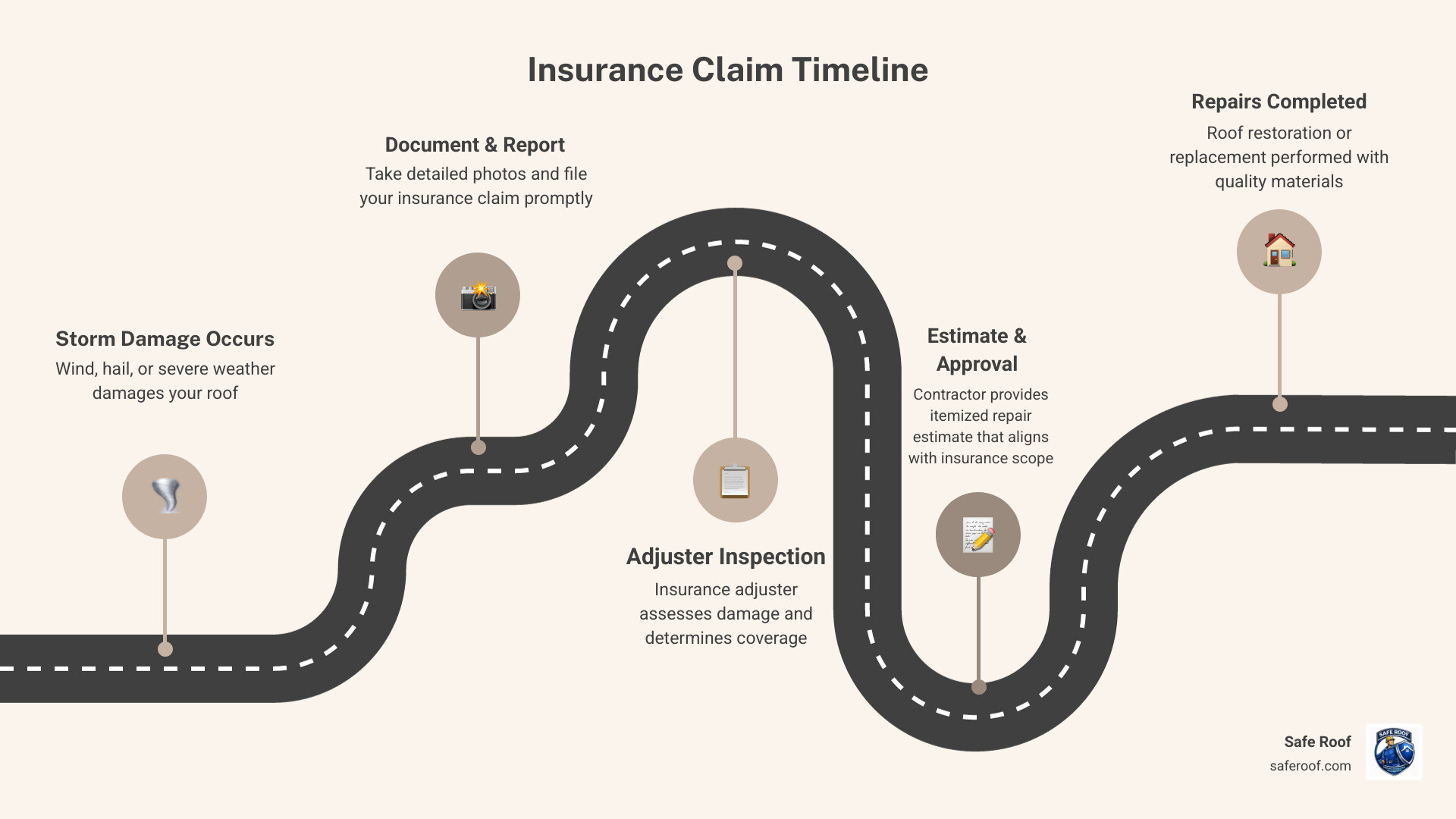
The core benefit of working with an insurance approved roofing contractor is the sheer amount of stress they remove from your shoulders. The process begins with a comprehensive, professional inspection. When we inspect a roof in Prosper, TX, or Oklahoma City, OK, we do not just look for missing shingles. We document the entire roofing system, including the underlayment, decking, flashing, and ventilation.
Once the damage is documented, we guide you through the process of filing your claim. When the insurance company schedules an adjuster to visit your home, we make sure our team is present for the adjuster meeting.
During this meeting, we walk the roof side-by-side with the adjuster to ensure all storm-related damage is noted in their report. This collaborative approach prevents the adjuster from missing critical items, such as bruised shingle underlayment or damaged valley flashing.
An experienced contractor also understands the critical differences between policy types:
- Replacement Cost Value (RCV): This policy type covers the full cost of repairing or replacing your damaged roof at current market prices, minus your deductible.
- Actual Cash Value (ACV): This policy type only pays for the depreciated value of your roof based on its age. If you have an ACV policy on an older roof, your out-of-pocket costs will be significantly higher.
We work directly with your adjuster to review their scope of work, ensuring that the insurance payout aligns with the actual cost of materials and labor in your local market. If you need help starting this process, you can learn more about our Insurance Claims Assistance services.
How an Insurance Approved Roofing Contractor Protects You from Scams
In the wake of a major hailstorm or high-wind event, neighborhoods are often flooded with door-to-door solicitors and “storm chasers.” These are out-of-state contractors who travel from town to town, chasing storm damage. They often pressure homeowners into signing exclusive contracts on the spot, promise to install a “free roof” by waiving the deductible, and then disappear once they collect the initial insurance check—leaving the homeowner with substandard work or an unfinished roof.
Working with an established, local, insurance-approved contractor protects you from these predatory tactics. Reputable local companies have deep roots in the community and a reputation to protect. Whether you are looking at local reviews for roofers in Collin County or checking out local business directories, choosing a local company ensures you have a physical office to visit if you ever need warranty work completed.
Furthermore, a legitimate contractor will never offer to waive your deductible. In both Texas and Oklahoma, it is a class A misdemeanor for a contractor to pay, waive, or rebate a homeowner’s insurance deductible. An insurance-approved contractor will always operate in full compliance with state laws, protecting you from potential insurance fraud charges. If your roof has sustained wind damage, we recommend working with a professional who understands these legal boundaries; you can find more information on our Wind Damage Roof Repair page.
How Approved Contractors Handle Storm and Hail Damage
Storm damage in the Southern Plains is uniquely destructive. High winds can tear shingles clean off a roof, while large hail can bruise the asphalt matting of a shingle, compromising its waterproofing capabilities and drastically shortening its lifespan.
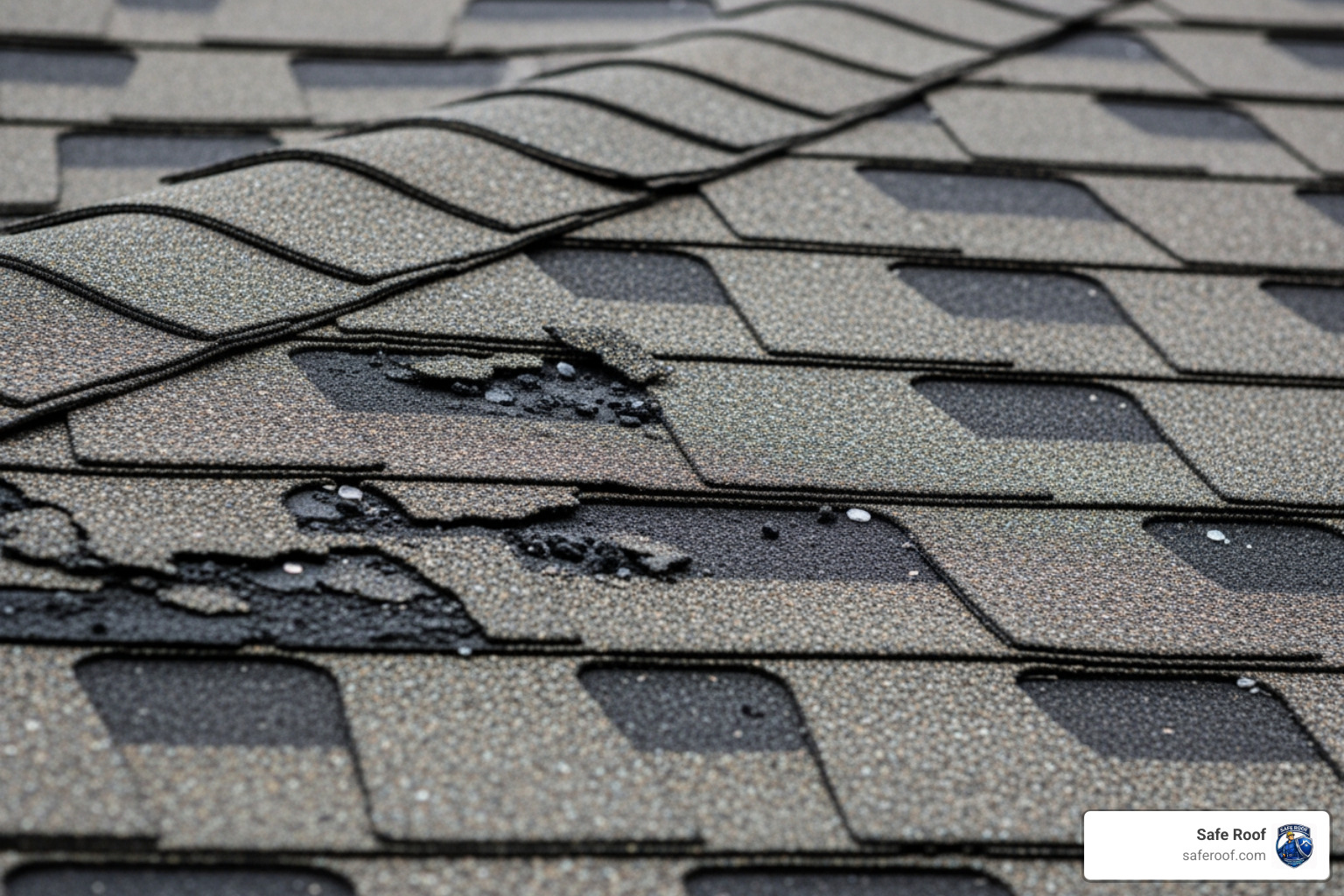
When we assess storm damage, we look for key indicators of compromise:
- Granule Loss: Hail impacts knock the protective mineral granules off asphalt shingles, exposing the underlying asphalt layer to harsh UV rays.
- Bruising: Heavy hail creates dark, soft spots on shingles where the fiberglass mat has fractured underneath.
- Wind Uplift: Strong winds can lift shingles and break the sealant strip underneath. Even if the shingle does not blow away, a broken seal allows water to blow up and under the shingles during the next rainstorm.
If your property has been hit by a storm, acting quickly is vital. Even small hail can cause hidden damage that leads to leaks months down the road. If you suspect your home has sustained damage, we recommend scheduling an inspection right away. You can explore our specialized Hail Damage Roof Repair services to see how we restore storm-damaged properties.
If the damage is widespread, a complete Roof Replacement may be necessary. An insurance-approved contractor will manage the entire project from start to finish, coordinating with your insurance company to ensure the replacement is fully funded and built to modern building codes.
Frequently Asked Questions about Insurance Roof Claims
Does homeowners insurance cover a 20-year-old roof?
Yes, homeowners insurance can cover a 20-year-old roof, but it depends entirely on the cause of the damage and your specific policy language. If a 20-year-old roof is damaged by a sudden, covered peril—such as a tornado, severe hailstorm, or a falling tree—your insurance policy should cover the repair or replacement.
However, insurance will not cover a roof that has simply reached the end of its natural lifespan due to normal wear and tear or neglect. Additionally, if you have an Actual Cash Value (ACV) policy, the insurance company will deduct significant depreciation based on the roof’s age, leaving you to pay a large portion of the replacement cost out of pocket.
In storm-prone areas, maintaining your roof is critical. In states like Florida, a massive surge in insurance non-renewals due to aging roofs has forced many homeowners to replace roofs over 15 years old just to keep their coverage. While Texas and Oklahoma have different regulatory landscapes, local insurance carriers are increasingly inspecting roofs during policy renewals and may require a replacement if the roof shows signs of advanced age.
What is the difference between ACV and RCV policies?
The difference between these two policy types determines how much money you will receive from your insurance company after a claim:
- Replacement Cost Value (RCV): This is the most comprehensive coverage. Under an RCV policy, the insurance company pays the actual cost to repair or replace your roof at current market prices. They will first send you an initial check based on the depreciated value of the roof, and then release the remaining “depreciated” funds once the contractor submits proof that the work has been completed. Your only out-of-pocket cost is your deductible.
- Actual Cash Value (ACV): Under an ACV policy, the insurance company only pays for what your roof is worth today, taking its age and wear into account. If your 15-year-old roof is destroyed by hail, the insurer will calculate the cost of a new roof and deduct 15 years of depreciation. You will only receive a check for the remaining value, meaning you must pay both your deductible and the accumulated depreciation out of pocket to get a new roof.
Can a contractor waive my insurance deductible?
No. Under Texas law (specifically House Bill 2102, effective September 1, 2019) and Oklahoma law, it is strictly illegal for a roofing contractor to waive, rebate, or absorb a homeowner’s insurance deductible.
Some unscrupulous contractors try to bypass this law by offering “advertising agreements,” “sign allowances,” or inflated estimates to cover the deductible. These practices constitute insurance fraud. If a contractor offers to waive your deductible, they are asking you to participate in a fraudulent scheme.
A reputable, insurance-approved contractor will always require you to pay your deductible as mandated by your insurance policy and state law. They will provide a clear, legal invoice showing that the deductible was paid.
Conclusion
Navigating a storm damage claim can feel overwhelming, but you do not have to do it alone. Hiring an insurance approved roofing contractor ensures that your claim is documented accurately, negotiated professionally, and completed to the highest industry standards.
At Safe Roof, we are proud to be a GAF-certified roofing contractor serving homeowners and commercial property owners across North Texas and Southern Oklahoma. From the heart of the DFW Metroplex to the communities of South and Central Oklahoma, we bring decades of experience, full-service insurance claim expertise, and industry-leading 50-year warranties to every project we touch.
If your home has been affected by recent storms, let our team handle the heavy lifting. Contact us today to schedule your comprehensive, hassle-free roof inspection.
Ready to get started? Visit our Insurance Claims Assistance page to schedule your free inspection today!