What an Insurance Claim Roof Contractor Actually Does (And Why It Matters)
Working with an insurance claim roof contractor is one of the most important decisions you’ll make after storm damage hits your home. Most homeowners have never filed a major roof insurance claim before — and the process can feel overwhelming fast.
Here’s a quick answer if you need it now:
What does an insurance claim roof contractor do?
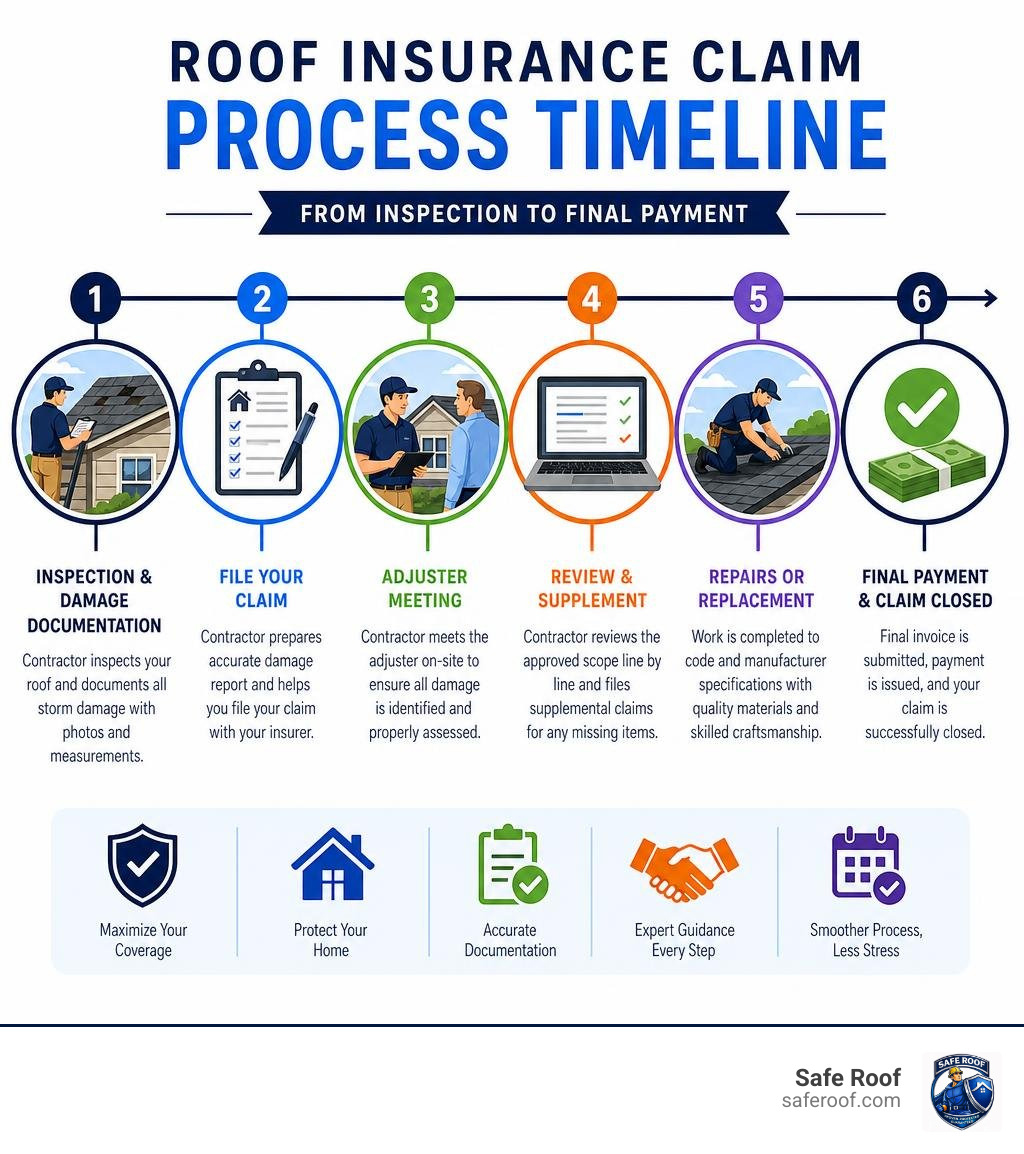
- Inspects your roof and documents all storm damage with photos and measurements
- Helps you file your claim with accurate damage reports your insurer can act on
- Meets the adjuster on-site to make sure no damage gets missed or undervalued
- Reviews the approved scope line by line and files supplemental claims if items are missing
- Completes the repairs or replacement to code and manufacturer specifications
The stakes are real. Roof replacement costs typically range from $5,000 to $15,000 or more, and a poorly documented claim can leave you paying far more out of pocket than you should. Filing without a knowledgeable contractor in your corner often means the adjuster’s report becomes the final word — even if it misses damage.
At Safe Roof, we’ve guided hundreds of homeowners through exactly this process across Southern Oklahoma and North Texas. I’m Jacob Ortiz, owner of Safe Roof and a GAF-certified insurance claim roof contractor with years of experience helping storm-affected homeowners navigate claims, document damage correctly, and get fair settlements. This guide walks you through every stage of the inspection and claims process — so you know exactly what to expect.
Learn more about insurance claim roof contractor:
Understanding the Role of an Insurance Claim Roof Contractor
When a severe storm drops hail or unleashes high winds across the DFW Metroplex or Central Oklahoma, your roof bears the brunt of the impact. However, repairing or replacing a storm-damaged roof involves two entirely different skill sets: high-quality craftsmanship and complex insurance navigation. This is where a specialized insurance claim roof contractor becomes invaluable.
What is an Insurance Claim Roof Contractor?
An insurance claim roof contractor is a professional roofing company that specializes in storm restoration, forensic damage assessment, and insurance policy compliance. Unlike a standard roofer who simply quotes a retail price for labor and materials, an insurance specialist understands how to translate physical property damage into the precise technical language and documentation formats that insurance carriers require.
For homeowners navigating this process, choosing a contractor with specific insurance expertise is critical. If you want to understand how these professionals align with your insurance carrier’s expectations, read The Homeowner Guide to Insurance Approved Roof Contractors for an in-depth breakdown.
Key Differences Between an Insurance Specialist and a Standard Roofer
A standard roofing contractor is excellent at installing shingles, but they often lack the administrative and technical capabilities required to successfully resolve an insurance claim.
Here is what sets an insurance specialist apart:
- Xactimate Estimating Software: Insurance carriers write their estimates using a specialized estimating software called Xactimate. An insurance-focused contractor uses this exact same software to ensure that our material costs, labor rates, and line-item scopes match what your insurance company expects to see.
- Building Code Compliance: Local building codes in North Texas and Southern Oklahoma change frequently. An insurance specialist knows how to identify required code upgrades—such as ice and water shields, drip edges, or updated ventilation—and prove to your insurer that these upgrades are legally required.
- Manufacturer Certifications: Top-tier certifications, like being GAF-certified, allow your contractor to offer enhanced warranties (like our 50-year system warranties) while remaining compliant with carrier requirements for quality installations.
If your home has been hit by a storm, relying on a standard roofer can lead to underpaid claims. For specialized support, it is best to consult professionals who understand the nuances of hail damage roof repair and wind restoration.
Who to Call First After Storm Damage: Contractor or Insurance?
If you walk outside after a severe storm and spot shingle granules in your driveway or dented gutters, your first instinct might be to call your insurance agent immediately. However, you should almost always call a reputable roofing contractor first.
Calling a contractor for a preliminary inspection before filing a claim protects you from several common pitfalls:
- Preventing Frivolous Claims: If you file a claim and the insurance adjuster visits your home only to find that your roof has no storm damage (or the damage is less than your deductible), your carrier will close the claim with zero payout. However, that claim still goes on your permanent insurance record (your CLUE report), which can negatively impact your premiums.
- Accurate Damage Mapping: A professional contractor will climb onto your roof, locate any hard-to-see damage, and provide a clear photo report. This gives you concrete evidence before you officially open a claim file.
- Emergency Mitigation: If your roof is actively leaking, a contractor can perform emergency tarping to prevent further interior damage. Insurance policies legally require homeowners to mitigate damage immediately to prevent further loss.
Before making any calls to your insurance carrier, schedule a professional assessment. You can learn more about what our experts look for during these initial visits by reading about our comprehensive roof inspections.
Step-by-Step Guide to Filing a Roof Insurance Claim
Filing an insurance claim doesn’t have to be a stressful ordeal. By following a systematic, organized process, you can ensure your home is restored quickly and your financial interests are protected.
Step 1: Professional Damage Assessment
The process begins with a comprehensive physical inspection. When we inspect a home, we don’t just look at the shingles. We perform a complete property assessment that includes:
- High-Resolution Photo Documentation: Capturing clear, close-up photos of bruised asphalt shingles, missing tab sections, and wind-lifted materials.
- Collateral Damage Checks: Documenting impact marks on metal roof vents, window screens, siding, and gutters to prove the severity of the storm.
- Interior Leak Detection: Checking ceilings and attics for water intrusion that could indicate structural framing damage.
If we find minor wind damage that does not warrant a full replacement, we will recommend a targeted roof repair instead of filing a full claim.
Step 2: Filing the Claim with Your Carrier
Once we confirm that your roof has qualifying storm damage, it is time to file the claim. You will contact your insurance provider directly (online, via their app, or over the phone) to open the claim.
When you file, make sure to have your contractor’s photo report handy. You will need to provide the exact storm date and a brief description of the damage. Once filed, the insurance company will assign you a claim number. For a detailed roadmap on selecting the right partner for this step, check out our guide on steps to take when hiring a hail damage roof contractor.
Step 3: The Adjuster Meeting and Scope Approval
After your claim is filed, the insurance company will schedule an adjuster to visit your home and inspect the roof. This is the most critical step in the entire process.
You should notify your contractor as soon as you have an adjuster meeting scheduled so they can attend in person. Your contractor will walk the roof alongside the adjuster to point out every instance of damage, ensuring the carrier’s initial scope of work is complete and accurate. This collaborative approach is essential for securing approval for a full, high-quality roof replacement rather than a cheap, temporary patch job.
The Adjuster Inspection: How Your Contractor Advocates for You
Many homeowners assume that the insurance adjuster’s job is to find every bit of damage on their roof. While many adjusters are thorough, they are often incredibly busy—especially after a major storm event—and can easily miss subtle signs of damage or overlook local building code requirements.
Why You Need an Insurance Claim Roof Contractor During the Adjuster Inspection
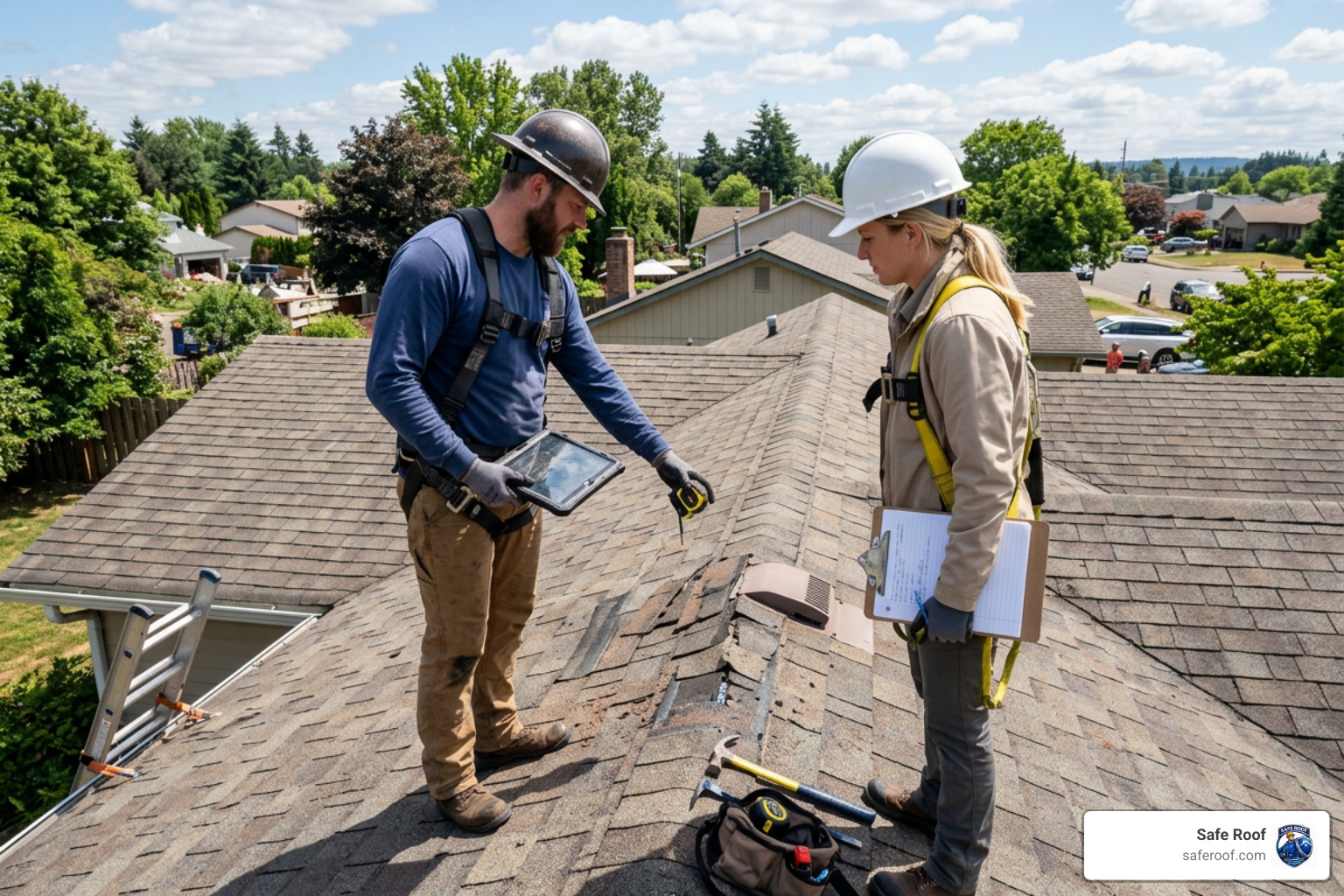
Having an experienced insurance claim roof contractor physically present during the adjuster’s inspection completely changes the dynamic of the meeting.
- Speaking the Same Technical Language: Our team understands the exact terms adjusters use. We can discuss “spatter marks,” “hail bruising,” and “wind uplift” on equal terms.
- Physical Damage Mapping: We mark damaged areas with chalk before the adjuster arrives, ensuring they don’t miss hard-to-see hail impacts on the back slopes of your roof.
- Providing On-Site Evidence: We provide the adjuster with our detailed photo reports, drone measurements, and local code documentation right there on the roof.
Handling Missed Damage and Supplemental Claims
It is incredibly common for an initial insurance settlement check to be lower than the actual cost of repairs. This usually happens because the adjuster missed hidden damage or omitted required line items from their estimate.
If this happens, your contractor will file a supplemental claim. A supplement is a standard request sent directly to your insurance carrier for additional funds. Common reasons for filing a supplement include:
- Hidden Damage: Finding rotted plywood decking or damaged structural framing once the old shingles are torn off.
- Omitted Code Upgrades: Adding required line items like drip edges or starter shingles that the adjuster left off the initial scope.
- Price Discrepancies: Adjusting material or labor costs to reflect current local market realities in Texas and Oklahoma.
Understanding Your Out-of-Pocket Costs and Deductibles
Navigating the financial side of a roof insurance claim can be confusing. The most important rule to remember is that your out-of-pocket cost is typically limited to your insurance policy’s deductible.
In Texas and Oklahoma, standard homeowners insurance deductibles are usually structured as a percentage of your home’s insured value (commonly 1% to 2%) rather than a flat dollar amount. For example, if your home is insured for $300,000, a 1% deductible means you must pay $3,000 out of pocket.
To understand how your insurance policy will payout for your roof replacement, you must know whether you have an Actual Cash Value (ACV) or a Replacement Cost Value (RCV) policy:
| Policy Feature | Actual Cash Value (ACV) | Replacement Cost Value (RCV) |
|---|---|---|
| How Payout is Calculated | Replacement cost minus depreciation (based on roof age) | Full cost to replace the roof at current market prices |
| Initial Payment | Depreciated value of the roof | Depreciated value (first check) |
| Final Payment | None (you pay the depreciation difference) | Recoverable depreciation (second check after work is done) |
| Your Out-of-Pocket Cost | Deductible + Depreciation | Deductible only |
Note: Under Texas law (specifically HB 2102) and Oklahoma law, it is illegal for a roofing contractor to waive, absorb, or refund your insurance deductible. Any contractor who offers to “waive your deductible” is asking you to participate in insurance fraud. Always work with an ethical contractor who requires your deductible to be paid legally.
How to Choose the Right Insurance Claim Roof Contractor
When a major hailstorm rolls through Collin County, Texas, or Carter County, Oklahoma, local neighborhoods are often flooded with door-to-door solicitors. Choosing the wrong contractor can lead to poor workmanship, voided manufacturer warranties, or even legal trouble.
Red Flags: Spotting Storm Chasers and Avoiding Roofing Scams
To protect your home and your wallet, watch out for these common storm chaser red flags:
- Out-of-State License Plates: “Storm chasers” follow severe weather patterns across the country. If their trucks have out-of-state plates, they likely won’t be around to honor their workmanship warranty if your roof leaks next year.
- High-Pressure Sales Tactics: Avoid sales representatives who demand that you sign an exclusive contract before providing a detailed, written damage report.
- Promises to “Waive” Deductibles: As mentioned, this is a major legal red flag. If they are willing to cheat the insurance company, they will likely cheat you on material quality and safety standards. For official guidance on this, review the Texas Department of Insurance Roofing Regulations.
Essential Qualifications, Licenses, and Certifications
When selecting an insurance claim roof contractor, ensure they possess the following qualifications:
- Local Office and References: Look for established physical locations in areas like Ardmore, OK, McKinney, TX, or Plano, TX.
- Active General Liability Insurance: Verify their insurance certificates directly with their insurance provider before any work begins on your home.
- Manufacturer Certifications: Choose a GAF-certified contractor who can offer upgraded 50-year system warranties that standard roofers cannot access.
- A+ Better Business Bureau (BBB) Rating: A strong local track record of resolving customer concerns is a great indicator of a reliable partner.
Frequently Asked Questions about Roof Insurance Claims
Will filing a roof insurance claim raise my premiums?
Filing a single storm damage claim should not raise your individual insurance rates. Because hail and wind damage are classified as “Acts of God” (events you could not prevent), insurance carriers generally cannot penalize you for filing a claim. However, your insurance rates may rise at renewal time because your entire zip code was affected by a catastrophic weather event—meaning your rates will likely go up whether you file a claim or not.
How long do I have to file a claim after a storm?
Most standard homeowners insurance policies in Texas and Oklahoma require you to file a claim within one year (12 months) of the storm date. Some carriers have even shorter windows. It is critical to document damage and file your claim as quickly as possible; waiting makes it much harder to prove that the damage was caused by a specific storm event rather than normal wear and tear.
How do contractors help maximize payouts legally?
We help maximize your payout by ensuring that every legitimate, code-required repair is included in your insurance scope. By using Xactimate software, providing clear photo documentation, and detailing local building code requirements, we ensure your insurance carrier pays for a complete, high-quality restoration that meets all manufacturer specifications.
Conclusion
Navigating a roof insurance claim doesn’t have to be a stressful, confusing maze. When you partner with an experienced, GAF-certified insurance claim roof contractor, you gain a professional advocate who will document your damage, meet your adjuster, handle the complex paperwork, and install a beautiful, durable roof backed by a 50-year warranty.
At Safe Roof, we take pride in restoring homes across Texas and Oklahoma with honesty, transparency, and top-tier craftsmanship. If you suspect your home has sustained hail or wind damage, don’t wait for a leak to appear.
Contact our storm restoration experts today for a free, no-obligation inspection and professional guidance. Visit our Safe Roof Insurance Claims Assistance page to get started, or call us directly at (800) 555-7663 to schedule your assessment. Let us handle the insurance stress so you can focus on your family!