
When Your Patio Roof Starts Leaking, Here’s What to Do First
Patio roof repair is something thousands of homeowners in Texas and Oklahoma deal with every season — especially after hail, high winds, or a brutal summer of UV exposure. The good news: many leaks can be stopped quickly with the right approach.
Quick answer for a leaking patio roof:
- Find the source — Look for water stains, cracks, or gaps at seams and flashing
- Clean the area — Remove debris, dirt, and loose material around the leak
- Apply a metal-specific sealant or patch — Press firmly to eliminate air bubbles
- Check gutters and drainage — Blocked gutters cause water to pool and worsen leaks
- Call a pro if damage is structural — Sagging, rot, or mold means DIY won’t cut it
Most minor repairs take just a few hours. More serious damage can take one to three days. And if your patio roof is pushing 15 years old, it may be time to think about replacement instead of another patch job.
Your patio isn’t just an outdoor space. For most homeowners, it’s where you spend your evenings, host cookouts, and ride out the summer heat. When the roof over it starts failing, it affects your whole home — and ignoring it only makes repairs more expensive.
That’s where Safe Roof’s professional home services come in. We’ve seen what happens when small leaks get left alone through a Texas storm season: what starts as a drip turns into rotted beams and a full replacement bill.
I’m Jacob Ortiz, owner of Safe Roof and a licensed roofing contractor serving homeowners across Southern Oklahoma and North Texas. I’ve handled everything from minor patio sealant jobs to full structural patio roof repair and replacement projects, and I’ll walk you through exactly what you need to know.
Identifying the Signs of Patio Roof Damage
Before you climb up on a ladder, you need to know what you are looking for. Patio roofs are highly exposed to the elements, and in areas like the DFW Metroplex and Central Oklahoma, our weather swings from baking heat to severe thunderstorms in a matter of hours.

To catch problems before they compromise your entire structure, look for these common warning signs:
- Water Stains and Dark Patches: These are the most obvious indicators. If you see circular yellow, brown, or dark stains on your patio ceiling, water is actively penetrating the outer layer.
- Sagging Beams and Fascia: If the rafters or support beams under your patio cover look bowed or warped, moisture has likely soaked into the wood, weakening its structural integrity.
- Peeling Paint or Bubbling Drywall: Moisture trapped behind painted wood or drywall causes the finish to lose adhesion, leading to unsightly peeling, cracking, or flaking.
- Mold, Mildew, or Rot: A damp environment is a breeding ground for mold. If you smell a musty odor or see green, black, or white fuzzy growth on your wood supports, you have a chronic leak.
- Rust and Corrosion: For metal patio covers, rust around fasteners, seams, or flashing indicates that the protective coating has worn off, leaving the steel or aluminum vulnerable to holes.
If you spot any of these red flags, it is essential to act quickly. Ignoring a small leak today can lead to structural failure tomorrow. When in doubt, scheduling an inspection with our professional roofing services can help you pinpoint the exact source of the damage before it spreads.
When to Choose DIY Patio Roof Repair vs. Replacement
A patio roof typically lasts 15 years before needing a full replacement, depending on weather exposure and installation quality.
To determine whether you can get away with a simple DIY patio roof repair or if you need a complete roof replacement, use this simple decision framework:
- Choose DIY Repair if: The leak is isolated to a single seam, a few loose screws, or a small puncture; the underlying wood deck and support beams are dry, solid, and free of rot; and the roofing material is less than 10 to 12 years old.
- Choose Professional Replacement if: There is visible sagging in the rafters or structural framing; mold or wood rot has spread across multiple support boards; the roof has multiple active leaks; or the materials are past their 15-year lifespan and deteriorating from decades of UV exposure.
Attempting to patch a structurally compromised roof with DIY sealants is like putting a band-aid on a broken bone. It might mask the drip temporarily, but the underlying wood will continue to rot, eventually leading to a costly collapse.
Common Causes of Patio Roof Leaks
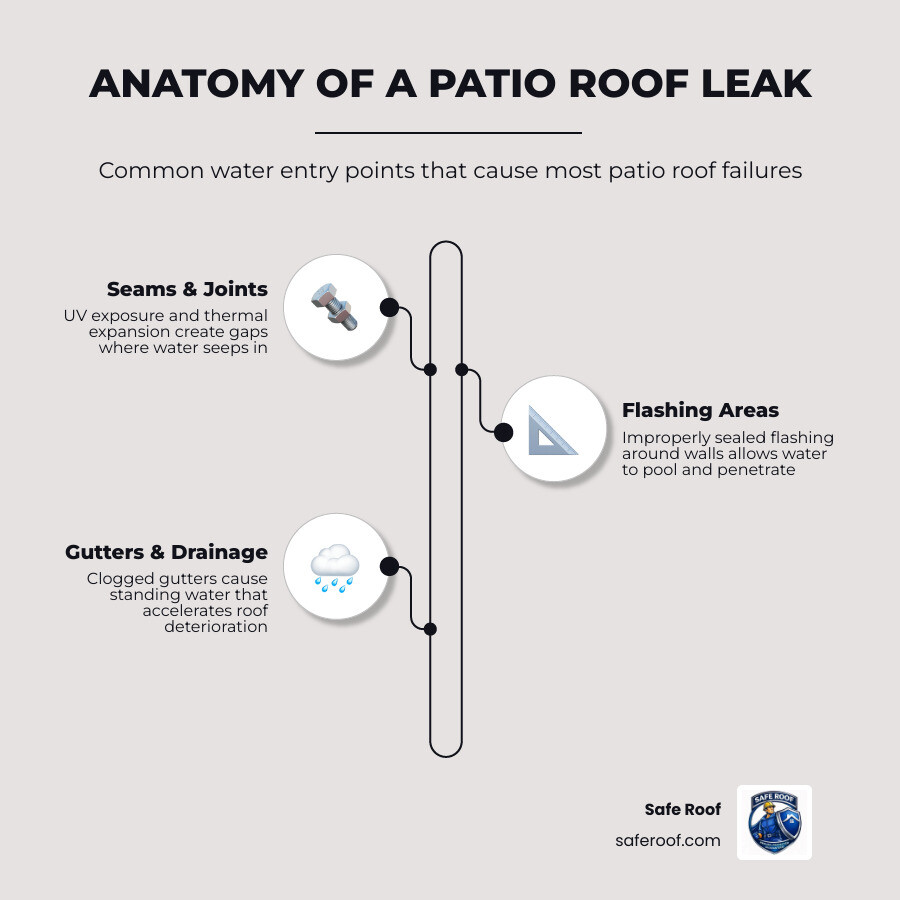
Understanding why patio roofs fail helps you prevent future issues. In our North Texas and Oklahoma service areas, we see three primary culprits:
- Intense UV Exposure: The Texas and Oklahoma sun is brutal. Constant ultraviolet radiation bakes roofing materials, causing rolled roofing, shingles, and sealants to dry out, crack, and lose their flexibility.
- Severe Storms and Wind: High winds can lift the edges of rolled roofing or metal panels, while hail punctures plastic-based materials and dents metal covers. If you suspect your patio has suffered hail or wind damage, explore our specialized storm damage roofing resources to learn how we restore storm-battered properties.
- Clogged Gutters and Standing Water: Because patio roofs often have a much shallower pitch than main house roofs, water drains slowly. If leaves and debris clog your gutters, water will back up, pool on the roof surface, and find its way through the smallest seams.
Step-by-Step Guide to DIY Patio Roof Repair
Ready to tackle the repair yourself? If you have confirmed that your patio’s structure is solid and the damage is localized, you can complete a basic repair in an afternoon.
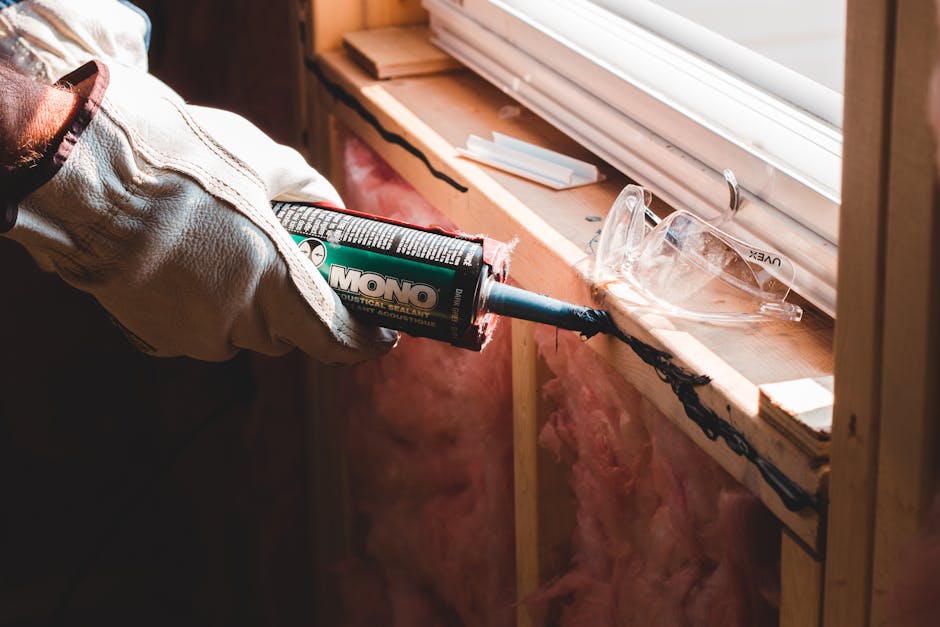
Here is how to execute a reliable roof repair safely and effectively:
- Step 1: Gather Your Safety Gear and Tools. Never step onto a wet or unstable roof. Wear rubber-soled shoes for traction, use a sturdy extension ladder secured on level ground, and wear safety glasses and heavy-duty work gloves. You will also need a wire brush, a putty knife, a caulking gun, and a high-quality metal or exterior-grade sealant.
- Step 2: Clean the Surface Thoroughly. Sealants will not adhere to dirt, algae, or crumbling debris. Use a wire brush and a mild detergent solution to scrub the area around the leak. Rinse it with clean water and let it dry completely.
- Step 3: Prepare the Damaged Area. If you are repairing a metal roof, scrape away any old, cracked silicone or peeling coatings with your putty knife. If you are fixing a minor crack in rolled roofing, ensure the edges of the tear are dry and free of loose granules.
- Step 4: Apply Metal-Specific Sealant or Patching Compound. For seams and joints, apply a generous bead of high-quality silicone or elastomeric sealant. If you are patching a larger hole, use a self-adhering repair tape or a metal patch, pressing firmly from the center outward to eliminate any trapped air bubbles.
- Step 5: Inspect and Repair the Flashing. The flashing—the metal transition piece where your patio roof connects to your home’s exterior wall—is a common leak point. Apply sealant along the top edge of the flashing where it meets the siding to create a watertight barrier.
Repairing an Aluminum or Metal Patio Roof
Metal patio covers, especially pan-style aluminum roofs, are incredibly durable, but they have a unique vulnerability: thermal expansion and contraction. As temperatures swing from freezing winter nights to scorching summer afternoons in places like Fort Worth and Plano, metal panels expand and contract.
This movement puts immense stress on fasteners and seams. Over time, screws back out, and sealants crack.
When repairing a metal patio roof:
- Replace backing washers: Inspect the neoprene or rubber washers under the roof screws. If they are dry-rotted or missing, replace them with new, weather-rated roofing fasteners.
- Use flexible sealants: Avoid rigid glues. Only use high-grade, 100% silicone sealants designed for metal roofing, as they remain flexible and move with the metal.
- Check the finish: That finish quality matters just as much as the metal itself. If the protective coating is chalking or peeling, apply a specialized metal roof coating to protect the underlying aluminum from corrosion. For complex metal installations, always check GAF’s industry standards for weatherproofing to ensure your repairs meet professional guidelines.
Fixing Low-Slope or Rolled Patio Roofing
Many residential patios feature a low-slope design, typically with a shallow 2/12 pitch (meaning a 2-inch vertical drop for every 12 inches of horizontal run).
Asphalt shingles should never be used on roofs with a pitch below 4/12. Shingles rely on gravity to shed water; on a low-slope roof, wind-driven rain will easily blow under shingles, leading to catastrophic leaks.
Instead, low-slope patios require continuous membrane surfaces, such as self-adhered rolled roofing or torch-down modified bitumen. If your rolled roofing is leaking, patching it requires careful attention to the substrate. Water pooling on low-slope roofs often rots the underlying wooden decking. If the deck feels spongy when you press on it, a simple patch will not suffice; you will need a professional structural roof repair to replace the rotted wood framing before applying a new membrane.
Costs, Timelines, and Materials for Patio Roof Projects
Planning your budget and schedule is key to a successful project. To help you weigh your options, we have compiled an original dataset detailing the most common patio roofing materials, their lifespans, and typical repair versus replacement costs in our service areas.
| Material Type | Average Lifespan | DIY Repair Cost (Materials) | Professional Replacement Cost | Best Suited For |
|---|---|---|---|---|
| Aluminum / Metal Panels | 20–30 Years | $50 – $150 | $3,000 – $6,000+ | Hot, sunny climates with high wind potential |
| Rolled Roofing (Modified Bitumen) | 8–12 Years | $40 – $100 | $2,000 – $4,500 | Flat or extremely low-slope patio structures |
| UV-Resistant Shingles | 15–20 Years | $30 – $80 | $2,500 – $5,000 | Patios with a steep pitch matched to the main house |
| Clay / Concrete Tiles | 50+ Years | $100 – $250 | $5,500 – $10,000+ | Heavy-duty, premium structures matching tile homes |
Budget Planning and Timelines
While a minor DIY patch job might only cost you $50 in sealants and a few hours of your weekend, a full patio replacement is a significant investment. In North Texas and Southern Oklahoma, a professional patio roof replacement typically begins around $2,000 and can exceed $5,000, depending on the size of the cover, structural complexity, and the premium nature of the materials used.
The good news is that most patio roof repairs are highly efficient. A typical professional patio roof repair or replacement can be completed within one to three days, assuming cooperative weather. If you want to ensure your investment is protected by industry-leading warranties and GAF-certified craftsmanship, reach out to our local roof repair experts in Oklahoma City or our DFW teams for an accurate, transparent estimate.
Frequently Asked Questions About Patio Roof Repair
Will homeowners insurance cover my patio roof repair?
Homeowners insurance will cover patio roof repairs if the damage was caused by a sudden, accidental covered peril—such as hail, windstorms, or a falling tree limb. Insurance will not cover repairs for damage resulting from normal wear and tear, lack of maintenance, or age.
Because Texas and Oklahoma are prime targets for severe weather, storm damage is highly common. If a severe storm rolls through Collin County or Carter County and damages your patio, your homeowners insurance policy should cover the cost of restoration. However, if the leak is due to old, dried-out sealant that you haven’t maintained for 15 years, the insurance adjuster will likely deny the claim. At Safe Roof, we specialize in navigating complex insurance claims and can help you document storm damage to maximize your coverage.
What are the best materials for a patio roof in hot climates?
In the baking heat of North Texas and Oklahoma, the best materials are those that offer high UV resistance and structural durability:
- Metal Roofing (Standing Seam or Aluminum): Metal reflects solar heat, keeping your patio cooler, and it won’t crack or dry out under intense sunlight.
- Clay or Concrete Tiles: These materials offer unmatched thermal mass, blocking heat transfer and lasting for decades, though they require heavy-duty structural framing.
- Silicone-Coated Flat Roofing: For low-slope patios, applying a highly reflective white silicone coating over a modified bitumen membrane helps reflect UV rays and significantly lowers the temperature underneath.
How often should a patio roof be inspected and coated?
Self-adhered or heat-applied patio roof materials should be coated and assessed for damage every 3 to 5 years according to manufacturer recommendations.
Additionally, we highly recommend performing a visual inspection of your patio cover twice a year—once in the spring before the heavy storm season, and once in the autumn. You should also check the roof immediately following any major hail storm or high-wind event to catch minor punctures before they turn into active leaks.
Conclusion
A leaking patio roof doesn’t have to ruin your outdoor living space. By identifying the early signs of damage, keeping your gutters clear, and applying the right sealants, you can extend the life of your patio cover for years to come.
However, when the damage goes deeper than a simple seam separation—or if you are facing structural sagging, rotted wood, or storm-related destruction—DIY fixes simply won’t cut it. You need a trusted partner who understands the unique climate challenges of Texas and Oklahoma.
As a GAF-certified contractor, Safe Roof is proud to offer enhanced 50-year warranties, full-service insurance claim support, and unmatched expertise in residential roof restoration. Whether you are in Dallas, Fort Worth, McKinney, or Oklahoma City, we have you covered.
Don’t wait for the next big storm to turn your minor drip into a major headache. Schedule a professional patio roof repair with our expert team today for your free, no-obligation inspection!