
What Does a Minor Hail Damage Roof Look Like?
Identifying a minor hail damage roof requires looking past the obvious. While large hail leaves clear, unmistakable destruction, minor hail strikes leave subtle signatures that are easily overlooked. If you suspect your home has been hit, partnering with a professional Texas and Oklahoma roofing contractor is the best way to evaluate the integrity of your property.
The physical appearance of hail damage depends entirely on the roofing material. When a storm rolls through the DFW Metroplex or South Oklahoma, the impact of hail on your home varies based on whether you have asphalt shingles, metal panels, clay tiles, or wood shakes. To help homeowners spot these early warning signs, we look for specific material reactions during our assessments, which align with industry standards established by leading manufacturers like GAF.
Minor Hail Damage Roof Indicators on Asphalt Shingles
Asphalt shingles cover approximately 75% of homes in the United States and are highly susceptible to storm impacts. On an asphalt shingle roof, a minor hail damage roof typically displays three primary indicators:
- Granule Loss exposing the underlying mat: Hailstones knock loose the protective mineral granules on the shingle surface. This creates small, dark spots where the black asphalt underlayment or fiberglass mat is exposed to UV rays.
- Bruising: Much like a bruise on an apple, these spots are soft to the touch. If you press down on a suspected impact point, it will feel spongy compared to the firm, undamaged areas around it.
- Circular Fractures: Minor hail can cause micro-cracks in the shingle’s asphalt layer, radiating outward from the point of impact.
If you notice these subtle signs on your shingles, it is critical to address them before water begins to seep through. You can learn more about our targeted repair solutions on our Hail Damage Roof Repair service page.
Minor Hail Damage Roof Indicators on Metal, Tile, and Wood
Non-asphalt roofing materials react differently to hail impacts:
- Metal Roofing: Minor hail damage on metal roofs rarely causes leaks immediately. Instead, it presents as shallow, circular dents or dimples. While often cosmetic, these impacts can chip or scratch the protective paint finish. Over time, this exposed metal is vulnerable to rust and corrosion.
- Clay and Concrete Tiles: Clay and concrete tiles are incredibly durable but brittle. Minor hail damage on these roofs looks like small chips, star-shaped fractures, or clean, sharp cracks along the edges of the tiles.
- Wood Shakes and Shingles: Wood reacts to hail by splitting. Minor damage appears as random, sharp-edged splits along the grain of the wood, often showing a fresh, light-brown or orange color inside the split.
If you live in Oklahoma and have recently experienced severe weather, we recommend scheduling a professional inspection to assess the damage and plan your localized recovery steps.
Hail Damage vs. Normal Wear and Tear
Distinguishing actual hail damage from normal wear and tear is one of the biggest challenges for homeowners and insurance adjusters alike. Because normal roof aging can mimic storm damage, understanding the differences is key to filing a successful claim.
| Feature | Hail Damage | Normal Wear & Tear / Aging |
|---|---|---|
| Pattern | Completely random across all slopes | Symmetrical, localized, or uniform across the roof |
| Granule Loss | Sharp, localized circular loss with exposed dark mat | Gradual, widespread thinning over the entire slope |
| Texture | Soft, bruised, or spongy at impact points | Firm, brittle, or stiff throughout |
| Associated Damage | Dents on gutters, siding, and A/C units | No damage to surrounding metal fixtures |
| Splits (Wood) | Sharp, light-colored splits with no weathering | Weathered, dark, rounded splits from expansion |
Natural weathering processes like blistering, cracking, and mechanical damage are often mistaken for hail. Blistering occurs when moisture trapped inside the shingle heats up and pops, leaving a crater. However, unlike hail bruises, blisters are firm to the touch and do not have a soft fiberglass mat underneath. Mechanical damage—often caused by foot traffic or poor installation—usually appears in neat rows or localized patterns rather than the random distribution of a hailstorm.
To ensure you don’t misidentify these signs, we highly recommend scheduling professional Roof Inspections to get an accurate, documented assessment of your roof’s condition.
What Size Hail Causes Roof Damage?
The size of the hail is the primary driver of roof damage, but it is not the only factor. Wind speed, wind direction, roof age, and the angle of impact play massive roles in how much damage occurs.
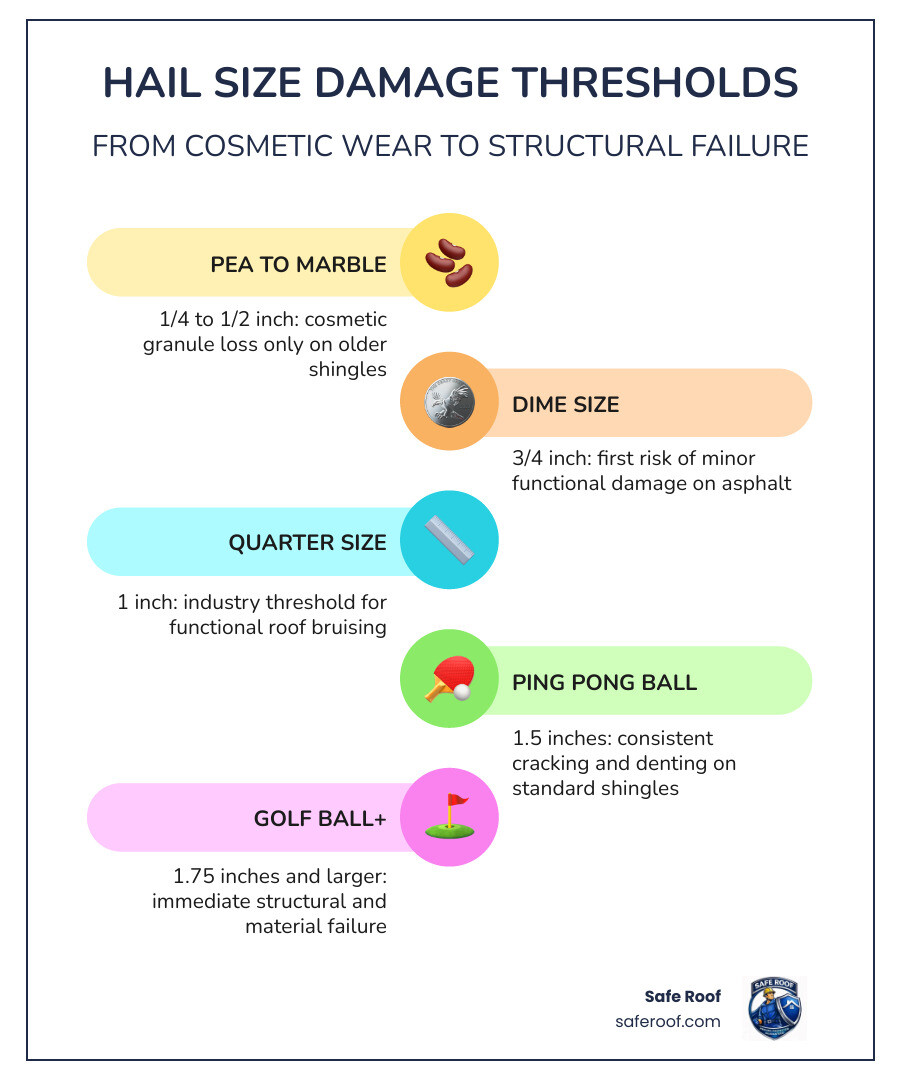
- Pea-Sized (1/4 inch) to Marble-Sized (1/2 inch): This size rarely causes functional damage. It may accelerate granule loss on older, brittle asphalt shingles but is generally considered cosmetic.
- Dime-Sized (3/4 inch): This is the absolute minimum threshold where minor damage can occur on standard asphalt shingles. It can knock off granules and dent thin aluminum gutters or vinyl siding.
- Quarter-Sized (1 inch): One inch is the widely recognized industry threshold for functional roof damage. At this size, hail has enough mass and velocity to bruise asphalt shingles, crack older wood shakes, and dent metal components.
- Half-Dollar to Ping Pong Ball (1.25 to 1.5 inches): Hail of this size causes consistent, functional damage to standard 3-tab and architectural shingles.
- Golf Ball to Baseball (1.75 to 2.75+ inches): At this scale, hail causes catastrophic, immediate damage, fracturing shingles, shattering clay tiles, and puncturing roof underlayment.
In high-wind areas like Prosper, TX, even 3/4-inch hail can be driven sideways at extreme speeds, causing the same level of damage as 1-inch hail in calm conditions. If your area has recently experienced a major storm, getting a professional inspection is the most reliable way to document local damage patterns and protect your property.
The Hidden Risks of Ignoring Minor Hail Damage
It is tempting to ignore a minor hail damage roof, especially if there are no active leaks inside your home. However, minor damage is a ticking clock.
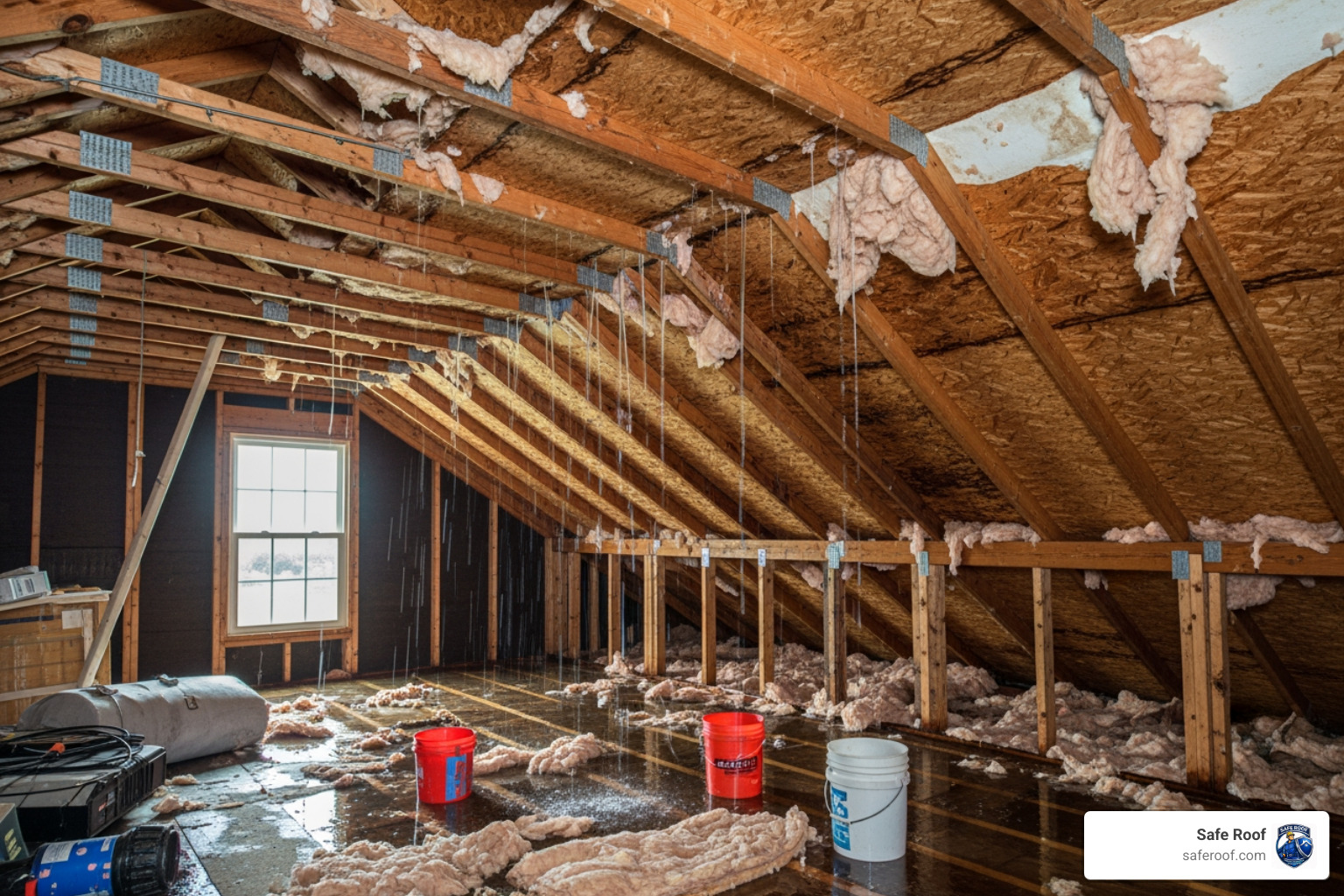
When hail bruises a shingle, it compromises the fiberglass mat beneath. Over the next 12 to 18 months, the sun’s UV rays bake the exposed asphalt, causing it to dry out, crack, and curl. Once the shingles lose their waterproofing ability, rainwater begins to bypass the shingle layer entirely.
This slow water intrusion leads to several severe, long-term structural risks:
- Mold and Mildew Growth: Trapped moisture in your attic space creates the perfect breeding ground for toxic mold, compromising your family’s indoor air quality.
- Structural Wood Rot: Water leaking onto your roof decking, rafters, and ceiling joists will rot the wood, weakening your home’s structural framing.
- Compromised Roof Lifespan: Ignoring minor hail damage can easily shave 10 to 15 years off the expected lifespan of your roof, turning a minor repair job into a premature, expensive replacement.
To protect your home from these progressive hazards, prompt action is essential. Learn how we handle storm-damaged properties by visiting our Storm Damage Roofing service page.
Navigating Insurance Claims for Minor Hail Damage
Filing an insurance claim for minor hail damage requires careful consideration. Unlike major catastrophes, minor damage may not always warrant a claim, depending on your policy and deductible.
Most homeowners insurance policies cover hail damage, but they distinguish between functional damage (which affects the roof’s waterproofing ability) and cosmetic damage (which only affects the roof’s appearance). Many modern policies include cosmetic damage exclusions, meaning they will not pay to repair minor dents on metal roofs or siding if the roof is still structurally sound.
Additionally, you must consider your claims history. Filing a claim that results in a payout lower than your deductible—or one that gets denied entirely—still goes on your insurance record. This can cause your premiums to rise or make it harder to secure coverage in the future.
Most insurance carriers in Texas and Oklahoma enforce a strict 12-to-24-month deadline from the date of the storm to file a claim. If you need professional guidance to document the damage and navigate the adjuster meeting, our team offers specialized Insurance Claims Assistance to ensure your claim is handled fairly.
How to Safely Inspect Your Roof and Choose Repair Options
We never recommend that homeowners climb onto their roofs to inspect for damage. Roofs are incredibly steep, and loose granules make them highly slip-prone after a storm. Instead, you can conduct a safe, highly effective ground-level inspection using this checklist:
- Check the Gutters: Look for heavy accumulations of shingle granules in your gutters or at the base of your downspouts.
- Inspect Metal Fixtures: Look for dents on easy-to-reach metal surfaces like your mailbox, gutters, downspouts, siding, and outdoor air conditioning condenser units. If these are dented, your roof likely took a hit too.
- Scan the Roof from the Ground: Use binoculars to look for random dark spots, cracked shingles, or lifted ridge caps.

If you find signs of impact, it is time to call a professional. Minor repairs can range anywhere from $375 to $1,500, while a full replacement can cost significantly more. Working with GAF-certified contractors ensures that your repairs are performed to the highest manufacturer standards and will not void your existing warranties.
If your roof is older or has sustained widespread minor damage, a targeted Roof Repair or a complete Roof Replacement may be the best long-term investment.
Frequently Asked Questions about Minor Hail Damage
Can 1/2 inch hail damage a roof?
Generally, no. Half-inch (marble-sized) hail does not have the mass or terminal velocity to cause functional damage to a structurally sound roof. However, if your roof is extremely old, brittle, or already degranulated, half-inch hail can accelerate granule loss and shorten its remaining lifespan.
How long do you have to file a hail damage claim in Texas and Oklahoma?
In both Texas and Oklahoma, most insurance policies require you to file a claim within 12 to 24 months of the storm event. Because minor hail damage is hard to spot and may not cause visible leaks for over a year, it is crucial to have your roof professionally inspected immediately after a storm so you don’t miss this filing window.
Is minor cosmetic hail damage covered by homeowners insurance?
It depends entirely on your individual policy. Many insurance companies have added “cosmetic damage exclusions” to their policies in recent years. If your policy has this exclusion, the insurer will not pay to repair minor dents on metal roofs, gutters, or siding unless the damage compromises the roof’s ability to shed water.
Conclusion
When it comes to a minor hail damage roof, waiting to see what happens is rarely the safest choice. Small dings and minor granule loss can rapidly escalate into costly leaks, structural wood rot, and mold growth.
At Safe Roof, we are proud to be a GAF-certified roofing contractor specializing in residential and commercial roof repair, storm damage restoration, and insurance claim navigation across Texas and Oklahoma. Whether you are in Ardmore, OK, the DFW Metroplex, or Collin County, TX, we protect your home with our industry-leading, enhanced 50-year warranties.
Don’t let minor storm damage turn into a major headache. Get a professional, honest evaluation of your roof today. Request a Free Roof Quote online, or learn more about our Hail Damage Roof Repair services to get started.