Why Metal Roofing Is One of the Smartest Investments for Your Home
Metal roofing is one of the fastest-growing choices for homeowners across the United States — and for good reason. If you are looking to upgrade your home’s protection, partnering with an experienced roofing contractor ensures you get the highest quality installation and materials.
Here’s a quick snapshot of what you need to know:
| Factor | Metal Roofing |
|---|---|
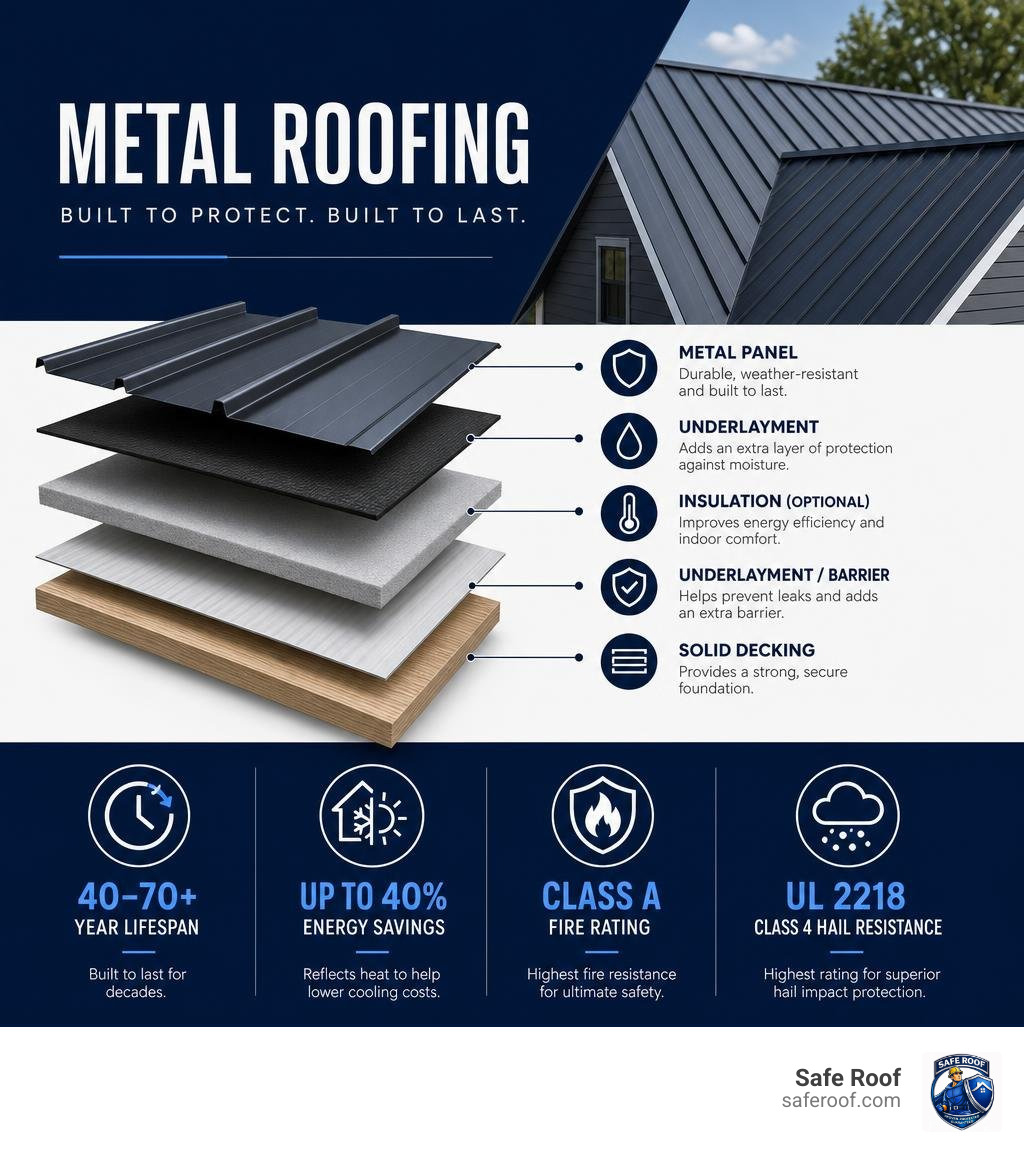
| Lifespan | 40–70+ years |
| Cooling cost savings | Up to 40% |
| Home value increase | Up to 6% |
| Cost recoup on resale | 85.9%–95.5% |
| Fire rating | Class A (highest) |
| Hail resistance | UL 2218 Class 4 (highest) |
| Wind resistance | Up to 120+ mph |
If your roof is aging, storm-damaged, or simply underperforming, metal is worth a serious look. It lasts decades longer than asphalt shingles, holds up against Oklahoma hailstorms and Texas heat, and can cut your energy bills significantly.
But with so many materials, panel styles, and contractors to choose from, the decision can feel overwhelming — especially when you’re already dealing with storm damage or a leaky roof.
That’s exactly what this guide is here to solve. Whether you’re comparing steel versus aluminum, standing seam versus corrugated panels, or trying to figure out if your insurance will cover an upgrade, we cover it all in plain language.
I’m Jacob Ortiz, owner of Safe Roof, a licensed roofing contractor serving homeowners and businesses across Southern Oklahoma and North Texas, with hands-on experience installing and restoring metal roofing systems across some of the country’s most weather-exposed markets. In this guide, I’ll walk you through everything I’ve learned — so you can make a confident, informed decision.
The Rise of Metal Roofing in Modern Construction
In recent years, we have witnessed a massive shift in how homeowners and commercial property owners view their roofing options. According to market research, U.S. residential demand for metal roofing surged to a record-high 18% in 2022, representing an impressive 6% increase in just three years.
This growing popularity is not a passing trend. As weather patterns become more volatile across the DFW Metroplex and Central Oklahoma, traditional materials are failing faster than ever. Homeowners are realizing that replacing a temporary roof every 10 to 12 years is a financial drain.
Investing in a metal roof raises a home’s average resale value by up to 6%. Furthermore, because of their extreme durability and fire-resistant properties, homeowners typically recoup between 85.9% and 95.5% of the initial installation costs upon resale, not to mention the substantial premium discounts offered by many homeowners insurance providers in Texas and Oklahoma. To explore how this upgrade fits your property, you can Learn more about our professional metal roofing services.
Core Materials: Comparing Steel, Aluminum, Copper, and Zinc
Selecting the right metal is the foundation of a successful roofing project. Each material possesses unique chemical and physical properties that dictate how it performs under the baking Texas sun or during a freezing Oklahoma winter.
| Material | Average Lifespan | Weight (per Sq. Ft.) | Relative Cost | Best Suited For |
|---|---|---|---|---|
| Steel (Galvalume/Galvanized) | 40–70 Years | 1.0–1.5 lbs | $$ | Budget-conscious residential & commercial |
| Aluminum | 50–75 Years | 0.5–0.7 lbs | $$$ | Coastal areas, humid climates, lightweight retrofits |
| Copper | 100–200+ Years | 1.0–1.2 lbs | $$$$$ | Historic restorations, luxury accents, ultimate longevity |
| Zinc | 80–140 Years | 1.0–1.2 lbs | $$$$ | Modern architectural designs, self-healing applications |
Steel and Aluminum Options
Steel is the workhorse of the metal roofing industry. It is highly durable, structurally rigid, and cost-effective. Most modern steel roofs are treated with either a galvanized zinc coating or a Galvalume coating (an alloy of aluminum and zinc) to prevent rust and corrosion. For those seeking premium architectural performance, you can Explore high-quality standing steel systems that utilize Kynar 500 PVDF paint systems to resist fading and chalking for decades.
Aluminum is an incredibly lightweight option, weighing as little as half a pound per square foot. Because aluminum is completely rustproof, it is highly recommended for humid environments or areas with high salt exposure. Additionally, aluminum is highly reflective, saving homeowners up to 20% on heating and cooling costs by bouncing solar radiation away from the attic space.
Premium Copper and Zinc Alloys
For those seeking the absolute pinnacle of architectural aesthetics and performance, copper and zinc are the gold standards.
Copper requires no paint or protective coatings. Over time, it undergoes a beautiful natural patination process, transitioning from a bright salmon-pink to deep russet-bronze, and finally to a classic verdigris green. This living patina acts as a self-passivating protective barrier. Copper roofs boast a documented lifespan exceeding 100 to 200 years, as demonstrated by historic installations like the U.S. Capitol Dome.
Zinc is another premium, eco-friendly metal that requires only 25% of the energy to process compared to steel or copper. Like copper, zinc develops a protective patina over time that heals itself from minor scratches, making it virtually maintenance-free for over a century.
Panel Styles, Profiles, and Fastening Systems
The way metal panels are formed and fastened to your roof deck dramatically influences both the building’s visual appeal and its structural weather resistance.
Concealed Fastener Standing Seam Metal Roofing Systems
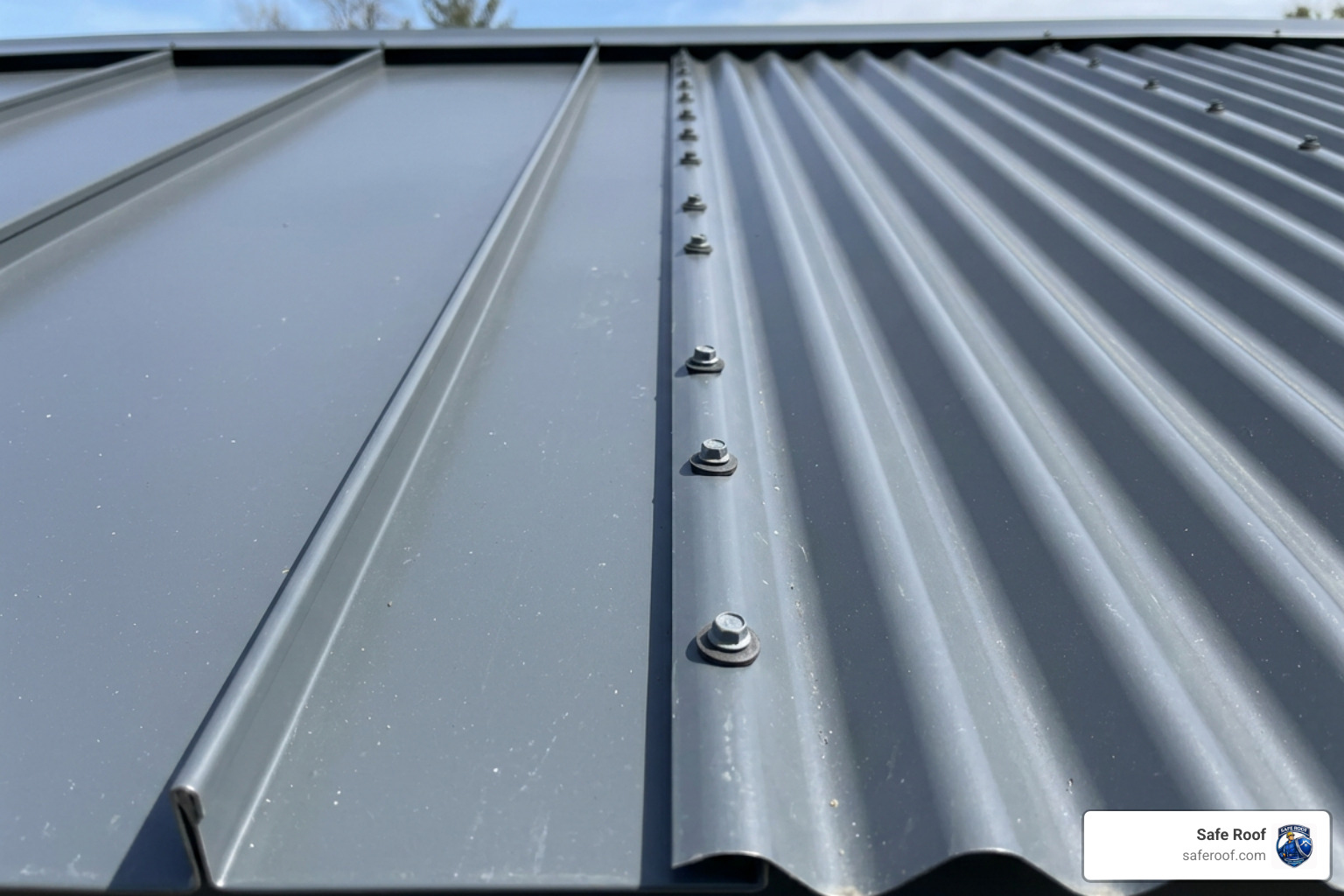
Standing seam systems represent the highest tier of metal roof engineering. In these systems, the fasteners are completely hidden underneath the metal panels. The panels are joined together by raised interlocking seams—typically 1 to 2 inches high—that run vertically up the roof slope.
Because the fasteners are concealed, they are never exposed to rain, wind, or UV rays, eliminating the risk of leaks developing around fastener holes. Standing seam systems allow the metal to expand and contract naturally with temperature fluctuations without putting stress on the screws.
Homeowners can Discover standing seam shingle options that combine this advanced weathertight technology with a traditional shingle aesthetic. To ensure these systems perform flawlessly, we recommend professional installation; you can Read about our comprehensive roof installation process to see how our team handles these precise configurations.
Exposed Fastener and Corrugated Panels
Exposed fastener systems, such as PBR (Purline Bearing Rib) and classic corrugated panels, are fastened by driving screws directly through the face of the metal panel. These systems are highly popular for agricultural, industrial, and budget-friendly residential projects.
While they require periodic inspections to ensure the neoprene washers around the screws remain intact, they offer incredible strength and are highly cost-effective. If you are planning a commercial or utility project, you can View technical specifications for PBR panels to evaluate their load-bearing capabilities. For regional material sourcing, regional centers like the Garland, Texas Service Center provide excellent localized supply chains for these profiles.
Aesthetic Versatility of Stone-Coated Metal Roofing
If you love the look of traditional roofing materials but want the unmatched durability of steel, stone-coated metal roofing is the perfect middle ground. These panels are stamped from high-grade structural steel and coated with natural stone granules.
This process allows manufacturers to replicate the exact depth, texture, and color of asphalt shingles, Mediterranean clay tiles, or rustic wood shakes. Best of all, they weigh only 1.6 lbs per square foot—far lighter than real clay tiles (which can weigh up to 11 lbs per square foot)—meaning you get the luxury look without needing to reinforce your home’s structural framing.
Metal vs. Traditional Roofing Materials
How does metal roofing hold up against traditional alternatives? Let’s look at the numbers.
- Asphalt Shingles: While asphalt shingles have a lower upfront cost, they typically need to be replaced every 12 to 15 years in storm-prone regions like North Texas and Central Oklahoma. High winds easily peel them back, and hail can bruise the asphalt matrix, leading to rapid granule loss and leaks.
- Clay and Concrete Tiles: Clay tiles look beautiful but are incredibly heavy, expensive, and prone to cracking under the impact of heavy hail or foot traffic.
- Wood Shakes: Wood shakes offer a rustic aesthetic but present a severe fire hazard, require constant maintenance to prevent rot and mold, and carry a short lifespan in humid or wet climates.
By contrast, a metal roof is a “once-and-for-all” solution. It cannot rot, crack, or support mold growth, and it carries the highest ratings for fire and wind resistance. If you are tired of dealing with temporary roofs, you can Schedule a professional roof replacement with our certified team.
Performance in Extreme Weather and Environmental Benefits
Texas and Oklahoma experience some of the most punishing weather in North America. From triple-digit summer heat waves to severe convective supercells carrying damaging winds and giant hail, your roof is your first line of defense.
Hail and Wind Resistance
Most high-quality metal roofs carry a UL 2218 Class 4 Impact Resistance rating. During testing, these roofs withstand the impact of 2-inch steel balls dropped from a height of 20 feet without cracking or fracturing. In the real world, this means your roof can survive severe hailstorms that would completely destroy an asphalt shingle roof.
Furthermore, standing seam metal roofs are engineered to withstand hurricane-force winds up to 120–140 mph. If your current roof has recently suffered from severe weather, you can Get expert hail damage roof repair or Find reliable wind damage roof repair to restore your home’s safety.
Insulated Panels and Thermal Performance
Metal roofs are highly energy-efficient. Instead of absorbing heat and radiating it down into your home like dark asphalt shingles, metal reflects solar radiant heat. This thermal barrier can reduce your cooling costs by up to 40% during the peak of summer.
For commercial buildings, cold storage facilities, or modern residential designs, insulated metal panels (IMPs) take thermal performance to the next level. These composite panels feature built-in polyurethane foam cores that deliver continuous insulation R-values ranging from R-17.5 to over R-50. You can Check out insulated standing seam composite panels to see how these advanced systems work, or Learn about our commercial roofing solutions to see how we apply them to large-scale properties.
Cost Analysis, ROI, and Myth-Busting
While the upfront cost of a metal roof is higher than asphalt shingles, it is a far more profitable investment over time.
Consider the 50-year lifecycle cost: over 50 years, you would likely need to replace an asphalt roof 3 to 4 times. When you add up the costs of multiple tear-offs, labor, materials, and rising inflation, the traditional roof ends up costing twice as much as a single metal roof that lasts for half a century.
Let’s bust a few common myths that hold homeowners back:
- “Metal roofs are noisy in the rain.”
Fact: When installed over solid wood decking and high-quality underlayment, a metal roof is no noisier than any other roof type. The attic space and home insulation easily absorb the sound. - “Metal roofs attract lightning.”
Fact: Lightning strikes the highest point in an area, regardless of material. If your home is struck, metal is actually the safest material because it is non-combustible and safely disperses the electrical charge. - “Metal roofs rust quickly.”
Fact: Modern metallic coatings (like Galvalume) and advanced PVDF paint finishes completely protect the raw steel from moisture, preventing rust for decades.
Frequently Asked Questions About Metal Roofs
Can metal panels be installed over existing asphalt shingles?
Yes, in many cases, metal roofing can be retrofitted directly over existing asphalt shingles. This “roof-over” method eliminates the labor and disposal costs of a complete tear-off. However, local building codes in Collin County, TX, and Oklahoma City, OK, typically restrict roofs to a maximum of two layers. To determine if your home’s structure can support this, you should Schedule a comprehensive roof inspection with a licensed professional.
Do metal roofs attract lightning or make excessive noise during rain?
No. Metal roofs do not attract lightning, and they are not noisy. Acoustic testing shows that a metal roof installed over solid plywood decking with standard attic insulation keeps rain noise within 1 to 3 decibels of a traditional asphalt shingle roof—rendering the difference imperceptible to the human ear.
How do I choose the right contractor and evaluate warranties?
Look for a contractor with manufacturer certifications (such as GAF certification) and extensive local experience in Texas and Oklahoma. Always ask about both the manufacturer’s material warranty and the contractor’s workmanship warranty. At Safe Roof, we offer enhanced 50-year warranties to give our clients absolute peace of mind. You can Contact our team for a free roof quote to get a detailed, transparent estimate.
Conclusion
A metal roof is more than just a shelter; it is a lifetime investment in your home’s efficiency, value, and storm safety.
At Safe Roof, we are proud to be GAF-certified roofing specialists serving homeowners and businesses across North Texas and Central/South Oklahoma—including Dallas, Fort Worth, Plano, Celina, Prosper, McKinney, Ardmore, and Oklahoma City. Whether you need storm damage restoration, an insurance claim consultation, or a premium metal roof upgrade backed by our enhanced 50-year warranties, our team is ready to help.
To see our craftsmanship in action, you can Browse our completed projects in our project gallery or Read client testimonials from your neighbors.
Ready to make the switch? Get your free metal roofing quote today to speak directly with one of our storm damage and metal roofing experts.