What You Should Know About Tin Roofing Sheets Before You Buy
Tin roofing sheets are a category of metal roofing panels that have covered everything from farmhouses to factories for well over a century — and they’re still one of the most searched roofing options today. If you are planning a new build or need storm restoration, partnering with an experienced roofing contractor in Texas and Oklahoma ensures your investment is protected.
Quick answer: What are tin roofing sheets?
| Feature | Details |
|---|---|
| Material | Steel or stainless steel with a tin or zinc coating |
| Common profiles | Corrugated, ribbed (classic rib), standing seam |
| Typical lifespan | 5-10 years (basic GI sheets) to 40-70+ years (premium coated panels) |
| Best for | Agricultural sheds, residential homes, commercial buildings, temporary structures |
| Cost range | ~$1.50-$5.00/sq ft for materials; $7-$16/sq ft installed |
| Key advantage | Long-lasting, low maintenance, recyclable |
If you’re a homeowner or business owner in Texas or Oklahoma weighing your roofing options after storm damage or an aging roof, you’re in the right place. This guide breaks down everything — materials, costs, profiles, installation, and maintenance — so you can make a confident decision.
Metal roofing has evolved significantly. What was once simple tin plate is now a sophisticated category of coated steel and stainless steel products, engineered to handle extreme weather, reduce maintenance, and last decades longer than asphalt shingles. As a trusted local partner, we work with these materials regularly and know what actually matters in the field.
I’m Jacob Ortiz, owner of Safe Roof and a licensed roofing contractor with hands-on experience installing and inspecting tin roofing sheets across some of the country’s most storm-exposed markets. In this guide, I’ll share what I’ve learned working with metal roofing systems on real homes and businesses — so you get straight answers, not sales talk.
What Are Tin Roofing Sheets?
To understand modern tin roofing sheets, we must first clear up a very common historical misunderstanding. When most people say “tin roof,” they are actually referring to galvanized steel or aluminum.
Historically, true tinplate was a highly popular material consisting of soft iron or cold-rolled low-carbon steel sheets dipped in molten tin. This tin coating provided a non-toxic, rust-resistant barrier that protected the underlying steel from corroding. Today, the manufacturing process has evolved to electroplating, which applies a micro-thin, incredibly uniform layer of pure tin to a steel base.
According to industrial specifications detailed by Lishengda, high-quality cold-rolled tinplate sheets combine the structural strength of low-carbon steel with the exceptional corrosion resistance of tin. Tinplate is widely valued for its sealing capabilities and non-toxic properties, making it highly versatile. When used in industrial, commercial, or agricultural settings, modern tin-coated products provide a robust defense against moisture and UV exposure, as outlined in the technical guide on Petropipe.co.in.

How do tin roofing sheets differ from other metal roofing materials?
- Tin vs. Aluminum: Aluminum is naturally rust-proof and highly reflective, making it excellent for heat dissipation. However, aluminum is a softer metal than steel, making it more susceptible to denting from heavy hail, which is a major concern in the DFW Metroplex and Central Oklahoma. Aluminum is also generally more expensive than standard steel-based sheets.
- Tin vs. Galvanized Steel: Galvanized steel uses a zinc coating to protect the steel core from corrosion. While galvanized steel is the modern industry standard for residential and commercial metal roofing, tin-coated steel (or terne metal) offers a unique historical aesthetic and a highly uniform weathering process that many historic properties require.
If you are currently dealing with a severely damaged, leaking, or aging roof, understanding these material differences is the first step in planning a successful roof replacement.
The Pros and Cons of Tin Roofing Sheets
Every roofing material comes with a set of trade-offs. Before investing in a metal roof, you should weigh how well tin roofing sheets align with your budget, aesthetic preferences, and local climate.
Comparison of Metal Roofing Materials
| Metric | Tin-Plated / Terne Steel | Galvanized Steel | Aluminum |
|---|---|---|---|
| Core Material | Cold-Rolled Steel | Carbon Steel | Alloys of Aluminum |
| Protective Coating | Pure Tin or Tin-Alloy | Zinc (Galvanized) | Natural Oxide Layer |
| Average Lifespan | 40 to 70+ Years | 40 to 60 Years | 40 to 50 Years |
| Hail Resistance | High (Thicker Gauges) | High | Moderate (Prone to Dents) |
| Aesthetic Patina | Natural Matte Gray | Metallic / Painted | Painted / Matte |
The Advantages
- Exceptional Durability: A properly coated and installed tin-plated steel roof can easily outlast several generations of asphalt shingles.
- Lightweight Design: Metal panels exert significantly less structural load on a building’s framing compared to heavy clay tiles or slate. This makes them ideal for both older historic homes and lightweight agricultural structures.
- Eco-Friendly and Recyclable: Metal roofing panels are 100% recyclable at the end of their lifespan, reducing the millions of tons of asphalt shingle waste that enter landfills every year.
- Superior Weather Protection: When installed with tight, professional seams, metal panels offer excellent resistance to high winds, torrential rains, and heavy snow loads.
The Disadvantages
- Noise During Rain: Without adequate attic insulation and high-quality underlayment, rain and hail can create a loud drumming sound inside the home.
- Rust Vulnerability: If the protective tin or zinc coating is deeply scratched or compromised, the underlying steel will rust. This requires prompt touch-ups and maintenance.
- Higher Upfront Cost: While metal roofs offer an incredible return on investment over forty years, the initial material and labor costs are higher than standard asphalt shingles.
For homeowners looking to maximize energy efficiency and long-term durability, exploring these benefits is a core step in selecting the right residential roofing system.
Lifespan and Weather Performance of Tin Roofs
One of the strongest selling points of tin roofing sheets is their longevity. While cheap, temporary galvanized iron (GI) sheets might only last 5 to 10 years in harsh environments, premium tin-plated steel and terne-coated stainless steel can easily last 40 to 70 years or more.
Over its first 2 to 3 years of exposure to the elements, premium tin-plated metal undergoes a natural weathering process. It slowly loses its initial metallic sheen and develops a beautiful, uniform, matte gray patina. This patina isn’t just cosmetic; it acts as an additional protective barrier against further atmospheric corrosion.
For historic restorations and high-end modern designs, products like Roofinox Tin offer a lead-free, terne-coated stainless steel surface that mimics historic aesthetics while delivering modern, multi-generational durability.

Surviving Texas and Oklahoma Weather
Our local climate in North Texas and Central Oklahoma is notoriously brutal on roofs. From scorching summer heat waves in Dallas and Fort Worth to severe spring hailstorms in Ardmore and Oklahoma City, your roof has to take a beating.
- Wind Resistance: High-quality metal roofing panels are rated to withstand winds of up to 140 mph, making them highly resilient against the straight-line winds and severe storms common to Collin County and the DFW Metroplex.
- Hail Damage Performance: While large hail can cause cosmetic dimpling on metal panels, it rarely breaches the structural integrity of a heavy-gauge steel panel. This is a massive advantage over asphalt shingles, which easily lose protective granules and crack under hail impact. If your property is hit by a major storm, securing professional storm damage roofing restoration is essential to protect your investment.
- Simple Maintenance: To ensure your tin roof reaches its maximum lifespan, you must keep it free of organic debris. Regularly clear fallen branches, leaves, and pine needles from the valleys, and keep your gutters clean to prevent standing water from backing up under the eave panels.
Types, Profiles, and Costs of Tin Roofing
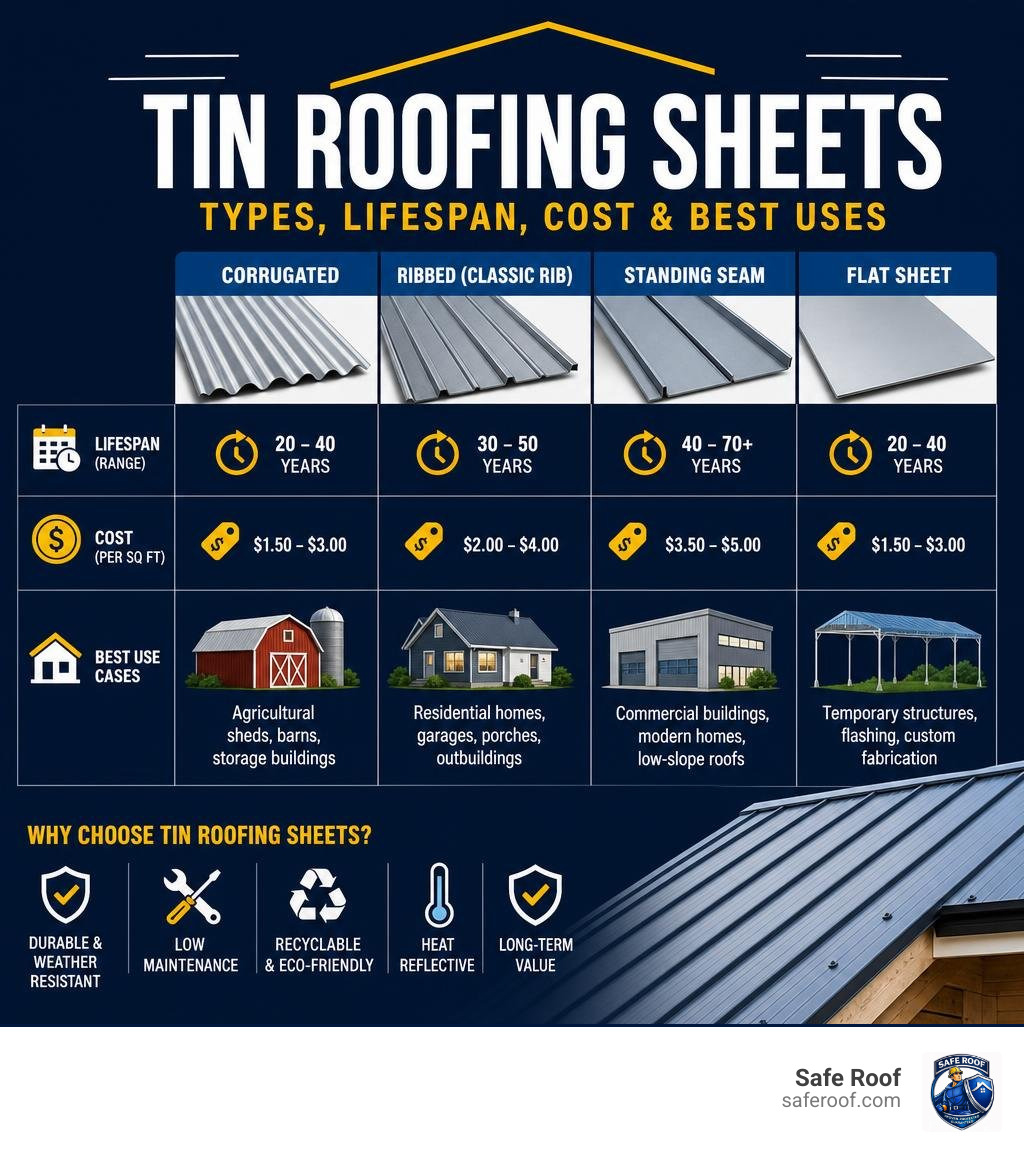
When shopping for tin roofing sheets, you will choose between two primary installation styles: exposed fastener (corrugated) and concealed fastener (standing seam). Additionally, your budget will need to account for both material costs and specialized installation labor.
According to market data, basic steel panels range from $1.50 to $3.50 per square foot for materials, while premium painted or terne-coated stainless steel panels can cost significantly more. It is important to note that installation labor typically comprises 60% to 70% of the total cost of a metal roof. Metal roofing requires specialized tools, precise flashing details, and experienced crews to ensure a leak-free fit.
Another major factor in cost and longevity is the paint system applied to the panels:
- SMP (Silicone Modified Polyester): A highly budget-friendly paint system that offers good weather resistance, though it may fade slightly over several decades.
- PVDF (Polyvinylidene Fluoride): A premium finish that costs 30% to 40% more than SMP but offers industry-leading color retention, chalk resistance, and UV protection.
To find the perfect balance of cost, aesthetics, and performance for your property, we recommend consulting with a provider of professional roofing services.
Corrugated Tin Roofing Sheets
Corrugated panels are characterized by their classic, wavy, or S-curve profile. They are an incredibly economical option and are highly favored for agricultural sheds, commercial warehouses, and residential accents.
Manufacturers like Xinri Steel produce heavy-duty galvanized tin roofing sheets designed to withstand extreme temperatures and heavy rainfall. In the residential and light commercial markets, two primary metal thicknesses dominate:
- 26-Gauge Steel: This is a thicker, heavier, and more durable option. It offers superior wind resistance and structural strength, making it the preferred choice for permanent residential roofs.
- 29-Gauge Steel: A thinner, lighter-weight steel that is highly economical. It is commonly used for temporary structures, side cladding, and budget-sensitive agricultural outbuildings.
Classic rib profiles provide a vintage, rustic charm while ensuring efficient water runoff. For structures that require a fast, budget-friendly, and highly durable cover, corrugated tin sheets remain an unbeatable choice.
Standing Seam Tin Roofing Sheets
Standing seam systems represent the gold standard of residential metal roofing. Unlike corrugated panels, standing seam sheets feature raised interlocking seams that connect above the flat surface of the roof.
The defining feature of standing seam is its concealed fastener design. Because the screws and clips are hidden beneath the metal panels, they are completely protected from rain, wind, and UV exposure. This eliminates the risk of leaks developing around backed-out fasteners over time. Standing seam roofs offer a sleek, modern, architectural aesthetic that elevates the curb appeal of homes in upscale neighborhoods throughout Plano, McKinney, and Prosper, TX.
Installation Best Practices and Accessories
A metal roof is only as good as the quality of its installation. Even the most expensive tin roofing sheets will fail if they are laid over poor underlayment or fastened with cheap hardware.
When installing a modern metal roof, we adhere to several strict industry best practices:
- Use High-Quality Synthetic Underlayment: Traditional organic felt paper can degrade quickly under high temperatures. We always recommend a premium synthetic underlayment, which provides a secondary, tear-resistant waterproof barrier beneath the metal panels.
- Select Compatible Fasteners with Neoprene Washers: For exposed fastener roofs, we use screws equipped with durable neoprene or EPDM washers. These washers compress to form a tight, leak-proof seal around the screw hole. Overtightening or undertightening these screws can cause leaks, so precise torque is critical.
- Install Proper Ridge Caps and Flashings: High-wind areas require heavy-gauge ridge caps and custom-bent metal flashings around chimneys, dormers, and valleys to prevent wind-driven rain from penetrating the roof deck.
- Adhere to Local Building Codes: Construction projects in North Texas and Oklahoma must comply with strict wind-uplift ratings. It is crucial to work with a licensed contractor who understands the specific codes of your municipality.
For local sourcing, builders and contractors across our service areas rely on regional suppliers like Western States Metal Roofing in Dallas/Fort Worth, the McElroy Metal Service Center in Richland Hills, QXO in Plano, OK Metals in Perkins, Central Texas Metal Roofing Supply, and Acier Steel.
To ensure your home is fully protected against the elements, always secure expert roof installation from a certified team.
Frequently Asked Questions About Tin Roofing
How long do tin roofing sheets last?
The lifespan of a tin roof depends heavily on the specific material and environmental conditions. Basic, thin-gauge galvanized iron (GI) sheets used on temporary structures typically last 5 to 10 years. However, premium-grade steel panels finished with high-performance PVDF coatings or historical terne-coated stainless steel can easily last 40 to 70+ years when properly maintained.
Are tin roofing sheets suitable for residential homes?
Yes. Modern standing seam and premium classic rib profiles are highly suited for residential homes. They offer exceptional durability, energy efficiency by reflecting solar heat, and a clean, modern aesthetic. To minimize rain noise and maximize energy savings, residential installations should always include high-quality synthetic underlayment and adequate attic insulation.
How much do tin roofing sheets cost compared to asphalt shingles?
Upfront, a metal roof can cost two to three times more than standard architectural asphalt shingles. However, because metal roofs last up to three times longer, require minimal maintenance, and can lower your cooling costs by reflecting solar energy, they offer a significantly higher long-term return on investment (ROI).
Conclusion
Whether you are looking to restore a historic home, upgrade your commercial property, or build a highly durable agricultural shed, tin roofing sheets offer a time-tested, incredibly resilient solution.
At Safe Roof, we are proud to be a GAF-certified roofing contractor specializing in residential and commercial roof repair, replacement, and storm damage restoration across Texas and Oklahoma. From Dallas, Fort Worth, Prosper, Celina, Plano, Sherman, and McKinney to Oklahoma City, Ardmore, and Carter County, our teams provide local expertise, enhanced 50-year warranties, and full-service support for wind and hail insurance claims.
Ready to explore your metal roofing options? Schedule a professional metal roofing consultation with us today to get started on your next project!