
Why Getting Exterior Brick Veneer Right the First Time Matters
If you’re planning to install brick veneer on an exterior wall, here’s the fast answer on how it’s done:
- Prepare the substrate — inspect and repair the wall, remove unacceptable surfaces like wood siding
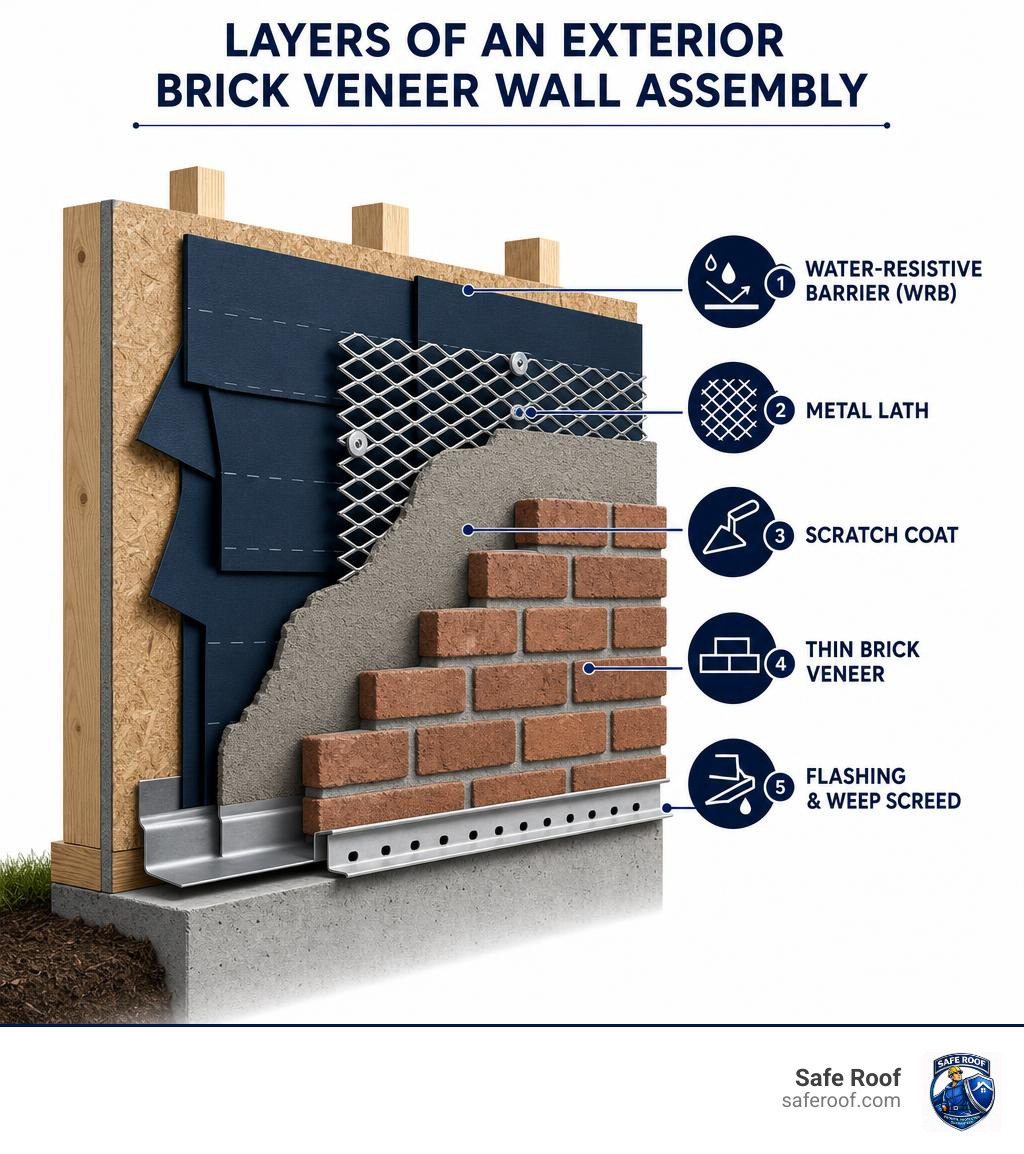
- Install two layers of WRB (water-resistive barrier) in shingle fashion over the sheathing
- Attach metal lath (min. 2.5 lb/yd²) with corrosion-resistant fasteners, 6 inches apart vertically into studs
- Apply a 1/2-inch scratch coat of Type S mortar and let it cure
- Back-butter and set the thin brick using Type S or polymer-modified mortar
- Install flashing and weep screeds at the base, minimum 4 inches above grade
- Fill and strike mortar joints at 3/8-inch standard spacing
- Clean, cure, and seal with a non-acidic masonry sealer
To ensure your home remains protected, partnering with a trusted contractor like Safe Roof is the best way to guarantee a flawless installation.
Brick veneer looks timeless — and it performs exceptionally well when installed correctly on an exterior wall. But here’s the thing most DIY guides skip over: exterior installation is a completely different animal than slapping thin brick on interior drywall.
On the outside of your home, brick veneer faces wind, rain, freeze-thaw cycles, and moisture pressure that can silently destroy an improperly built wall assembly. In Southern Oklahoma and North Texas — where Safe Roof works every day — severe storms and humidity swings make this even more critical. A missed moisture barrier or improperly installed weep screed isn’t just an aesthetic problem. It becomes a structural one.
Thin brick veneer weighs approximately 10–15 lbs per square foot — significantly lighter than traditional full brick at 30–40 lbs per square foot. That weight savings matters for your wall’s structural load. But lighter doesn’t mean simpler, especially on the exterior.
I’m Jacob Ortiz, owner of Safe Roof and a licensed contractor with hands-on experience helping homeowners across Southern Oklahoma and North Texas protect and improve their exterior walls, including projects that integrate solutions to install brick veneer on exterior walls alongside roofing and siding work. In this guide, I’ll walk you through every layer of a correctly built exterior brick veneer system — so you don’t make a costly mistake.
Interior vs. Exterior Brick Veneer: Key Differences
To understand why exterior systems fail, we have to look at how they differ from interior assemblies. When you look at The Right Way to Install Brick Veneer on Drywall | Pinska Masonry , the focus is purely on aesthetics, basic adhesion, and clean lines. Inside a climate-controlled home, you don’t have to worry about wind-driven rain, freezing temperatures, or structural deflection caused by heavy storms.
On an exterior wall, your brick veneer is the primary shield against the elements. While interior drywall remains dry and static, exterior sheathing (like OSB or plywood) expands and contracts with changes in temperature and humidity.
Furthermore, exterior walls must withstand freeze-thaw cycles. If water gets trapped behind your brick veneer in the winter, it will freeze, expand, and pop the brick right off the wall—or worse, rot your home’s structural framing.
Why You Cannot Install Brick Veneer Exterior Wall Assemblies Like Interior Drywall
You cannot install brick veneer exterior wall products using interior methods because interior walls rely on the dry, stable nature of gypsum board. On the outside of a building, moisture will find a way behind the cladding.
According to the BIA Technical Note 28A on Adding Brick Veneer, an exterior brick veneer wall must be designed as a drainage system or a highly managed adhered system. If you attempt to stick thin brick directly to exterior sheathing with standard interior mastic, the adhesive will re-emulsify when exposed to moisture, causing total system failure.
Exterior systems require heavy-duty water-resistive barriers (WRB), metal lath for mechanical bonding, and specialized mortars that can handle structural movement and environmental exposure.
Step-by-Step Guide to Install Brick Veneer Exterior Wall Systems
Installing thin brick veneer outside requires a meticulous, layered approach. If you miss one step, you compromise the entire system. Here is our step-by-step roadmap to a professional-grade installation.
Preparing the Substrate and Water-Resistive Barrier (WRB)
Before any brick or mortar touches the wall, the substrate must be structurally sound and completely weatherproofed.
- Inspect the Sheathing: Ensure your OSB or plywood sheathing is clean, dry, and securely fastened to the studs.
- Apply the First Layer of WRB: Install a high-quality water-resistive barrier, such as No. 15 asphalt felt (conforming to ASTM D226 Type 1) or a code-approved house wrap. Start from the bottom of the wall and work your way up, overlapping horizontal seams by at least 2 inches and vertical seams by 6 inches.
- Apply the Second Layer of WRB: Building codes typically require two separate layers of WRB over wood-based sheathing when applying an adhered masonry veneer. This second layer acts as a slip-sheet, preventing the wet mortar scratch coat from bonding directly to the primary weather barrier, which would otherwise restrict drainage.
- Wrap the Corners: Ensure your WRB wraps around all inside and outside corners by a minimum of 16 inches to prevent water intrusion at these high-risk transition zones.
Installing Lath and Applying the Scratch Coat
Once your weather barriers are secure, you must build the mechanical base that holds the mortar and brick.
- Choose the Right Lath: Use a minimum 2.5 lb/yd² galvanized expanded metal lath or a 3.4 lb/yd² self-furred metal lath meeting ASTM C847 standards.
- Fasten the Lath: Attach the lath horizontally, ensuring the “cups” of the metal mesh face upward (it should feel rough when you run your hand down the wall, and smooth when you run it up). Fasten the lath directly into your wall studs using corrosion-resistant screws or nails.
- Fastener Spacing: Space your fasteners a maximum of 6 inches apart vertically along each stud. Fasteners must penetrate at least 3/4 inch into wood framing or 3/8 inch into steel studs.
- Apply the Scratch Coat: Mix your Type S mortar and apply a nominal 1/2-inch thick scratch coat over the entire lath surface. Ensure the mortar completely embeds the metal lath.
- Score the Surface: Use a plasterer’s rake or a notched trowel to lightly score horizontal grooves into the wet scratch coat. This increases the mechanical bond for your setting bed.
- Curing: Allow the scratch coat to cure for at least 24 hours before installing the brick. Keep it slightly damp if you are working in hot, dry weather to prevent it from drying out too quickly.
Mortars, Adhesives, and Setting Beds for Exterior Applications
Using the wrong mortar on an exterior wall is a recipe for cracked joints and falling bricks. For exterior projects, you must use materials rated for structural strength and weather resistance.
- Type N Mortar: Best suited for general joint grouting (pointing) due to its excellent workability and flexibility.
- Type S Mortar: The industry standard for scratch coats and setting beds. It offers high compressive strength (minimum 1,800 psi) and exceptional lateral strength to resist wind loads.
- Polymer-Modified Mortars: These engineered mortars comply with ANSI A118.4 or ANSI A118.15. They contain latex or acrylic additives that vastly improve shear bond strength, water resistance, and flexibility. They are highly recommended for tight-fit installations or when applying thin brick directly to cement backer boards.
According to the Installation Guide and Detailing Options for Compliance with ASTM C1780 , setting bed mortars must achieve a minimum shear bond strength of 50 psi when tested in accordance with ASTM C482.
| Mortar Type | Ideal Application | Key Properties | Code Compliance |
|---|---|---|---|
| Type N | Joint Grouting / Pointing | High workability, moderate strength, flexible | ASTM C270 |
| Type S | Scratch Coat & Standard Setting Bed | High compressive strength, excellent bond | ASTM C270 / C1714 |
| Polymer-Modified | High-Performance Setting Bed | Maximum adhesion, highly flexible, low water absorption | ANSI A118.4 / A118.15 |
Critical Moisture Management: Flashing, Weeps, and Clearance Requirements
Water will destroy an exterior wall if it has no way to escape. Proper drainage detailing is what separates a professional masonry job from a DIY disaster.
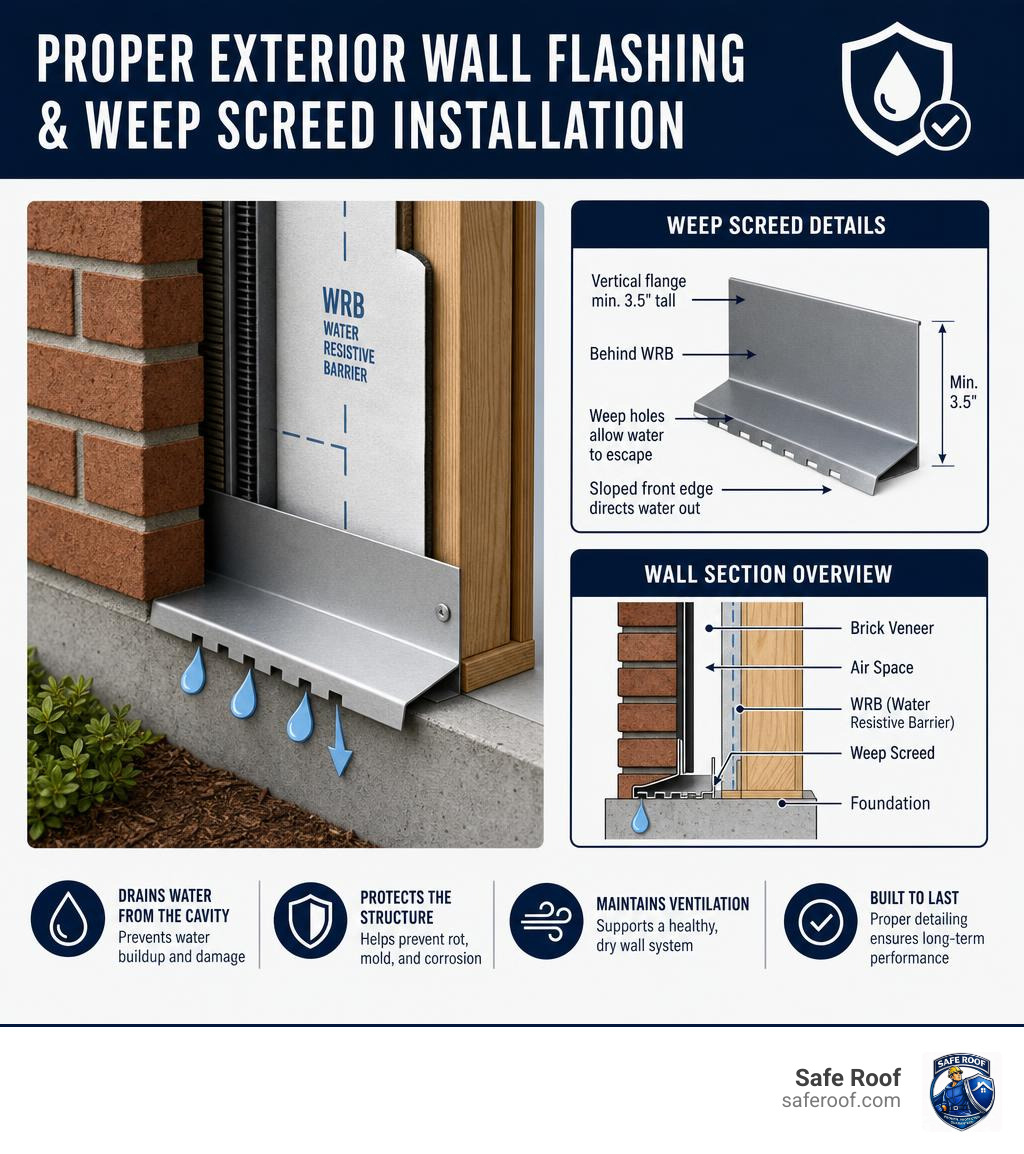
Integrating Flashing and Weep Screeds to Prevent Water Damage
To keep water from pooling at the base of your wall and rotting your foundation sill plate, you must install a weep screed.
- Weep Screed Placement: Install a corrosion-resistant, minimum 26-gage (0.0179 inch) metal weep screed at the bottom of your wall frame. The vertical attachment flange must be at least 3.5 inches tall and sit behind your WRB.
- Clearance Requirements: Building codes require weep screeds to be installed a minimum of 4 inches above grade (soil) or 2 inches above paved surfaces (such as concrete patios or driveways). This gap prevents ground moisture from wicking up into your wall assembly.
- Open Head Joint Weeps: If you are installing an anchored brick system or a rainscreen system with a drainage cavity, install open head joint weeps immediately above your flashing. Space these weeps a maximum of 24 inches on center to allow water to drain freely, as outlined in the MVMA Installation Guide for Adhered Concrete Masonry Veneer.
Structural Considerations and Substrate Requirements
Before you install brick veneer exterior wall systems, you must verify that your home’s structural framing can handle the physical forces involved.
- Deflection Limits: Your backup wall system (whether wood studs, steel studs, or concrete) must be rigid enough to prevent the brick veneer from cracking under wind pressure. The maximum allowable out-of-plane deflection is limited to L/360 under design wind loads.
- Stud Spacing: Framing studs should be spaced no more than 16 inches on center for optimal rigidity, though 24 inches is acceptable under specific engineered designs.
- Continuous Insulation (CI) Limits: If your home uses rigid continuous insulation on the exterior, you can install standard lath directly over it only if the insulation is 1/2 inch thick or less. If your rigid insulation is thicker than 1/2 inch, you must use an engineered fastening system to prevent the fasteners from bending under the weight of the brick.
- Concrete and CMU Substrates: You can apply thin brick veneer directly to clean concrete or concrete masonry units (CMU) without lath, provided the surface has a Concrete Surface Profile (CSP) of 2 or greater and is completely free of form-release agents, paint, or sealers.
Layout, Cutting, and Finishing Exterior Brick Veneer
With your prep work complete, you are finally ready for the fun part: laying the brick. If you want to see a visual demonstration of the physical layout, check out this video on How To Install Brick Veneer Outside // DIY THIN BRICK – YouTube .
Layout and Patterns
Plan your layout to minimize small, awkward cuts. A standard running bond pattern is the most common and forgiving. Always mix bricks from multiple boxes during installation to ensure a natural, even distribution of color and texture.
Cutting the Brick
Use a wet tile saw equipped with a diamond masonry blade to make clean cuts. Measure each cut individually as you approach corners, windows, and doors, because wall framing is rarely perfectly plumb.

Back-Buttering and Placing
Dampen your cured scratch coat slightly with a sponge so it doesn’t suck the moisture out of your fresh mortar. Apply a 1/2-inch layer of polymer-modified Type S mortar to the back of each thin brick (this is called “back-buttering”). Press the brick firmly onto the wall with a slight twisting motion to ensure 100% mortar coverage and eliminate any air pockets.
Spacing and Grouting
Maintain a consistent 3/8-inch mortar joint between your bricks. Use a grout bag filled with Type N mortar to fill the joints once the bricks have set for at least 24 hours.
Striking the Joints
Wait until the mortar in the joints is “thumbprint hard” (it should feel like damp sand). Use a concave joint tool to strike the joints. This compacts the mortar, creating a tight seal against water intrusion.
Cleaning and Sealing
Never use a wire brush or harsh muriatic acid on new thin brick, as this can scratch the face and cause severe efflorescence (white, powdery salt stains). Instead, clean excess mortar with a damp sponge and a stiff nylon brush. Once the wall has cured for at least 28 days, apply a breathable, non-film-forming silane-siloxane masonry sealer to protect the brick and joints from water penetration.
Frequently Asked Questions About Exterior Brick Veneer
Can you install brick veneer exterior wall panels directly over existing wood siding?
No, you cannot install brick veneer directly over existing wood, vinyl, or aluminum siding. These materials are highly flexible, prone to moisture trapping, and cannot support the weight of a masonry assembly. You must strip the wall down to the original sheathing, inspect for rot, and build your system up using the proper WRB, lath, and scratch coat steps.
How long does an exterior thin brick veneer system last?
When installed correctly with a proper drainage plane, quality flashing, and a breathable sealer, an exterior thin brick veneer system will easily last 50+ years. The system requires very little maintenance beyond occasional washing and inspecting the sealant around windows and doors every few years.
What is the standard mortar joint spacing for exterior thin brick?
The industry standard mortar joint spacing is 3/8 inch. This spacing matches traditional full-bed brick masonry and is pre-calculated into the packaging coverage of most thin brick manufacturers, such as the OLD BRICK ORIGINALS™ KILN-FIRED THIN BRICK VENEER lines.
Conclusion
Installing an exterior brick veneer wall is a fantastic way to elevate your home’s curb appeal and add a layer of robust, fire-resistant protection. However, because an exterior wall must handle everything mother nature throws at it, cutting corners on weather barriers, flashing, or mortar will lead to structural damage.
If you are located in North Texas or Southern Oklahoma — including Dallas, Plano, Sherman, McKinney, or Oklahoma City — and want to ensure your home’s exterior cladding is built to withstand our intense storm seasons, we can help. At Safe Roof, we combine our GAF-certified roofing expertise with complete exterior solutions, including professional siding, flashing, and storm damage restoration.
Let our team of experienced professionals handle your next exterior upgrade so you can enjoy beautiful, stress-free results backed by our industry-leading warranties.
Explore our Safe Roof Siding Installation Services today to schedule your free exterior inspection and estimate!