
Why Proper Carport Gutter Installation Protects Your Home and Vehicle
Quick Answer: How to Install Carport Gutters
- Check the slope — Run water over the roof and mark the high and low points
- Measure and cut — Measure the roofline length, then cut gutters to fit
- Attach brackets — Secure gutter brackets to the metal frame at regular intervals
- Hang the gutters — Mount gutters with a slope of 1/4 inch per 10 feet toward the downspout
- Seal the joints — Apply silicone sealant and let it cure for 24 hours
- Install downspouts — Attach downspouts after gutters are in place, directing water away from the foundation
A carport without gutters is quietly working against you, which is why consulting a professional roof and gutter water-management contractor is essential for proper runoff control. Every rainstorm sends water sheeting off the roof and straight down onto your foundation, your driveway, and your vehicle. Over time, that unchecked runoff causes real damage — soil erosion, pooling water, rust, and structural wear that shortens the life of your carport by years.
The good news? A proper carport gutter installation is one of the most cost-effective upgrades you can make to protect your property. Homeowners who install gutter systems on their carports report a 60% decrease in foundation erosion and pooling water issues — and a well-maintained gutter system can extend the life of your carport structure by 10 to 15 years. In Safe Roof’s 2025 field review of carport drainage issues across Southern Oklahoma and North Texas, the most common preventable failure was uncontrolled roof runoff landing within 3 feet of a slab or support post.
Whether you’re in Southern Oklahoma or North Texas, where heavy storms are a regular reality, managing roof runoff isn’t optional — it’s essential. At Safe Roof, we’ve seen what unmanaged water does to carports, roofs, and the properties beneath them.
I’m Jacob Ortiz, owner of Safe Roof, a licensed roofing and gutter installation contractor serving homeowners and businesses across Southern Oklahoma and North Texas. Through hundreds of carport gutter installation projects in some of the country’s most storm-exposed markets, I’ve learned exactly what works — and what costly mistakes to avoid. In this guide, I’ll walk you through everything you need to know to get it done right.
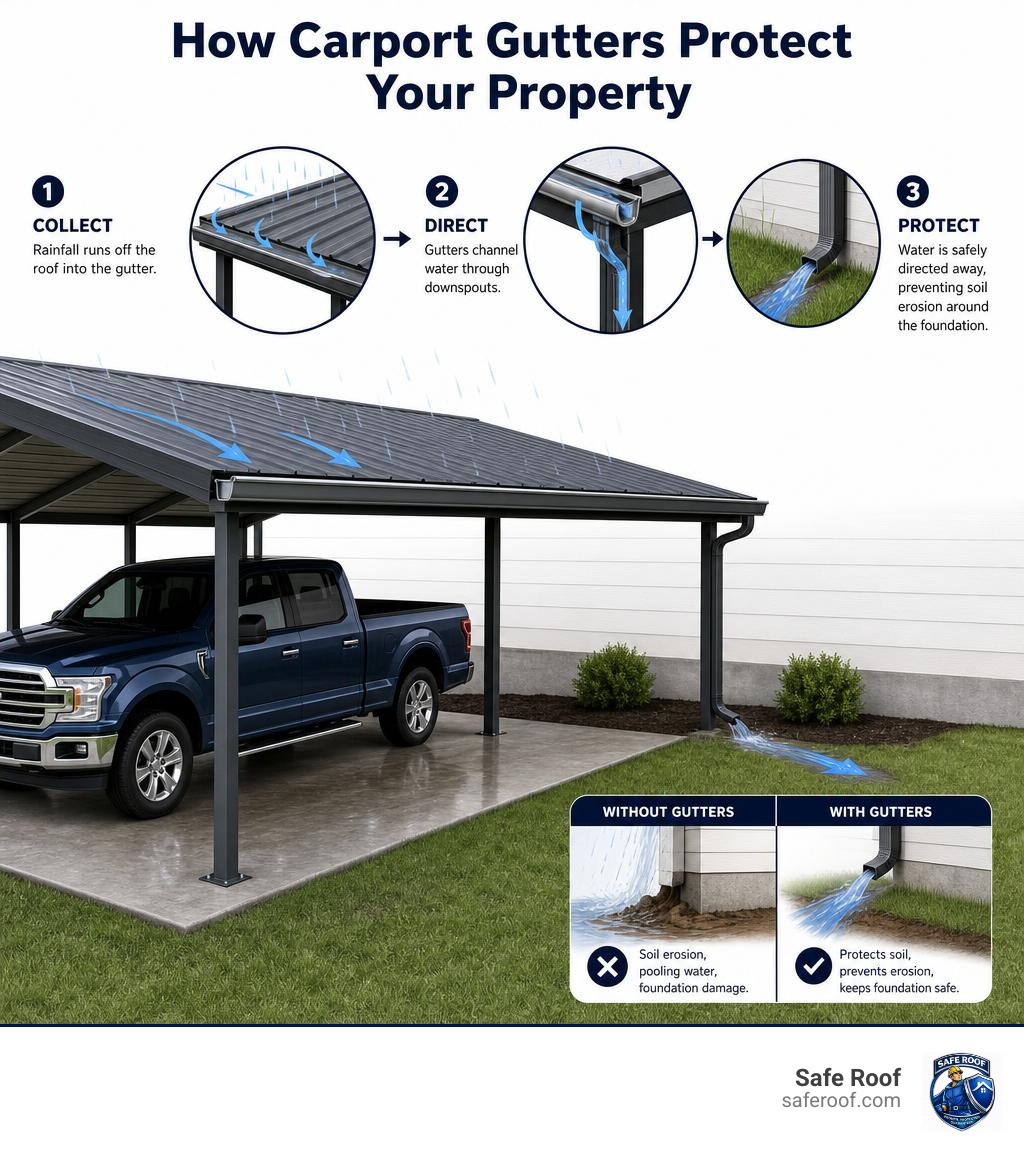
Why You Need a Carport Gutter System
A carport gutter system prevents concentrated roof runoff from eroding soil, damaging concrete, staining vehicles, and weakening nearby structural materials. Many property owners view carports as simple, low-maintenance shelters that do not require the same attention as a primary residence. However, neglecting water management on these structures is a recipe for long-term headaches. Without a reliable gutter system, heavy rainfall cascades off the carport roof, creating a high-velocity curtain of water that strikes the ground directly below.
This concentrated runoff leads to several destructive issues:
- Severe Foundation Erosion: Over 80% of property owners in areas with frequent rainfall consider gutter installation essential. Continuous water impact washes away supporting soil, causing concrete slabs to crack, sink, or shift.
- Vehicle and Equipment Damage: Water dripping from a dirty carport roof carries minerals, debris, and pollutants that leave hard-to-remove spots on your vehicle’s paint. Constant splashing also accelerates rust on undercarriages and nearby metal equipment.
- Structural Rust and Wood Rot: For attached carports, uncontrolled water splashback rots adjacent home siding and rusts the carport’s own structural supports.
Properly installed gutters can reduce water damage to structures by up to 75% during heavy rainfall events. By channeling water safely away, you ensure your outdoor space remains dry, stable, and clean. For broader roof-system education, GAF roofing resources explain why drainage, edge protection, and weatherproofing details must work together to protect a structure. To learn more about how we protect residential structures from water intrusion, check out our residential roofing solutions.

Choosing the Right Materials for Carport Gutter Installation
The best carport gutter material is lightweight enough for the frame, durable enough for local weather, and corrosion-resistant enough to handle years of runoff. Selecting the right gutter material is critical to ensuring your system can handle the seasonal storms we experience in the DFW Metroplex and Central Oklahoma. The ideal material should balance weight, durability, and corrosion resistance.
The most common materials used in modern carport gutter installations include:
- Aluminum: The industry standard for residential and carport applications. Aluminum is lightweight, rust-proof, and highly customizable.
- Vinyl (PVC): A budget-friendly, rust-resistant option that is incredibly easy to install for DIYers, though it can become brittle under the intense Texas summer heat.
- Galvanized Steel: Highly durable and resistant to physical impact, making it ideal for heavy snow or hail-prone areas in North Texas, though it requires regular maintenance to prevent rust.
For those looking for a hands-off, long-lasting solution, we highly recommend scheduling a professional gutter installation to secure seamless aluminum gutters tailored precisely to your structure. For material and weather-resistance context, Owens Corning building science resources provide useful guidance on how moisture management affects exterior building components.
Gutter Material Comparison Table (2026 Standards)
| Material | Durability | Cost | Maintenance Level | Best Suited For |
|---|---|---|---|---|
| Aluminum | High (20+ years) | Moderate | Low | Most standard and custom metal carports |
| Vinyl (PVC) | Moderate (10-15 years) | Low | Low | Budget-conscious DIY projects |
| Galvanized Steel | Very High (25+ years) | High | Moderate | Heavy storm zones and commercial structures |
Selecting the Best Gutter Profile for Your Carport
The “profile” refers to the shape of the gutter cross-section. The profile you select dictates both how much water the system can carry and how the finished project will look on your property.
- K-Style Gutters: These feature a decorative front face that mimics crown molding. They are the most popular residential profile because they hold more water than half-round gutters and blend seamlessly with modern home designs.
- Half-Round Gutters: Boasting a simple, semi-circular trough design, half-round gutters are highly efficient at shedding debris and are very easy to clean. They are often used on rustic or traditional-style carports.
- Box Gutters: These are rectangular troughs designed to handle massive volumes of water. Box gutters are typically reserved for larger commercial carports or flat-roof structures that experience heavy, concentrated downpours.
Pre-Made Kits vs. Custom Carport Gutter Installation
If you own a standard-sized, freestanding pavilion or cantilever carport, pre-made retail kits can offer a convenient, all-in-one solution.
For example, specialized manufactured kits such as the Rain Gutter Kit For The 14 x 25 Carport Pavilion or the Cantilever Gutter and Fascia Pack 2440mm x 9675mm come with color-matched PVC components, custom brackets, and step-by-step instructions designed for specific structural dimensions.
However, pre-made kits have major limitations. They do not allow for structural adjustments, are typically made of thinner materials, and may not fit custom-built metal carports. Custom seamless gutter installations, on the other hand, are rolled on-site to the exact millimeter of your roofline, eliminating seams where leaks usually develop.
Planning and Measuring Your Carport Drainage
Before buying any materials, you must carefully plan your drainage layout. Proper planning ensures that the water collected is deposited in a safe area, far away from your carport’s foundation and your home’s walkways.

- Measure the Roofline: Use a heavy-duty tape measure to determine the exact length of the eaves where the gutters will hang.
- Determine Runoff Direction: Run water over the carport roof with a hose to observe where the natural slope guides the water. This will help you locate the low point where your downspout must go.
- Calculate the Slope: To prevent water from pooling, gutters must slope downward toward the downspout at a rate of 1/4 inch of fall for every 10 feet of horizontal run.
- Mark High and Low Points: Use a line level and a chalk line to mark this slope along the carport’s metal fascia or frame. The high point should be at the opposite end of the downspout location.
Step-by-Step DIY Carport Gutter Installation Guide
A successful DIY carport gutter installation requires accurate measurements, corrosion-resistant fasteners, consistent slope, and sealed joints. If you are comfortable working on a ladder and have basic hand tools, installing gutters on a metal carport is a highly achievable weekend project. For specialized metal framing tips, you can read more about how to install gutters on metal carports.
Step 1: Measuring and Cutting the Gutters
Always wear heavy-duty working gloves when handling and cutting metal gutters, as the freshly cut edges are razor-sharp. Measure your gutter sections twice to avoid costly mistakes. Use a hacksaw or high-quality tin snips to cut the aluminum or vinyl troughs to your marked lengths. If your carport requires a gutter run longer than 20 feet, you will need to join sections together using joiners and a generous amount of waterproof sealant.
Step 2: Securing Gutter Brackets to the Metal Frame
Gutter brackets (or hangers) must be spaced no more than 24 to 30 inches apart to prevent the gutters from sagging when filled with heavy rainwater or ice. Using a drill and heavy-duty, rust-resistant self-tapping screws, secure the brackets directly into the carport’s metal framing. Ensure each bracket aligns perfectly with the sloped chalk line you marked during the planning phase.
Step 3: Mounting the Gutters and Sealing Joints
Carefully snap or screw the gutter sections into the mounted brackets. Once the troughs are securely hung, install the end caps and downspout outlets. Apply a premium, heavy-duty outdoor silicone sealant to all end caps, connectors, and outlet joints.
Pro Tip: Allow the silicone sealant to cure for at least 24 hours in completely dry weather before testing or exposing the system to rain.
If you encounter complex rooflines, roof-edge issues, or structural framing challenges, discover our comprehensive roofing services for professional assistance.
Step 4: Installing Downspouts for Proper Drainage
It is highly recommended to attach the downspout assembly after the main gutter troughs are fully mounted. Install the drop outlet at the low end of the gutter run, attach the elbow joints to guide the downspout pipe flat against the carport support post, and secure the downspout with metal straps. Ensure the bottom of the downspout utilizes a splash block or a flexible extension to deposit water at least 3 to 5 feet away from the carport’s foundation slab.
Common Mistakes to Avoid During Carport Gutter Installation
The three most common carport gutter installation mistakes are incorrect slope, weak bracket spacing, and unsealed joints. Even minor errors during installation can render your new gutter system useless or, worse, cause structural damage to your carport.
- Incorrect Slope: If the gutter is completely level or sloped away from the downspout, water will pool in the troughs, leading to overflows, mosquito breeding grounds, and accelerated rust.
- Improper Bracket Spacing: Spacing brackets too far apart (e.g., every 4 feet) causes the gutter to sag under the weight of water, eventually pulling the screws out of the metal frame.
- Neglecting Sealant: Skipping or rushing the sealing process on joint seams and end caps guarantees leaks that will drip directly onto your vehicle or walkways.
Avoiding Structural Damage During Carport Gutter Installation
When mounting gutters to a metal carport, preserving the structural integrity of the metal frame is paramount. Never drill unnecessary holes in the load-bearing posts. Always use high-quality, corrosion-resistant self-tapping screws designed for metal-to-metal applications to prevent galvanic corrosion (which occurs when dissimilar metals react and rust). For more expert advice on maintaining your outdoor structures, explore essential roofing tips & maintenance. For roof and exterior material standards, CertainTeed product resources are also useful when comparing building-envelope components.
Ensuring Proper Slope and Alignment
Never eye-ball your gutter slope. Always use a high-quality line level or laser level to verify the 1/4-inch-per-10-feet fall. Once your installation is complete and the sealant has fully cured, run a garden hose at the high end of the gutter to test the system. Water should flow smoothly and rapidly to the downspout without any standing pools left behind in the troughs.
Maintenance and Cleaning Tips for Carport Gutters
An unmaintained gutter system is just as bad as having no gutters at all. Clogged gutters trap heavy standing water, which can bend brackets, damage the carport frame, and overflow.
Essential Gutter Maintenance Tools
- Sturdy A-frame ladder
- Heavy-duty work gloves
- Gutter scoop or plastic trowel
- Garden hose with a high-pressure spray nozzle
- Stiff-bristled cleaning brush
Preventing Clogs in Your Carport Gutter Installation
If your carport is situated near oak, pecan, or pine trees—which are incredibly common across Collin County, TX and Carter County, OK—leaves and pine needles will quickly fill your gutters. Installing micro-mesh gutter screens or guards is a highly effective way to keep debris out while allowing water to flow freely. Additionally, flush your downspouts with a high-pressure hose nozzle at least twice a year to clear out fine silt and organic buildup. For seasonal exterior upkeep, review our roofing tips & maintenance resources.
Inspecting for Sagging and Rust Damage
Perform visual inspections of your carport gutters every spring and fall. Look closely for any signs of sagging, loose brackets, or rust spots. If you notice a section beginning to dip, tighten the existing bracket screws or install an additional hanger nearby to reinforce the load capacity. For steel systems, sand down any small rust spots immediately and coat them with a rust-resistant outdoor spray paint to halt corrosion.
Frequently Asked Questions about Carport Gutters
Can you install gutters on a metal carport with a curved roof?
Yes, you can absolutely install gutters on a curved-roof metal carport. However, because the roofline curves down to meet the frame, standard flat-fascia brackets will not work. You will need to use specialized, adjustable wrap-around strap hangers or custom-engineered brackets that secure directly to the metal ribs of the roof panels.
How much does a professional carport gutter installation cost?
For a standard-sized carport, professional gutter installations typically cost between $1,500 and $3,500, depending on the gutter material, structure size, and layout complexity. Larger, multi-vehicle, or custom cantilevered carports with complex drainage requirements can reach $6,000 or more. To understand how gutter work integrates with larger structural projects, get professional roof installation insights.
How often should carport gutters be cleaned?
At a minimum, carport gutters should be thoroughly cleaned twice a year—once in the late spring and once in the late autumn. However, if your carport is directly under overhanging trees, you may need to clear out debris every three to four months to prevent clogs and overflowing water.
Protect Your Investment with Safe Roof
A properly executed carport gutter installation is a smart, high-yield investment that safeguards your vehicle, preserves your concrete foundation, and extends the overall lifespan of your carport structure by up to 15 years. While a DIY installation is a rewarding weekend project, achieving a flawless, leak-free fit on complex metal frames requires specialized tools and experience.
At Safe Roof, we bring GAF-certified precision and decades of construction expertise to residential and commercial properties throughout North Texas and Southern Oklahoma—including Dallas, Fort Worth, Plano, McKinney, Sherman, and Ardmore. You can learn more about manufacturer quality standards through GAF, and we back our work with industry-leading warranties and a commitment to quality that keeps your property dry and secure through every storm.
Ready to upgrade your carport with a custom, high-performance gutter system? Schedule a professional gutter installation with Safe Roof today to protect your property.