
Your roof is the single most important structural element of your home. It shields your family, your belongings, and your investment from everything the sky throws at it, scorching summer heat, driving rain, hail, and high winds. Yet most homeowners only think about their roof when something has already gone wrong.
That reactive approach is expensive. By the time a water stain appears on your ceiling, the damage has already worked its way through your shingles, underlayment, decking, insulation, and drywall. What could have been a straightforward repair becomes a major, and costly, restoration project. At Safe Roof, we work with homeowners across Texas and Oklahoma every day, and the pattern is consistent: the homes that hold up best over time are the ones whose owners take a proactive approach.
In this comprehensive guide, we’ll dive into the essential roofing tips and maintenance strategies every homeowner needs to ensure long-term structural integrity.
The Real Cost of Ignoring Roof Maintenance
Many homeowners follow the “if it isn’t leaking, don’t fix it” philosophy. It feels logical, why spend money on something that isn’t broken? But roofing doesn’t work that way.
The deterioration of a roof is gradual and largely invisible until it reaches a tipping point. Granules wash off shingles silently. Flashing pulls away from a chimney without fanfare. A soffit begins to rot without any visible interior symptom, until one heavy rain reveals the full extent of the damage.
Consider the numbers:
- A well-maintained asphalt shingle roof can last 20–25 years or more.
- A neglected roof in the same climate may fail in 12–15 years, forcing a full roof replacement that can cost tens of thousands of dollars.
- Small repairs — replacing a few missing shingles, resealing flashing, clearing gutters, typically cost a fraction of what structural repairs demand.
Preventative maintenance also keeps your energy bills lower. A roof with proper ventilation and intact shingles reflects heat and regulates attic temperature more effectively, reducing the strain on your HVAC system during the hottest months.
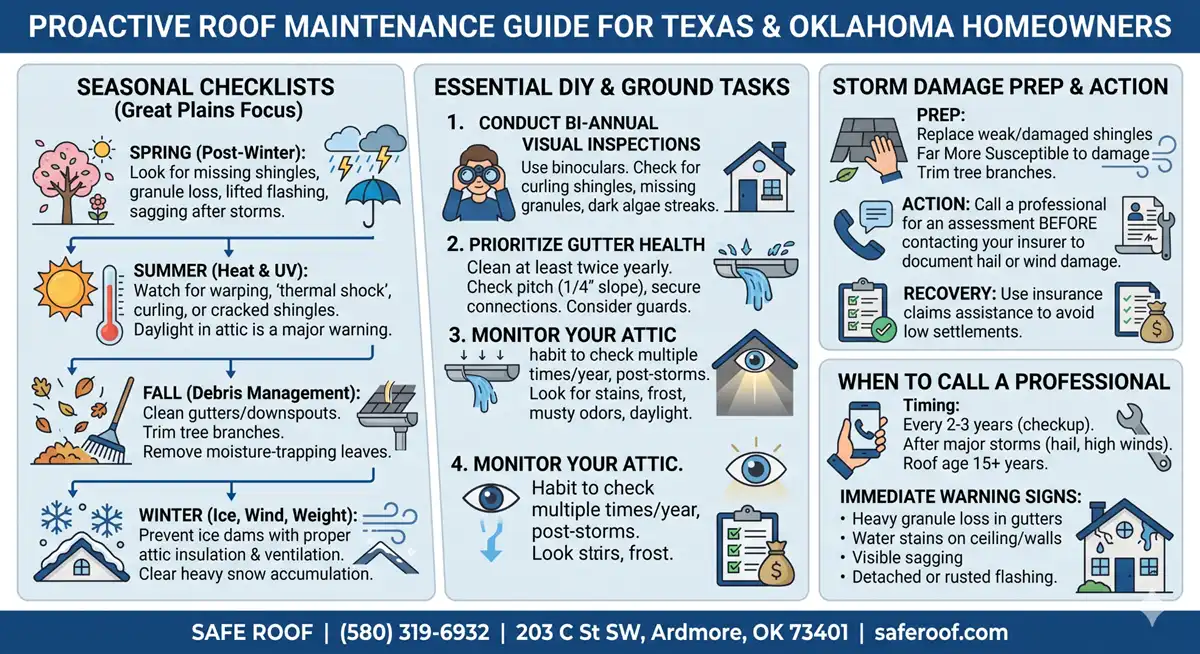
Seasonal Roof Maintenance: A Month-by-Month Mindset
Different times of year bring different threats to your roof. Here’s how to think about maintenance across the four seasons.
Spring: Post-Winter Assessment
Spring is the ideal time to assess how your roof weathered the colder months. After any significant ice or wind event, walk the perimeter of your home and look for:
- Shingles on the ground or in your yard
- Visible granule buildup in your gutters or at downspout exits
- Sections of flashing that appear lifted or separated
- Sagging areas along the roofline
Spring is also the prime storm season in much of the South-Central U.S. If you’re in Texas or Oklahoma, getting a professional roof inspection before severe weather season hits is one of the smartest investments you can make.
Summer: Heat and UV Damage
Extended heat accelerates the aging of asphalt shingles. UV radiation breaks down the asphalt binders that give shingles their flexibility. Over time, this causes shingles to become brittle, curl, or crack, a process sometimes called “thermal shock” when it’s driven by rapid temperature swings between hot days and cooler nights.
During summer, pay attention to:
- Shingles that appear warped, curled at the edges (“cupping”), or curling upward in the center (“clawing”)
- Areas of the roof that look noticeably lighter in color, indicating granule loss
- Any daylight visible when you peek into your attic, a sign of a gap or hole in the roof deck
Fall: Gutter and Debris Management
Falling leaves and debris are your roof’s adversaries in autumn. Leaves that accumulate on the roof trap moisture against the shingles, accelerating moss and algae growth. Clogged gutters cause water to back up under the eaves, rotting fascia boards and eventually the roof deck itself.
Fall maintenance should include:
- Cleaning gutters and downspouts thoroughly, at minimum after the last leaves have fallen
- Trimming any tree branches that hang over the roofline
- Checking that your gutter installation is properly pitched so water flows freely toward downspouts
Winter: Ice, Wind, and Weight
While Oklahoma and Texas generally see milder winters than the northern states, ice storms, freezing rain, and high winds do occur, sometimes with little warning. Ice dams can form when heat escaping through a poorly insulated roof melts snow near the peak, which then refreezes at the colder eaves, backing water up under the shingles.
Winter prep tips:
- Ensure your attic insulation and ventilation are adequate before temperatures drop
- Clear heavy snow accumulation from the roof if safe to do so, wet snow is extremely heavy
- Check that attic exhaust and intake vents are not obstructed
Essential Roofing Maintenance Tips Every Homeowner Should Know
1. Conduct Bi-Annual Visual Inspections
You don’t need to climb onto your roof to perform a useful inspection. From the ground, using binoculars, you can identify many early warning signs:
- Curling or cupping shingles — a sign of aging or moisture imbalance
- Missing shingles — any gap in your shingle field is a potential entry point for water
- Dark streaking or staining — often indicates algae growth, which deteriorates shingles over time
- Sagging areas — may indicate structural issues with the decking or rafters beneath
If you spot anything concerning, schedule a roof inspection with a qualified contractor rather than waiting for a leak to confirm the problem.
2. Prioritize Gutter Health
Gutters are a critical part of your roofing system. When they fail, the roof fails with them. Clogged or improperly pitched gutters allow water to pool at the roof edge, seeping under shingles and rotting the fascia and soffits.
Best practices for gutter maintenance:
- Clean gutters at least twice a year, once in late spring and once in late fall
- Check for proper pitch (gutters should slope about 1/4 inch per 10 feet toward the downspout)
- Look for separations at the joints, sagging sections, or gutters pulling away from the fascia
- Consider gutter guards if your home is surrounded by trees
If your current gutters are undersized, improperly installed, or beyond repair, professional gutter installation can protect your entire roofline going forward.
3. Identify and Address Damaged Shingles Promptly
A single missing or damaged asphalt shingle is not a cosmetic problem, it is an active vulnerability. High winds, which are common across the Great Plains and throughout Texas and Oklahoma, can lift shingles and break the sealant strip that bonds them to the course below. Once that bond is broken, the underlayment beneath is exposed to UV, rain, and wind.
Whether you have budget-friendly 3-tab shingles, durable architectural shingles, or premium luxury shingles, missing shingle replacement should never be delayed. The repair cost is minimal compared to the water damage a single gap can cause over a single rainy season.
4. Inspect and Maintain Flashing and Sealants
Flashing, the thin metal strips installed at roof penetrations like chimneys, skylights, plumbing vents, and valleys, is the most common point of failure on residential roofs. According to the National Roofing Contractors Association (NRCA), the majority of roof leaks can be traced to improper flashing installation or the deterioration of sealant around roof penetrations.
During any inspection, closely examine:
- The base flashing around your chimney for rust, gaps, or separation
- Step flashing along any dormers or walls that meet the roofline
- Pipe boot seals around plumbing vents, these rubber seals degrade over time and are a frequent source of leaks
- Valley flashing where two roof planes meet
If you notice cracked sealant, rust staining, or lifted flashing, these are candidates for immediate roof repair.
5. Monitor Your Attic
Your attic is a diagnostic window into your roof’s health. Make it a habit to check your attic a few times a year, particularly after major storms. What to look for:
- Daylight coming through the roof boards — indicates a gap or hole
- Water stains or wet insulation — confirms an active or recent leak
- Frost or condensation on the underside of the sheathing — a sign of poor ventilation
- Musty odors — may indicate hidden moisture and early-stage mold growth
Proper attic ventilation is one of the most underappreciated aspects of roofing maintenance. Without adequate airflow, specifically, balanced intake vents at the soffits and exhaust vents at or near the ridge, heat and moisture accumulate. This “cooks” the shingles from the inside out, dramatically shortening their lifespan. During a residential roofing check-up, always ensure your intake and exhaust vents are unobstructed. That’s why the U.S. Department of Energy recommends both proper attic insulation and ventilation as key factors in energy efficiency and roof longevity.
Storm Damage Roof Maintenance Tips
Severe weather can cause serious roof damage, often in ways that aren’t immediately visible. Follow these tips to stay ahead of storm-related issues.
Before the Storm:
- Schedule a roof inspection before peak storm season to catch vulnerable shingles, loose flashing, and weak seals
- Replace any curling, cracking, or missing shingles, damaged shingles are far more susceptible to wind uplift and hail impact
- Trim overhanging tree branches that could become projectiles in high winds
- Clean and secure your gutters so water flows freely during heavy rain, backed-up water forces its way under shingles fast
- Take dated photos of your roof to establish a pre-storm baseline for insurance purposes
After the Storm:
- Walk the perimeter and scan the roofline with binoculars, look for missing shingles, lifted ridge caps, and dented metal components
- Check your gutters for granule buildup, heavy granule loss after a storm is a strong indicator of hail damage.
- Inspect your attic for water stains, wet insulation, or daylight showing through the decking
- Examine flashing around chimneys, vents, and skylights, storms frequently loosen these first
- Call a professional roofer before contacting your insurer, a documented assessment strengthens your claim and ensures nothing is missed
- Use our insurance claims assistance service to navigate the process and avoid a low settlement
When to Act Immediately:
- Missing shingles or visibly torn sections, schedule wind damage repair before the next rain
- Water stains appearing on interior ceilings after a storm, call for roof leak detection right away
- Significant granule loss or bruised shingles, don’t wait for a leak to confirm hail damage
Storm damage rarely announces itself with a drip. If severe weather has moved through your area, a professional inspection is always the right next step. Get your free roof quote or call us at (580) 319-6932 today.
When to Call a Professional Roofer
DIY visual inspections are a valuable habit, but they have limits. A trained roofing professional can identify issues that are impossible to detect from the ground or even from a casual walk across the roof, things like thermal bridging, micro-fractures in the shingle mat, or early-stage decking deterioration.
Plan to schedule a professional inspection:
- Every 2–3 years as a routine checkup
- After any major storm — hail, high winds, or significant rainfall events
- Before buying or selling a home
- When your roof is approaching 15 years of age
Watch for these specific warning signs that should prompt an immediate call:
- Granules (gritty, sand-like material) accumulating in your gutters or at downspout exits
- Water stains or discoloration on interior ceilings or walls
- Moss, algae, or lichen growth, especially on north-facing slopes
- Daylight visible through the attic
- A sagging roofline or sections that appear uneven
- Flashing that is visibly lifted, rusted, or separated
If you’re seeing any of these signs, don’t wait. Our roof leak detection service can pinpoint the source of moisture intrusion quickly, and our structural roof repair team handles more serious cases where the damage has reached the decking or framing.
Safe Roof: Serving Homeowners Across Texas and Oklahoma
At Safe Roof, we don’t just fix roofs, we provide lasting peace of mind to homeowners across a wide service area. Our team understands the specific climate demands that make roofing in Texas and Oklahoma different from the rest of the country: the intensity of hail seasons, the unpredictability of severe weather, the relentless UV exposure, and the pressure that high-wind events put on roofing systems.
Whether you’re in the Dallas area, Fort Worth, McKinney, Plano, or anywhere in our Texas roofing service area, or whether you’re in Oklahoma City, Ardmore, or anywhere across our Oklahoma roofing service area, our team is ready to help.
Ready to Protect Your Home? Start Here.
Your roof is working every day to protect your home. Give it the attention it deserves before a small issue becomes a major expense. Whether you need a quick repair, want to explore your replacement options, or simply want a professional set of eyes on your roof before storm season, Safe Roof is ready to help.
Have questions? Visit our FAQ page or read through our customer testimonials to hear from homeowners we’ve served across the region. You can also view our project gallery to see our work firsthand, or contact us directly.
Safe Roof
Address: 203 C St SW, Ardmore, OK 73401
Phone Number: (580) 319-6932
Google Maps: Find Us Here
Email: info@saferoof.com
Business Hours:
Monday: Open 24 hours
Tuesday: Open 24 hours
Wednesday: Open 24 hours
Thursday: Open 24 hours
Friday: Open 24 hours
Saturday: Open 24 hours
Sunday: Closed
FAQs About Roofing Tips & Maintenance
How often should a roof be inspected?
Most roofing professionals recommend a professional roof inspection at least once every 2–3 years under normal conditions. However, you should schedule an inspection after any significant storm event, hail, high winds, or heavy rainfall, regardless of when your last inspection occurred.
What are the most common signs of roof damage?
The most common warning signs include missing or curling shingles, granules accumulating in your gutters, water stains on interior ceilings, daylight visible through the attic, sagging areas along the roofline, and moss or algae growth on the shingle surface. If you notice any of these, contact a roofer for a roof repair assessment before the damage spreads.
What causes moss and algae to grow on my roof?
Moss and algae thrive in shaded, moisture-retaining areas, typically north-facing slopes or sections beneath overhanging trees. Beyond being unsightly, they trap moisture against the shingles and accelerate deterioration. Zinc or copper strips installed near the ridge can help prevent growth, and there are algae-resistant shingle formulations available as well.
How long does a roof last?
The lifespan of a roof depends largely on the material. Asphalt shingle roofing typically lasts 20–25 years with proper maintenance, while metal roofing can last 40–70 years. Neglect, severe weather exposure, and poor ventilation can shorten any roof’s lifespan significantly.
Can I inspect my own roof?
Yes — a ground-level visual inspection using binoculars is something any homeowner can do safely. Look for missing shingles, visible damage, and granule loss. However, walking on your roof without training and proper equipment is not recommended, as it can cause additional damage and carries a serious fall risk. A professional inspection should still occur every few years.
What causes a roof to leak?
The most common causes of roof leaks include deteriorated or improperly installed flashing around chimneys, vents, and skylights; missing or damaged shingles; clogged gutters causing water backup at the eaves; cracked pipe boot seals; and storm damage. Our roof leak detection service can pinpoint the exact source quickly.
Should I repair or replace my roof?
If the damage is localized and your roof is under 15 years old with sound decking, a roof repair is usually sufficient. If your roof is 20+ years old, showing widespread granule loss, or has had multiple leaks in different locations, a full roof replacement is likely the more cost-effective long-term solution. A professional inspection will give you a clear recommendation.
How do gutters affect my roof’s health?
Gutters play a critical role in directing water away from your roof and foundation. When gutters are clogged or improperly installed, water backs up at the roof edge and seeps beneath shingles, rotting the fascia, soffits, and eventually the roof decking. Keeping your gutters clean and ensuring your gutter installation is properly pitched are simple steps that prevent significant roof damage.